By Bamidele Johnson
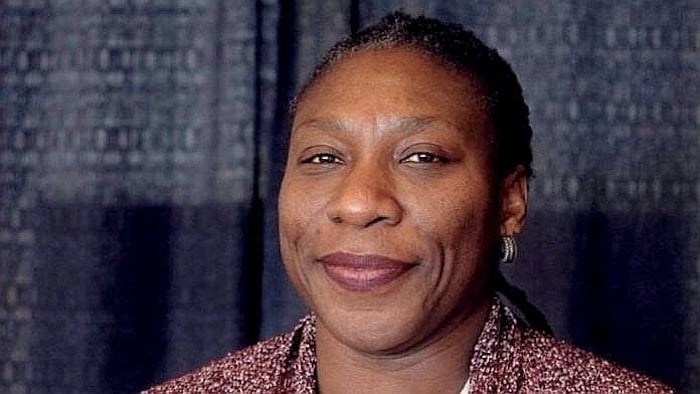
I read, on the cable.ng, the defence mounted on behalf of Professor Iyabo Obasanjo against criticism of her indifference to the grotesque conditions in which some residents of the Lagos–Ogun boundary communities live. I admire the writer’s simplicity of language and sedate tone. But you can afford to be tranquil when you have not lived in any of those communities. That response, which I believe was to my Facebook post on why I want, so very badly, Professor Obasanjo’s announced governorship bid to fail, is not off the boilerplate. It did not begin with the formulaic line about responding “for the need to put the records straight and ensuring that the public is not misled by disgruntled elements”. For sparing me that tedium, I am immensely grateful.
The defence, however, is gossamer-thin. It attempts to be clever by trying to turn absence into principle. It suggests that because the roads of Lambe, Akute, Alagbole and the surrounding axis are technically state roads, a federal legislator could do little more than sigh in sympathy and return to Abuja to loudly debate policy architecture.
The tidiness of its argument is not in doubt, but it is convincing only to the writer, Obasanjo herself and the mass choir expected to be put together by her aspiration.
Anyone with even a casual interest in Nigerian legislative practice over the last two decades knows that members of the National Assembly rarely hide behind constitutional diagrams when their constituents are living like the children of a lesser god.
Senators and members of the House of Representatives routinely intervene when there are infrastructural gaps in their constituencies. They lobby ministries, insert projects into appropriation bills, mobilise federal agencies and deploy the constituency project framework. And when all else fails, they simply push until something moves.
None of them pretends that these interventions magically convert federal legislators into commissioners for works. They simply understand that representation carries practical obligations, not just theoretical ones. That seemed beyond Professor Obasanjo when she was a senator.
And up to now, I suspect that she is not aware that federal legislators have stepped in when other tiers of government failed. Senator Uzor Kalu (Abia North), for example, has facilitated the rehabilitation of several rural roads across communities such as Arochukwu, Ohafia and Bende through federal intervention projects captured in the national budget. On his watch, road rehabilitation and erosion control works were executed in places like Nkporo and Isuikwuato through federal agencies and constituency allocations. No one argued that those roads suddenly became federal trunk routes. The projects were pushed through available federal channels because communities needed relief.
Ali Ndume (Borno South) has done the same for years. Through appropriations and federal intervention programmes, he has facilitated road construction and rehabilitation projects linking communities such as Biu, Askira and Hawul. He has also attracted classroom blocks, boreholes and healthcare facilities to several communities in southern Borno through federal agencies and the constituency project framework. The roads did not magically become federal roads. They were simply built because representation required intervention.
Godswill Akpabio, while representing Akwa Ibom North West in the Senate before becoming Senate President, facilitated the construction and rehabilitation of community roads, classroom blocks and electrification projects across Essien Udim, Ikot Ekpene and Obot Akara through federal constituency interventions. Again, nobody pretended that these projects fell neatly within federal jurisdiction. The point was to deliver relief where communities needed it.
Members of the House of Representatives do this even more routinely. Long before becoming Chief of Staff to the President, Femi Gbajabiamila facilitated several projects in Surulere through constituency interventions. Roads were rehabilitated in parts of the constituency. Classroom blocks were built in public schools. Health centres received upgrades and equipment through federal intervention programmes he helped attract.
Even the cartoonish Dino Melaye, whose theatrical style often overshadows everything, also facilitated projects while representing Kogi West in the Senate. Boreholes, classroom blocks and electrification schemes appeared in communities across Kabba, Ijumu and Yagba through constituency projects and federal intervention programmes. In several places, local access roads were rehabilitated under projects he attracted through the budget process.
None of these politicians wrote essays explaining that “a legislator does not supervise asphalt”. They understood that the constitutional separation of powers is not an excuse for passivity and indifference.
The modern Nigerian legislative system has evolved precisely because constituents demand visible impact. Constituency projects were not invented by voters in Lambe, Adiyan, Akute or Ijoko. They emerged from the recognition that lawmakers wield influence within the federal budgeting process and can deploy that influence to alleviate local infrastructure deficits.
The defence of Professor Obasanjo romanticises an earlier era of “clearer separation of powers”, as though legislators once lived in a purist republic of tidy constitutional boundaries. That is largely fiction. Nigerian legislators have been attracting projects to their constituencies since the beginning of the Fourth Republic in 1999. Not even the shittiest of them gave the excuses that the writer of the defence gave.
Even when projects fall within state jurisdiction, lawmakers routinely work with federal intervention agencies such as the Niger Delta Development Commission, Universal Basic Education Commission, the Ecological Fund and the Rural Electrification Agency to deliver infrastructure that improves local life.
The claim that sustainable development is not achieved by inserting isolated line items into budgets is technically correct. It is also irrelevant to the immediate problem residents face. When roads look like facilities for extreme sports, citizens are not asking for a lecture on institutional architecture. They are asking whether their representative used every available lever to improve their situation.
That is the heart of what I wrote about. It is not a childish demand for “ribbon- cutting” photographs. It is a question about advocacy and presence. Communities remember who fought for them. They also remember who explained why fighting was not technically within the job description.
The irony is that the defence of Professor Obasanjo indirectly confirms the complaint. It acknowledges that the corridor bordering Lagos has suffered decades of neglect. That is precisely the grievance residents have voiced for years. And if a political career that included service as state commissioner and later as senator did not significantly alter the trajectory of those communities, voters are entitled to ask why.
Explaining jurisdiction is not the same thing as demonstrating intervention.
In Nigerian politics, constituents rarely reward explanations when they have spent years navigating potholes deep enough to qualify as inland waterways. There is nothing that should recommend Professor Obasanjo to any resident of communities on the Lagos-Ogun boundary except those who want the Medusa stare we got for the four years she spent in the Senate. She should shove her Iyaniwura Foundation into one of the potholes in those communities. I lived in Lambe for nine years, so I know a thing or two about living on the outskirts of hell.