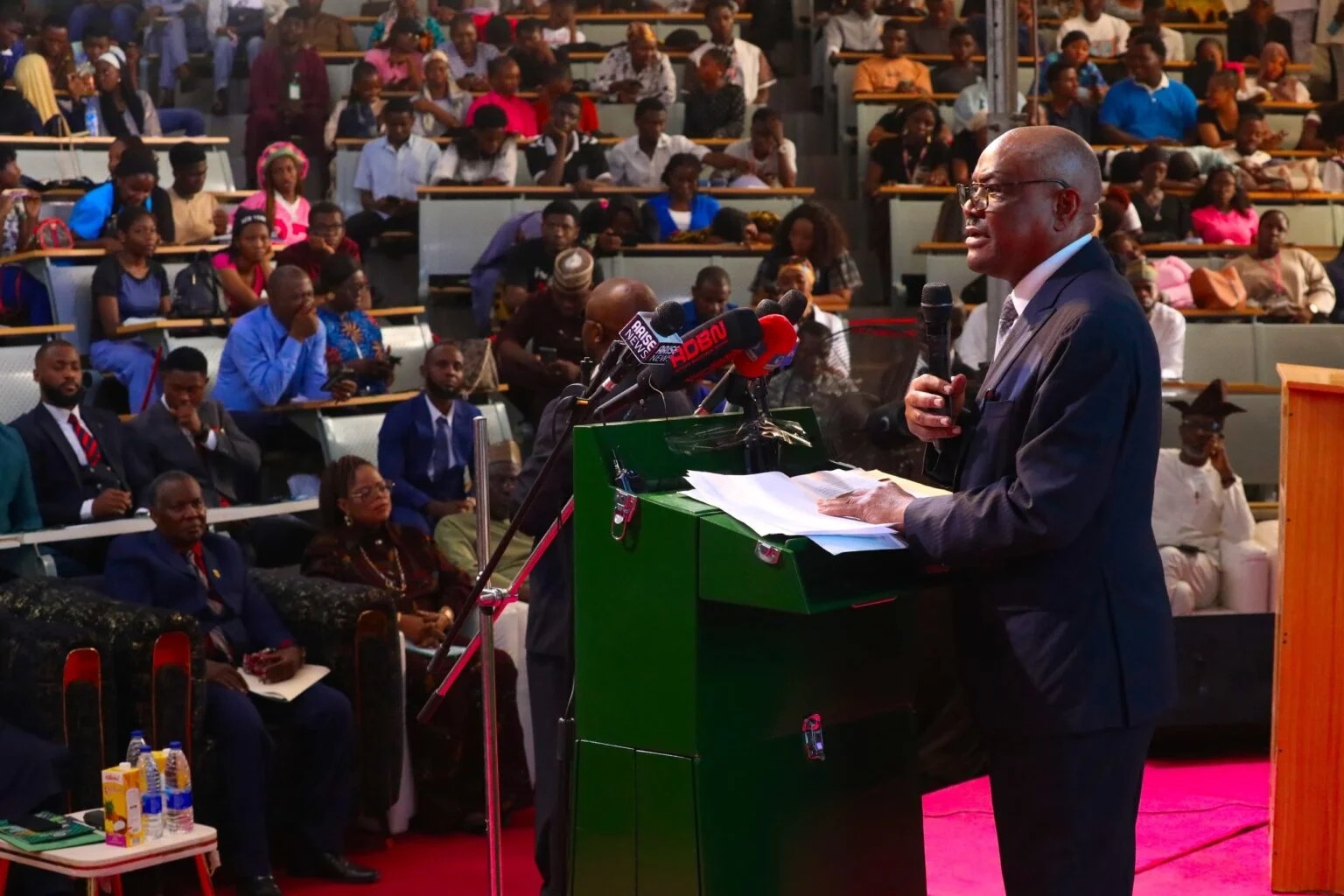
Minister of the Federal Capital Territory (FCT) Neysom Wike on Tuesday described political leadership as the bridge between democracy and development.
Wike stated this in Abuja on Tuesday, in a lecture titled, “The Impact of Political Leadership on Infrastructural Development in Nigeria: Between Dividends of Democracy and Good Governance.”
The minister presented the lecture at the 2026 Annual Distinguished Personality Lecture Series, organised by the Faculty of Social Science, Yakubu Gowon University, Abuja.
He argued that the most persistent obstacle to development was not the absence of ideas or resources, but the scourge of poor and mediocre leadership.
Wike argued that leadership has emerged from self-serving arrangements, detached from national vision, public interest, and developmental purpose.
According to him, the consequences have been predictable: a succession of leaders lacking preparation, courage, patriotism, and character.
“It is therefore unsurprising that Nigeria has spent decades struggling with issues that should be foundational – basic infrastructure, primary healthcare, effective democratic and judicial institutions, and a functional economy.
“These are not failures of imagination or policy design; they are failures of leadership.
“Institutions matter, policies matter, and resources matter, but leadership ultimately determines whether they function or fail.
“Nations are not built by resources alone; they are built by the quality of leadership that gives direction, coherence, and purpose to those resources.
“Political leadership, in this sense, is the decisive bridge between democratic ideals and developmental realities.”
He said that democracy promises participation, accountability, and representation, adding, however, that without purposeful leadership, these promises remain abstract.
He pointed out that development does not occur by accident, adding that infrastructural growth, social inclusion, and economic transformation are outcomes of deliberate vision, disciplined execution, and political courage.
According to him, where leadership is transactional, infrastructure stagnates, and institutions decay, but where leadership is decisive and purposeful, infrastructure becomes a catalyst for growth, confidence, and national cohesion.
“Nigeria’s development challenges, therefore, are not primarily a deficit of ideas, plans, or capacity. More often, they reflect failures of vision, courage, and prioritisation.
“Infrastructure suffers when politics is divorced from ideology, when power is pursued as an end rather than a responsibility, and when short-term political gain is preferred to long-term public interest.
“True political leadership demands difficult choices: choosing systems over personalities, service over self, accountability over convenience, and national interest over narrow advantage.
“It is only through such leadership that democracy moves beyond promise to performance, and development becomes the lived experience of the people rather than a distant aspiration.”
Wike further said that without infrastructure, development stalls; with it, progress becomes not only possible but inevitable.
He added that where infrastructure was transparently planned and faithfully executed, it builds trust between the state and the people.
He, however, said that where infrastructure was neglected, politicised, or abandoned, it deepens alienation and fuels cynicism.
He said that the dividends of democracy were not speeches or promises; they must be felt daily by citizens in visible, functional, and enduring ways.
“In this regard, infrastructure is the point at which democracy is tested, and governance is authenticated.
“The rapid transformation of Abuja under my watch stands as compelling evidence of this philosophy in action.
“In less than three years, the FCT has accelerated toward the standards of a modern city befitting a great nation.
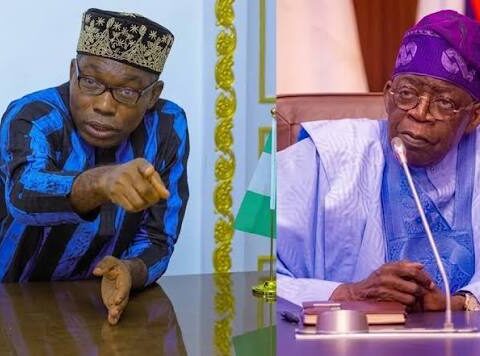
“This progress reflects not chance but commitment, made possible by the unwavering support and leadership of President Bola Tinubu, GCFR, and increasingly affirmed by both local commentators and international observers,” he said.