The Rivers State House of Assembly on Thursday initiated impeachment proceedings against Governor Siminalayi Fubara and his Deputy, Prof. Ngozi Nma Odu, citing alleged gross misconduct, including the failure to present the 2026 appropriation bill to the legislature.
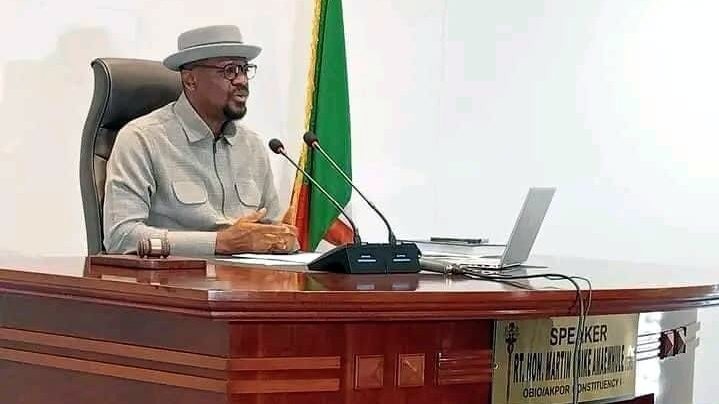
The Assembly, presided over by Speaker Rt. Hon. Martin Amaewhule, said the action followed what lawmakers described as the governor’s continued refusal to present the state budget and to engage the legislature in the budgeting process. According to the House, the alleged conduct violates constitutional provisions and qualifies as grounds for impeachment.
The process began with a motion moved by the Deputy Speaker, Hon. Dumle Maol, and seconded by Hon. Silvernus Nwankwo. Subsequently, the Majority Leader, Hon. Major Jack, formally read the notice of allegations against the governor in line with Section 188 of the 1999 Constitution.
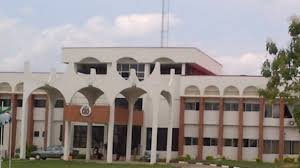
In the notice, the Assembly accused Governor Fubara of several acts of gross misconduct, including the demolition of the Assembly complex, extra-budgetary expenditure, withholding funds allocated to the Assembly Service Commission, and failure to comply with Supreme Court judgments affirming the financial autonomy of the legislature.
A separate notice of gross misconduct was also presented against the Deputy Governor by the Deputy Leader of the House, Hon. Linda Stewart. The allegations against Prof. Odu include unconstitutional expenditure of public funds, obstructing the Assembly from performing its constitutional functions, allegedly facilitating the occupation of government offices by individuals not screened by the House, seeking budget approvals from bodies other than the Rivers State House of Assembly, and the seizure of salaries and allowances belonging to the Assembly and its Service Commission.
Addressing lawmakers, Speaker Amaewhule said the allegations against both officials were largely centred on budgetary issues and spending outside the state’s appropriation law.
“We must ensure that every step taken in this process is in strict compliance with the Constitution,” he said. “The substance of these allegations relates mainly to the presentation of the budget and expenditures carried out without legislative approval.”
The Speaker maintained that the governor had shown no intention of presenting the 2026 budget, arguing that the Assembly would have received it by now if that were the case. He described the absence of an appropriation bill for 2026 as unprecedented in the state’s history.
Amaewhule further alleged that even after the Assembly approved a budget in 2023, the governor allegedly disregarded the appropriation law and awarded contracts outside the approved framework. He said such actions had negatively affected governance and development in the state.
He cited what he described as the poor state of public schools, unemployment among youths, deteriorating roads, and underperforming hospitals as indicators of governance failure.
The Speaker also claimed that President Bola Tinubu had intervened on several occasions, urging the governor to resolve the issues with the legislature, but alleged that the advice was ignored.
At the close of deliberations, Amaewhule announced that the House would suspend consideration of the Medium-Term Expenditure Framework and the 2026 appropriation bill until investigations into the allegations of gross misconduct are concluded.
“The law must take its course,” he said, adding that the Assembly would not proceed with any budget-related processes until the ongoing investigation is completed.
The House thereafter adjourned proceedings on the impeachment process to January 15.