By Emmanuel Gandu
EXCERPTS “The Middle Belt Movement was formed in 1949, and it was called the ‘Non – Muslim League’. It was a reflection of the shared perception on the part of the Middle Belters that what they had in common was a desire to be free of the Muslim North political control that was to be implemented throughout the Northern Region as a prelude to decolonization”.
“Several decades after amalgamation in 1914 this hostility, fears of, as well as the situation to be free seems to be as elusive as a mirage to the Middle Belt leaves much to be desired” “Regrettably, successive governments especially the arrival of Muhammadu Buhari’s and Nasir El Rufai’s policies from 2015 – 2023 unfortunately eroded the little gains the region had garnered over the years.
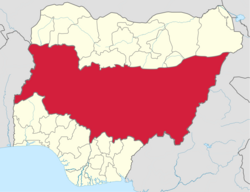
This had led to catastrophic rubble thereby deliberately abandoned and stripped these nationalities stark naked in the public square”] INTRODUCTION The Middle Belt refers to Nigeria’s central states of Benue, Kogi, Kwara, Plateau, Nasarawa, Bauchi, Gombe, Southern Kaduna, Adamawa, southern Yobe, southern Borno, Taraba, southern kebbi, and southern Niger. They have a unique culture, and are predominantly Christians.
POLITICAL CONSCIOUSNESS IN THE MIDDLE BELT
1946 – 1966 Starting from 1946, Politics generated many constitutional changes. The Richard’s Constitution of 1946 divided Nigeria into three regions of Northern, Western, and Eastern. Northern Nigeria was given 2 legislative houses – House of Chiefs and the House of Assembly. The National House of Representatives (Lower Chamber) was created in Lagos, where each of the 3 regions would send its own representative.
Curiously, both the House of Chiefs (Upper Chambers) and the House of Representatives was skewed in favour of the Hausa Fulani. For example, out of a total of 51members of the Northern House of Chiefs only 9 were Christians representing the entire Middle Belt, with the Chief of Kagoro Mallam Gwamna Awan coming a distant 47 in that list.
Top on this list is the Sultan of Sokoto, Followed by the Shehu of Borno, Emir of Gwandu, and Emir of Kano in that order. Realising that the colonial administration had concentrated political and economic power in the hands of the Emirs, agitations began to emerge from the minority tribes in the Middle Belt for self determination.
POLITICAL INTERVENTION OF THE CHIEF OF KAGORO
As a member of the Northern House of Chiefs, the Chief of Kagoro Mallam Gwamna Awan intervened at several fronts to position and reposition the Middle Belt strategically in the political affairs of Northern Nigeria despite the obvious odds. Sadly enough, politics in Nigeria at the time saw the emergence of political parties on regional basis. While the Action Group (AG) was for the Western region, the NCNC was for the Eastern Region, and the NPC and NEPU were for the Northern Region.
This development left the Middle Belt sidelined without a political party of its own. Realising this Middle Belt disadvantages, Gwamna Awan invited people like Rev. Bagaiya Nwaya, Haruna Kwoi, Aliedeno, Achimugu, Pastor David Lot, Joseph Tarkar, for talks where he told them to “see the handwriting on the political wall.” In his address where he said – “There is the need for us to form a forum through which the Middle Belt would participate in politics otherwise by the time other areas would be enjoying the benefits of politics, this area will not have such benefits. This dream can only be realised if we wake up and move alongside with other areas” – Gandu (2005).
At the end of this consultation, the Middle Belt Forum (NBF) was formed. It was this MBF that later gave birth to the United Middle Belt Congress (UMBC) as a political party for the Middle Belt. Having achieved his objectives, Gwamna Awan quitted political activism to face his Royal duties.
FORMATION OF THE MIDDLE BELT MOVEMENT
The Middle Belt Movement was formed in 1949, and it was initially called the “Non – Muslim League”. It was a reflection of the shared perception on the part of the Middle Belters that what they had in common – a desire to be free of the Muslim Political Control that was to be implemented throughout the Northern Region as a prelude to decolonization.
WHY THE MIDDLE BELT REGION WAS NOT CREATED
The struggle for the creation of the Middle Belt died such a political death because of some of the following reasons :
(1) The power and Influence of the colonial administration in union with the Hausa north was opposed to any balkanization of the Northern Region.
(2) The Hausa Fulani North was not in favour of allowing the people of the Middle Belt to be autonomous.
(3) They wanted to have a North that will be bigger in population and land mass than the Western and Eastern regions put together, for the purposes of domination.
(4) There was no cohesion in the struggle among the various tribes of the Middle Belt.
(5) The strength of the United Middle Belt Congress (UMBC) was weakened by factions. While the Plateau group led by Pastor David Lot and Patrick Dokotry, and the Southern Zaria group chose to align with the Northern People’s Congress, the other faction of the UMBC was reduced to a tribal party for the Tiv under the leadership of Joseph Tarkar.
THE CREATION OF THE MID WEST REGION
Meanwhile, the Mid Western Region was carved out of, and formed from the Benin and Delta provinces of the Western Region in 1963. This new region was the only constitutionally created region in the country and lasted until 1966 when it was renamed a province, and became the Mid – Western State in 1967, then Bendel in 1976, until 1991 when it was divided into Edo State and Delta State.
FACTORS THAT ENCOURAGED THE HOSTILE NATURE OF THE HAUSA FULANI NORTH TOWARDS THE MIDDLE BELT
(1) The Colonial legacy was in itself founded upon the principle of social injustice, differential and preferential treatment. This was comfortably adopted by the Northern Hausa Fulani in defining the role of ethnic, economic, religious and political administration for their exclusive dominance of multi ethnic, multi cultural, and multi religious Northern Nigeria.
(2) The Hausa Fulani have a political system that has a centralized authority, administrative machinery, Political machinery, judicial machinery, and a functional military hegemony of succession. This binds them into a formidable entity. In contrast, the Middle Belt nationalities are a conglomerate of diverse tribes who pays allegiance first to their various tribes and interests before the common good.
(3 This is the catalyst that have sustained the Sardauna legacy by ensuring political dominance, economic security, military control, and a veritable social cohesion for the Hausa Fulani agenda from generation to generation.
(4) The North was hostile to the Middle Belt Region by amongst several others, denying and alienating them from any active political role or participation within the colonial hierarchical structure of the provincial, regional, and national levels.
(5) Regrettably, the Middle Belt was grossly in lack of these cherished ideals that the Hausa Fulani had, hence the bane of developmental projects for the Middle Belt. As the struggle for the realisation of a Middle Belt Region intensifies, it is hoped that this century-old aspiration will be achieved.
Follow us on all social media platforms @dailyquery for news and analyses around the globe.