By Valentine Obienyem
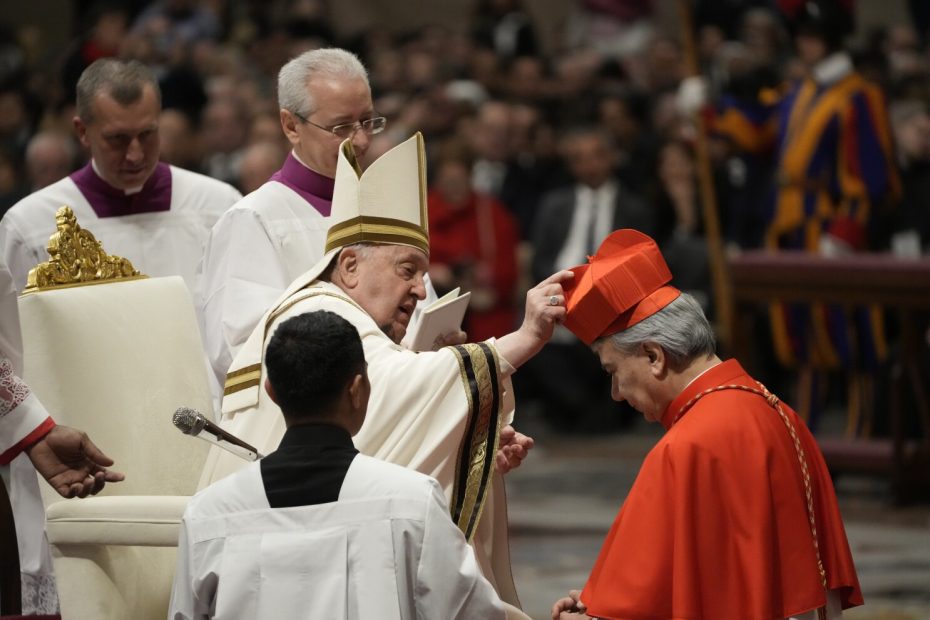
WHEN a Bishop or Cardinal attends an event accompanied by his Vicar General, Chancellor, Secretary, and other key aides, it is fair to say that he has come with his entire household. That was exactly what we witnessed today. His Eminence, Peter Cardinal Okpaleke, came to St. Dominic Savio Seminary, Akpu, for the Diocesan Youth Day celebration with his full team – the Vicar General, Rev. Fr. Prof. Anthony Chiegboka; the Chancellor, Rev. Fr. Dr. Law Nwankwo; his Secretary, Rev. Fr. John Uzoigwe; and several others.
This strong presence shows how deeply the Cardinal values events involving young people. His homily today reaffirmed that commitment. I am reminded of an article I read many years ago by Mr. Hyginus Aghaulo (now a priest), in which he likened youth to a destructive flood that needs proper guidance. “Build culverts and dykes,” he wrote, “and you will have tamed the destructiveness of the flood.” He went on to explain that when properly channelled, that same water could be used for irrigation and other productive purposes.
This analogy beautifully illustrates that when the energy, passion, and creativity of the youth are rightly directed, they become powerful forces for growth, renewal, and progress. The Cardinal understands this very well.
Since the central theme of today’s Gospel was prayer, the Cardinal spoke extensively on the subject – and, importantly, from the perspective of the youth, his primary audience. This, indeed, is the mark of good homiletics: the ability to adapt one’s message to the listeners.
In the words of the Cardinal, “When we stop praying, our spiritual life dries up because it means total withdrawal from God.” He explained that prayer sustains our relationship with God, and without it, we lose the very essence of our faith.
After explaining the nature of prayer, he identified several obstacles that often hinder it. The first, he said, is a wrong understanding of God. Many see God as a stern judge who is constantly noting our sins, waiting to condemn us on the day of judgment. This, he clarified, is an error. Rather, we must see God as a compassionate, forgiving, and loving Father whose mercy invites us into communion, not fear.
Another obstacle, he noted, is distraction. Today’s youth face numerous distractions – dreams, fantasies, and especially the allure of the internet. He warned against indulgences such as pornography and the endless pursuit of “likes” on social media. Yet, he also reminded them that the internet can serve God’s purpose, citing the example of St. Carlo Acutis, the teenage saint who used technology to promote Eucharistic devotion before dying at age fifteen.
The Cardinal further mentioned disappointment and despair as major hindrances to prayer. To illustrate, he narrated the story of Edith, a young girl who lost both parents despite her fervent prayers. Though life under her uncle was difficult, she did not lose faith. She persevered in prayer, realizing that God never gave up on her.
The Cardinal then theologically linked today’s readings to those of last Sunday, showing that both addressed different dimensions of prayer. He reminded the faithful to avoid the arrogance of the Pharisees. He also advised us never to disconnect prayer from genuine effort. Referring to Moses’ raised hands in the battle against the Amalekites, he noted that even when they realized that victory came through Moses’ uplifted arms, they still worked hard to keep his hands raised – a lesson that prayer requires cooperation with grace. He crowned it all with the age-old biblical truth: “Prayer without works is dead.”
During the homily, he asked how many people still support the “Prayer for Nigeria in Distress.” Many murmured that it should be stopped since “it has not worked.” Smiling, the Cardinal replied that perhaps the prayer has worked – for without it, Nigeria’s condition might have been worse. He reminded everyone that God is not a vending machine for answers; sometimes, He says no to prevent greater harm that a yes might cause.
As he concluded, the Cardinal gave what I consider his most valuable advice – one anchored on the truth that God works with us, not for us. He lamented that many young people bring problems upon themselves and then run from one “man of God” to another seeking quick solutions, often through anointed oils and rituals.
He reminded the youths that through Baptism, each of us has already been commissioned and empowered with sufficient grace to run the race of salvation. With the right disposition, he said, we can all echo the words of St. Paul to Timothy: “I have fought the good fight; I have finished the race; I have kept the faith.” The Mass is over, we have all moved to the arena for the event proper.
The march past has just concluded. The cooking competition, hairdressing competition, and the contest for the biggest yam harvest – being coordinated by the one I fondly call Agricola, Rev. Fr. Philip Okoye who already spoke on how to plant yam twice in a year – are now in progress. It’s an exciting array of events. By and by, I shall inform you more and better.
Kindly note that Prof. Patrick Obi and I are representing Mr. Peter Obi at the event. Like the Cardinal, he understands the needs of the youth and always delights in identifying with them.