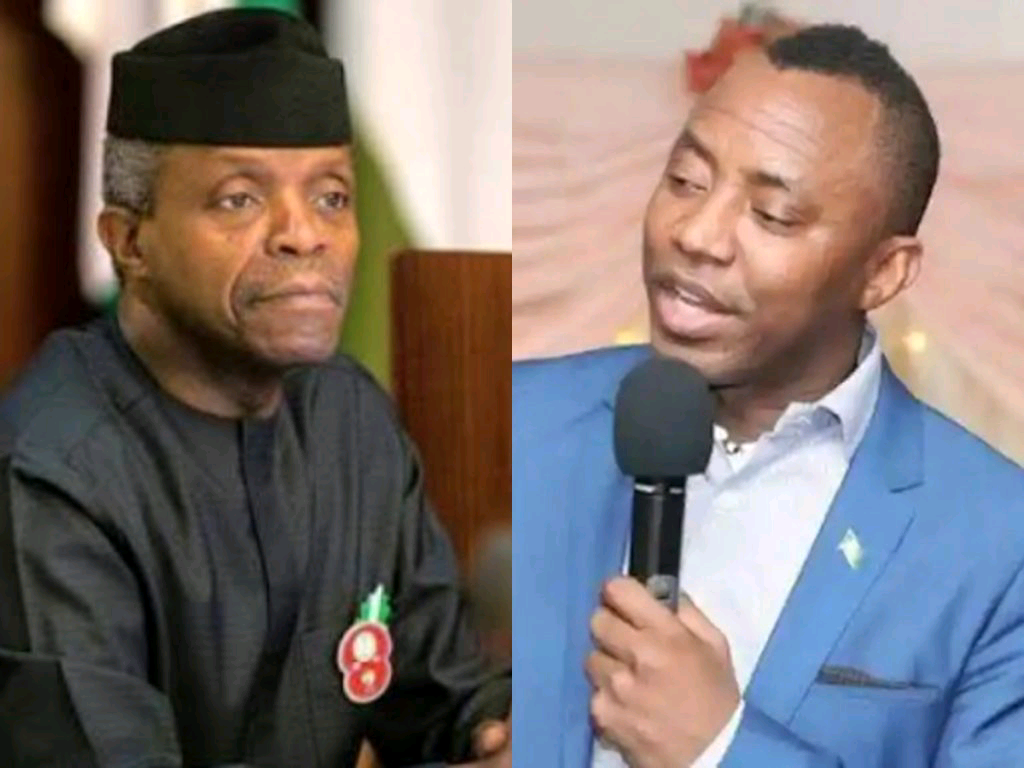
A behind-the-scenes clash reportedly erupted between former Vice President Yemi Osinbajo and the Department of State Services (DSS) during the controversial detention of Sahara Reporters publisher, Omoyele Sowore, in 2019.
Sowore, who spearheaded the #RevolutionNow protests against the administration of President Muhammadu Buhari, was arrested by the DSS in August 2019 on allegations of treasonable felony and plots to destabilize the country. Despite court orders granting him bail, the secret police repeatedly refused to release him, sparking widespread outrage from civil society groups, international rights organizations, and the legal community.
Sources familiar with the matter revealed that Osinbajo, himself a professor of law and Senior Advocate of Nigeria (SAN), was uncomfortable with the open disregard for judicial pronouncements. He was said to have privately engaged with the DSS leadership, stressing that the agency’s defiance of the court undermined Nigeria’s democratic credentials and painted the administration in a negative light before the international community.
However, the DSS reportedly pushed back, insisting that Sowore’s activism posed a “clear and present danger” to national security. The agency maintained that releasing him could embolden anti-government protests and trigger unrest across major cities.
The stalemate allegedly created friction between the then Vice President and the DSS hierarchy, as Osinbajo pressed for adherence to the rule of law while the security operatives stood their ground on national security concerns.
Observers at the time noted that the episode highlighted the internal tensions within the Buhari government, with critics accusing the administration of silencing dissent, while defenders justified the detention as a necessary step to maintain stability.
Though Sowore was eventually released after months in custody, the incident left lingering questions about the balance of power between Nigeria’s executive arm, the judiciary, and the security services. It also amplified debates on whether the country’s democratic institutions were strong enough to withstand authoritarian impulses.
Follow us on all social media platforms @dailyquery for news and analyses around the globe.