THERE are photographs that capture a moment.
And then there are photographs that escape their moment and begin a life of their own.
In June 1985, a pair of green eyes appeared on the cover of National Geographic magazine and stared into the world.
Millions saw them. Millions remembered them. The image travelled farther than most human beings ever will. It crossed oceans, borders, languages, religions, and ideologies. It hung on classroom walls. It appeared in newspapers and documentaries. It became one of the most recognisable photographs ever taken.
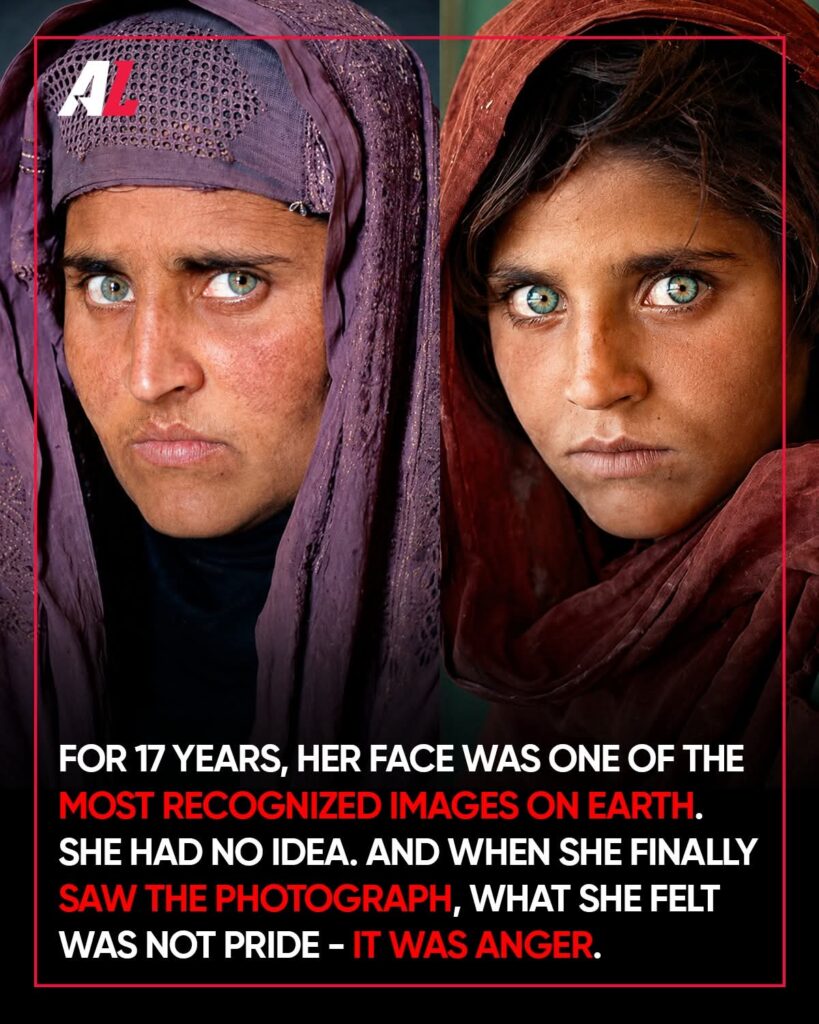
The world knew her as the Afghan Girl.
The world did not know her name.
For 17 years, neither did she know that the world knew her.
Long before she became a photograph, she was simply a child in Afghanistan.
She was born around 1972 in a small village in eastern Afghanistan. Then history arrived.
In December 1979, the Soviet Union invaded Afghanistan. Villages became battlefields. Mountains became escape routes. Families became refugees. Somewhere in that violence, Sharbat Gula lost her parents.
Their village was destroyed. Still a young girl, she joined her siblings and grandmother and began walking toward Pakistan across the Hindu Kush mountains.
There is something astonishing about that journey. We often talk about refugees as statistics, as waves, as crises, as numbers in reports. But every refugee crisis is really a collection of individual footsteps.
Somewhere among those thousands of footsteps crossing mountains and borders was a little girl who had no idea she was walking toward immortality.
The family eventually arrived at the Nasir Bagh refugee camp near Peshawar.
It was there, in December 1984, that an American photographer named Steve McCurry entered a makeshift school tent.
Inside sat a twelve-year-old girl.
When the camera was pointed at her, she reportedly raised her hands to cover her face. Her teacher told her to lower them. She obeyed.
The shutter clicked.
The entire encounter lasted seconds.
That second would outlive governments.
It would outlive wars.
It would outlive empires.
The photograph appeared on the cover of National Geographic six months later. The caption did not identify her. The magazine simply called her Afghan Girl.
The image exploded across the world.
The irony is almost unbearable.
The photograph became famous because people saw strength in her eyes. Yet no one knew where she was. No one knew her name. No one knew whether she was alive.
The picture travelled everywhere.
The girl remained trapped in the geography of war.
Years passed.
Then decades.
The Soviet Union collapsed. Governments rose and fell. New wars replaced old wars. The photograph continued its journey around the globe while Sharbat Gula continued her own very different journey through refugee camps, villages and uncertainty.
She married a baker named Rahmat Gul. She raised children. She struggled through the ordinary hardships of life in a region where history rarely leaves people alone for very long.
All the while, her face was becoming one of the most recognisable images in human history.
And she had absolutely no idea.
Think about that for a moment.
Movie stars know they are famous.
Politicians know they are famous.
Athletes know they are famous.
Sharbat Gula was famous in a way that few human beings have ever been famous, yet she remained completely unaware of it.
A photograph had become more famous than the person inside it.
In 2002, a National Geographic team finally found her in a remote part of Afghanistan.
By then, identifying her required extraordinary technology. Experts examined her eyes. Analysts compared facial structures. Investigators conducted forensic reviews. An entire apparatus was assembled to prove that the woman standing before them was the same girl from the cover.
The world had no trouble recognising the photograph.
Recognising the human being proved much harder.
When she was finally shown the image, it was the first time she had ever seen it.
Imagine that moment.
Imagine discovering that for 17 years strangers on every continent had looked into your eyes.
Imagine learning that your face had become a symbol before you even knew the symbol existed.
Imagine discovering that your image had travelled the world while you spent those same years trying simply to survive.
Most people spend their lives hoping to be remembered.
Sharbat Gula spent nearly two decades not knowing she already was.
Yet the story did not end there.
In 2016, Pakistan arrested and deported her.
The country that had sheltered her for decades suddenly became another place she had to leave.
Five years later, Afghanistan itself became unsafe again as the Taliban returned to power.
Once more she found herself caught in the currents of history.
Once more she had to move.
Once more she became a refugee.
In November 2021, Italy evacuated her and granted her refuge.
By then she was no longer the girl from the magazine cover.
She was a grandmother.
A survivor.
A woman who had spent more than four decades being carried from one chapter of history to another.
The photograph lasted a second.
The displacement lasted a lifetime.
That may be the most important thing about Sharbat Gula’s story.
We often celebrate iconic images because they freeze history.
What we forget is that the people inside those images do not remain frozen. They keep living after the camera leaves. They keep suffering. They keep aging. They keep carrying burdens that the photograph cannot show.
The world remembers the green eyes.
It should also remember the mountains she crossed, the parents she lost, the countries she fled, the borders that rejected her and the life she spent rebuilding again and again.
Because the most remarkable thing about Sharbat Gula is not that she became one of the most famous photographs ever taken.
It is that after everything history did to her, she remained standing.
A photograph can become a citizen of every country on Earth.
The person inside it can still spend a lifetime searching for a home.
Shaakaa can be reached on: shaakaastephanie@yahoo.com