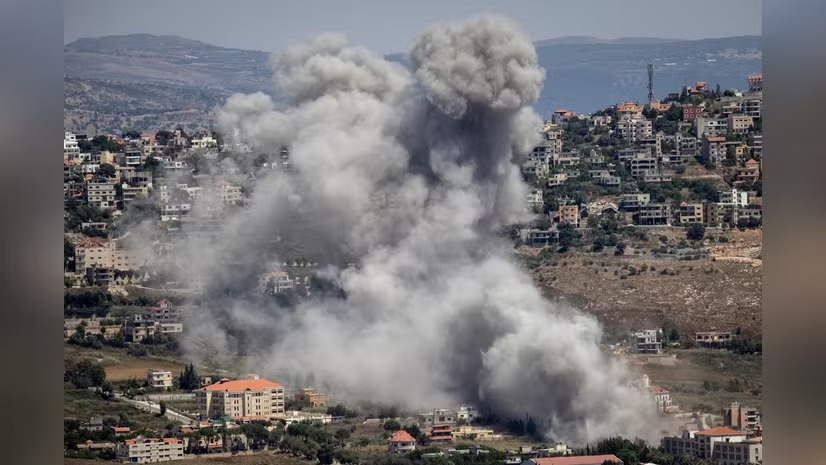
The conflict between Israel and Iran escalated dramatically on Monday as Israel launched a fresh wave of airstrikes on Iranian targets, sparking explosions across Tehran and raising fears of a wider regional war that is already shaking the global economy.
Iranian media reported multiple explosions in the capital city, Tehran, as air defense systems were activated in response to incoming strikes. The latest bombardment is part of an ongoing military campaign that began weeks ago and has now drawn in several countries across the Middle East, turning the confrontation into one of the most dangerous conflicts in recent decades.
In response to the strikes, Iran issued strong warnings, threatening retaliation against critical infrastructure across the Middle East. The threat quickly became reality as Saudi Arabia and the United Arab Emirates confirmed that they had intercepted missiles and drones targeting key installations within their territories. The attacks, believed to have been launched by Iranian forces or their regional allies, were aimed at energy facilities and strategic locations, further escalating tensions across the Gulf region.
The war, now in its fourth week, has severely damaged the global energy market. According to the International Energy Agency, at least 40 major energy assets across the oil- and gas-producing region have been severely or very severely damaged. These include oil fields, pipelines, refineries, export terminals, and storage facilities. The destruction has significantly reduced oil and gas output from the region, sending shockwaves through global markets and triggering what analysts are calling the worst energy crisis in decades.
Oil prices have surged sharply as supply fears grow, with many countries already experiencing rising fuel costs, electricity shortages, and inflation. Developing countries are expected to be the hardest hit, as higher energy prices will increase transportation costs, food prices, and the overall cost of living.
Iran has responded to the ongoing attacks by launching missiles and drones toward Israel and across the Gulf in recent weeks. Some of these strikes have reportedly hit energy facilities and even targeted United States embassies in the region, raising fears that the conflict could expand into a direct confrontation involving more global powers.
One of the most serious developments in the conflict has been Iran’s move to restrict traffic in the Strait of Hormuz, one of the most important waterways in the world. About one-fifth of the world’s crude oil passes through this narrow route. Any disruption there immediately affects global oil supply and prices. Iran’s actions in the strait have slowed down shipping traffic, causing delays and forcing some oil tankers to reroute, further tightening global supply.
World leaders have expressed deep concern over the situation, calling for immediate ceasefire negotiations to prevent further destruction and economic damage. Many fear that if the conflict continues, it could lead to a global recession due to rising energy costs and disrupted trade routes.
Security analysts warn that the longer the war continues, the greater the risk that more countries will be drawn into the conflict, either directly or indirectly. The Middle East remains one of the world’s most important energy hubs, and any prolonged conflict in the region will continue to affect economies across Europe, Asia, Africa, and the Americas.
As explosions continue to rock cities and missiles fly across borders, ordinary citizens across the region are living in fear, while the rest of the world watches nervously as the conflict threatens not just regional stability, but the global economy itself.
For now, the world waits anxiously to see whether diplomacy can bring the fighting to an end, or whether the war will continue to expand, deepening the energy crisis and pushing the world further into uncertainty.