The World Bank Group, global partners and countries on Saturday announced continued progress toward the goal of delivering affordable and quality health services to 1.5 billion people by 2030.
A statement by the World Bank Online Media Briefing Centre said 15 countries introduced National Health Compacts, outlining practical five-year reforms aimed to expand primary healthcare, improve affordability and support job-rich economic growth.
The statement said that since the goal was set in April 2024, the Bank and partners had supported countries to provide quality and affordable care to 375 million people.
It said work was underway with roughly 45 countries to scale proven primary care approaches that strengthen health outcomes while generating employment across health workforces, local supply chains and supporting industries.
“This progress comes as governments confront aging populations, rising chronic disease, and financial pressures.”
The statement said the 2025 Global Monitoring Report released at the Tokyo Universal Health Coverage (UHC) High-Level Forum showed that 4.6 billion people globally still lacked access to essential health services.
It said the report also revealed that 2.1 billion people faced financial hardship due to health expenses.
“ These challenges underscored the need for long-term, coordinated reforms that help countries build more resilient and equitable health systems.”
World Bank Group President, Ajay Banga, is quoted in the statement as saying, “strong primary healthcare systems are central to both health protection and economic growth.
“Strong primary health systems do more than safeguard health, they support jobs and economic opportunity.
“Countries are stepping forward with clear priorities, and we are working alongside them to deliver practical solutions at scale.”
According to the statement, the 15 countries that introduced National Health Compacts at the forum in Tokyo are Bangladesh, Egypt, Ethiopia, Fiji, Indonesia, Mexico, Morocco, Nigeria, Philippines, Sierra Leone, Syria, Tajikistan, Uganda, Uzbekistan and Zambia.
The statement said the compacts, which were endorsed at the highest levels of government, outlined five-year, country-led reforms aimed at expanding the reach and quality of primary healthcare, improving financial protection and strengthening health workforces.
“They also align Health and Finance Ministries behind measurable targets, provide a roadmap for coordinated action and guide support from development partners across country-led priorities.”
It said key commitments by countries include mobilising new financing, growing and digitally enabling their health workforce, modernising health facilities, expanding insurance coverage, and digitising service delivery.
“For example, in terms of boosting regional manufacturing of health products and technologies, Nigeria will train 10,000 pharmaceutical and biotech professionals and establish Centres of Excellence.
“Nigeria will also provide tax incentives to expand local production of vaccines, medicines, diagnostic and health technologies, strengthen regulatory agencies through digital systems and global alignment. ”
It said that to help countries advance their compacts and broader reforms, the World Bank Group, Gavi and the Global Fund announced aligned financing, including two billion dollars in co-financing with each institution.
The statement added that philanthropic partners working through the Global Financing Facility and the Health Systems Transformation and Resilience Fund aim to mobilise up to 410 million dollars for critical health areas.
It said Seed Global Health was working with compact countries to build capacity and provide support for assessment, planning and policy development, with a focus on advanced health workforce development.
The statement said Japan, the United Kingdom and other partners were also providing technical assistance.
“Japan, WHO and the World Bank jointly launched a Universal Health Coverage Knowledge Hub to support countries with practical evidence-based solutions and peer learning.”
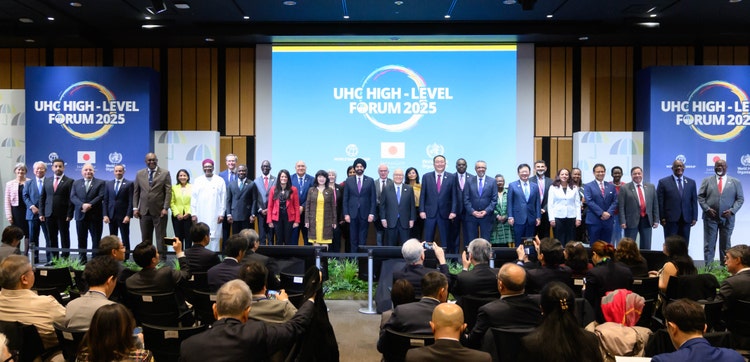
It said the UHC High-Level Forum, co-hosted by the Japanese Government, the WHO, and the World Bank Group, brought together ministers of health and finance, business leaders, philanthropies, global health agencies and civil society.