The greatest tragedy of modern Nigeria is not a lack of brilliance, it is the systematic triumph of mediocrity over excellence, weaponised at the very summit of state power.
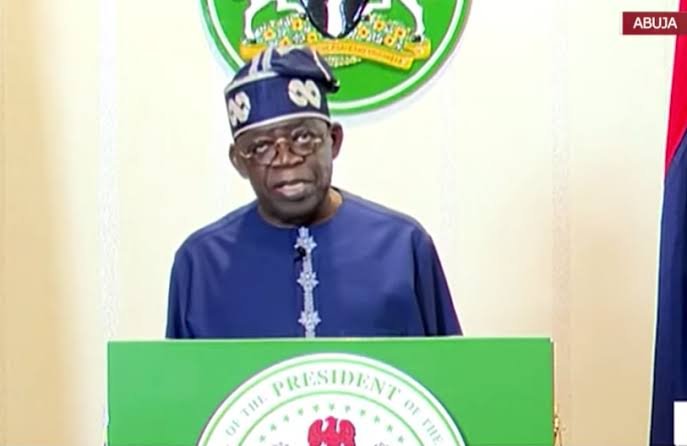
Step outside the borders of the country, and Nigerians are shaping global industries, leading scientific breakthroughs, and driving innovation across every major continent. Yet, when we look toward Aso Rock, we witness a surreal national horror.
A seat of supreme authority transformed into a sprawling house of corruption, institutional commotion, and a dizzying circus of fake agencies designed solely to loot the treasury and service an insatiable cabal.
This is the ultimate insult to a brilliant population, watching our collective destiny hijacked by political inferiors whose only proven talent is turning statecraft into a criminal enterprise.
If you want to understand this decay, you must look at how Aso Rock currently operates as the epicentre of administrative chaos.
Instead of a rigorous engine room for visionary macroeconomic policy, the presidency has devolved into a clearinghouse of patronage, where governance is out-sourced to competing factions and redundant structures.
We live in a bizarre administrative ecosystem where functional ministries are sidelined to make room for mushrooming special advisers, overlapping committees, and fake agencies created out of thin air simply to carve out fresh budgetary portfolios for political loyalists.
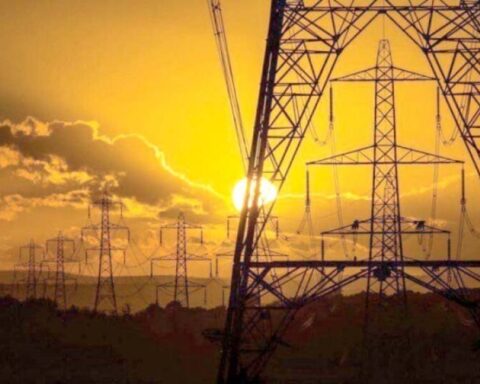
Billions are funneled into amorphous interventions and phantom parastatals while basic infrastructure rots, inflation strangles the citizenry, and the national grid collapses with clockwork regularity.
It is a government by motion without movement,a frantic choreography of commotion designed to mask the plunder taking place behind closed doors.
The mechanics that put this crop of rulers in power are entirely decoupled from merit, vision, or public utility.
Political parties do not function as ideological vehicles, they operate as insular cartels engineered for resource extraction and elite self-preservation.
Within these closed ecosystems, leadership selection is dictated by financial war chests, godfatherism, and primordial identity politics. Politics has been commercialized to the point where running for high office requires staggering sums of capital, pricing out the best minds who refuse to mortgage their integrity to dark financiers.
When elections become auctions, the highest bidder wins, and the nation loses.
A brilliant economist, a meticulous public administrator, or a transformative technocrat stands zero chance against a well-funded machine designed to manufacture consent through coercion and grand deception.
This structural reality forces a profound estrangement between Nigeria’s intellectual class and the corridors of power.
While the country’s brightest minds retreat into academia, private enterprise, professional practice, or international migration to escape systemic frustration, Aso Rock remains a heavily guarded sanctuary for incompetence and recycled greed.
Those who view power as an instrument of public service find themselves repelled by the toxic, transactional nature of the regime.
Governance is ceded to individuals whose primary qualification is their ruthlessness in navigating party machinery and their willingness to serve as custodians for entrenched elite interests.
The result is a perpetual cycle of half-baked palliatives, disastrous currency experiments, and an institutional incapacity to address deep-seated structural challenges like banditry, food insecurity, and crushing poverty.
Compounding this leadership bottleneck is the cynical weaponisation of primordial divisions by the ruling class. Whenever systemic failure threatens to provoke a unified, cross-ethnic demand for accountability, the machinery of state routinely retreats to ethnic, religious, and regional fault lines.
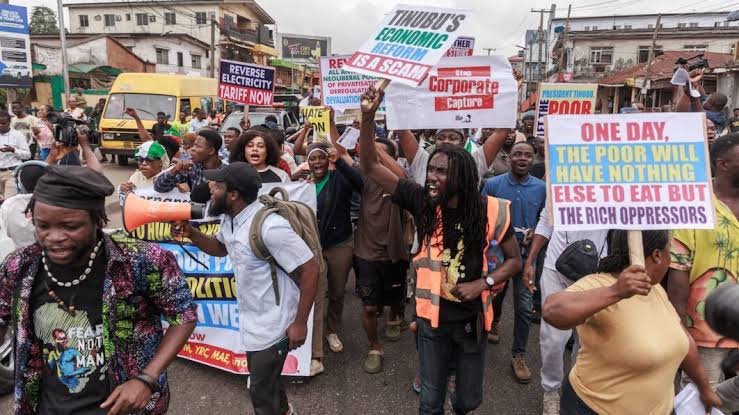
Citizens are kept fractured and suspicious of one another, manipulated into viewing governance as a zero-sum game of survival rather than a shared contract for collective progress. Under this psychological siege, the populace is forced to navigate an economy engineered to punish the vulnerable while enriching the politically connected.
The tragedy of this pattern is that it pits citizens against their own interests, ensuring that bad leadership remains insulated from democratic sanction behind walls of identity politics and state-sponsored propaganda.
The consequences of turning Aso Rock into a monument of corruption and commotion are written in the blood and tears of everyday Nigerians. A nation blessed with boundless youth energy, immense agricultural potential, and vast mineral wealth struggles perpetually with basic survival metrics because policy formulation is entirely divorced from empirical reality.
While the world transitions rapidly into knowledge-based digital economies, leadership recruitment processes in the country remain tethered to archaic patronage networks that reward absolute loyalty over competence. We are a country of world-class architects living inside a collapsing house built by third-rate squatters.
The raw materials of greatness are already here, throbbing in our universities, driving foreign economies, and writing brilliant chapters across the globe.
When we stop trading our collective future for a plate of ethnic porridge and start demanding leaders who can actually think beyond the next political heist, or we keep watching the brightest people on earth get bossed around by their intellectual inferiors.
Excellence can no longer be something we only afford ourselves in private or export to build other nations. When we finally summon the collective courage to evict the mediocrity squatting in our corridors of power and drag our governance into the light of our true capacity, Aso Rock will cease to be a monument to our collective humiliation.
Until then, we remain brilliant, broke, and waiting for a miracle, chanting that Naija no dey carry last while we continue to deceive ourselves.
Shaakaa can be reached on: shaakaastephanie@yahoo.com