The Independent National Electoral Commission has begun its one-hundred-day countdown to Nigeria’s 2027 general election. From this point, the election is no longer a distant event on the political calendar. It is approaching fast enough to impose a different discipline on the country: the discipline of judgment.
For three years, governments govern in the expansive territory of time. They explain, they reform, they pivot, they ask for patience, and they project their ambitions into a future that always seems safely distant. But when the clock begins ticking in double digits, the future arrives. The era of projection gives way to the era of accountability.
Governments naturally prefer to be judged by their intentions and their long-term trajectories. Citizens, however, do not live in trajectories. They live in daily arithmetic.
A family does not buy food with the promise of future macroeconomic stability. A small business owner does not power a generator with the prospect of an improved credit rating three years from now. A graduate does not pay rent with the statistical optimism of an economic forecast. A farmer cannot harvest a reform. A commuter cannot pay fares with a policy paper.
This is the uncomfortable territory into which the countdown now takes the country. The promises that once belonged to the distant future are beginning to meet the lives of the people who were asked to wait for them.
The future cannot remain a permanent promise.
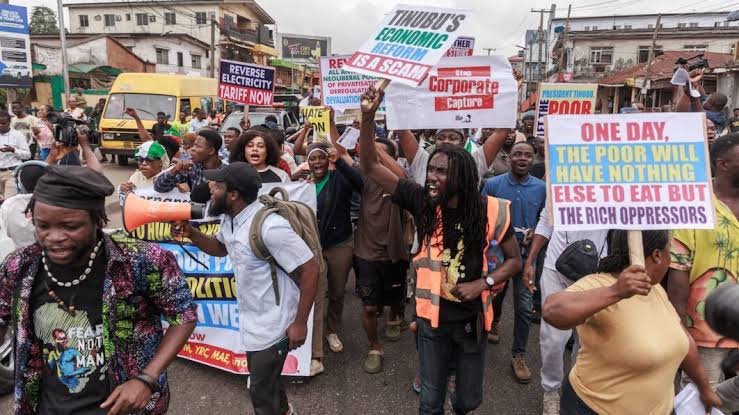
That distinction matters because Nigeria has spent much of the past three years being told that the country must endure extraordinary disruption in order to reach a more stable economic destination. Fuel subsidies were removed. The exchange-rate regime was fundamentally altered. Energy tariffs rose sharply. Businesses absorbed skyrocketing operating expenses. Households confronted a severe cost-of-living crisis that turned ordinary necessities into difficult daily calculations.
Each of these policies may be defended on economic grounds. Governments have the right to undertake difficult reforms, and serious economic problems rarely have painless solutions. But there is a point at which the defence of a reform cannot remain confined to the difficulty of making it. It must answer the more important question of what the reform has actually produced.
Removing a subsidy is a policy decision; lowering the cost of living for ordinary households is the purpose. Unifying an exchange rate is a financial mechanism; creating a predictable environment where businesses can manufacture, invest, and hire young people is the purpose. Raising state revenue is a fiscal tool; providing safer communities, better public services, and a reliable power grid is the purpose.
The instrument is not the outcome.
The danger of official rhetoric, even when delivered with genuine conviction, is that it gradually confuses the execution of a policy with the achievement of its purpose. A government can point to the political courage of what it has done without adequately demonstrating the value of what it has delivered.
Citizens are not required to grade governments for effort alone. They are entitled to ask whether their lives are becoming more secure, more productive, and more affordable.
That is why the INEC countdown is far more than a logistical exercise for electoral administrators. It is a structural mirror held up to the state. An election in a functioning democracy is not a favour granted by the political class to the population; it is a periodic contract review.
Has the cost of living improved sufficiently to justify the sacrifices demanded? Has security improved in the places where Nigerians actually live, work, travel, and farm? Has the business environment become less punishing? Has the state become more responsive, or simply more expensive?
These are not abstract questions. They are the exact terms on which government is experienced.
For decades, Nigerian elections have been reduced to the familiar mathematics of political survival: ethnicity, regional balancing, party machinery, endorsements, defections, and financial logistics. None of these realities will disappear in 2027. They will matter enormously. But beneath the machinery of campaign strategy is a far more consequential question: what actually changed in the country while the politicians were preparing to win it?
The Nigerian voter experiences government through market prices, transport fares, electricity bills, security alerts, school fees, and the availability or absence of work. The state may describe these as macroeconomic indicators; the citizen experiences them as daily survival.
That is why the coming election must demand more than another catalogue of grievances against the incumbent. The opposition cannot spend the next one hundred days merely reminding Nigerians that things are difficult. Nigerians already know. They are living the difficulty.
The opposition must tell the country what it intends to do with power: its explicit, actionable blueprints for food inflation, energy costs, exchange-rate stabilization, public debt, and the security of agricultural belts.
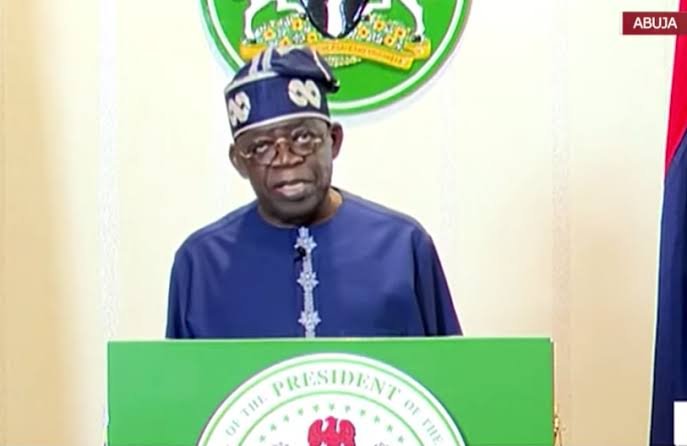
The incumbent, meanwhile, must confront the record of his own administration. He cannot ask Nigerians to evaluate a reform without also asking them to evaluate its consequences. He cannot permanently postpone the political bill for economic pain by pointing to a better tomorrow. At some point, tomorrow has to arrive.
That is what the countdown changes.
Ninety-one days are long enough for political campaigns to become louder, but short enough for the memory of the past three years to remain fresh. The decisions made since 2023 are still visible in household budgets, business ledgers, and public services.
The election presents the incumbent with a simple democratic obligation: explain the record. It presents the opposition with an equally serious obligation: explain the alternative. And it presents the voter with the most important obligation of all: remember.
Campaign seasons have a peculiar ability to manufacture collective amnesia. New slogans arrive. New alliances are announced. Old political enemies discover a common electoral destiny. Manifestos appear, rallies swell, promises multiply, and somewhere beneath the noise, the historical record is quietly asked to disappear.
It must not.
A democracy grows stronger when citizens remember what they were told, measure what they received, and distinguish between genuine progress and clever political explanation. The voter owes no candidate permanent loyalty, nor does any citizen owe a government permanent gratitude for eventually delivering what should have been provided in the first place.
The coming election must be more than a referendum on personalities. It must be a rigorous evaluation of competing records, competing plans, and competing visions for what Nigeria can become.
The clock has started running.
For the government, it is a countdown to judgment. For the opposition, it is a countdown to credibility. For the electorate, it is a countdown to the exercise of memory.
The country does not need another election where citizens act as passive spectators to a contest among political elites. It needs an election where the citizen is finally treated as the principal.
The countdown has begun. The speeches will become louder, the alliances more elaborate, and the promises more ambitious. But none of them can stop the arrival of the audit.
The countdown is the clock. The record is the evidence. And the citizen is the auditor.
Shaakaa can be reached on: shaakaastephanie@yahoo.com