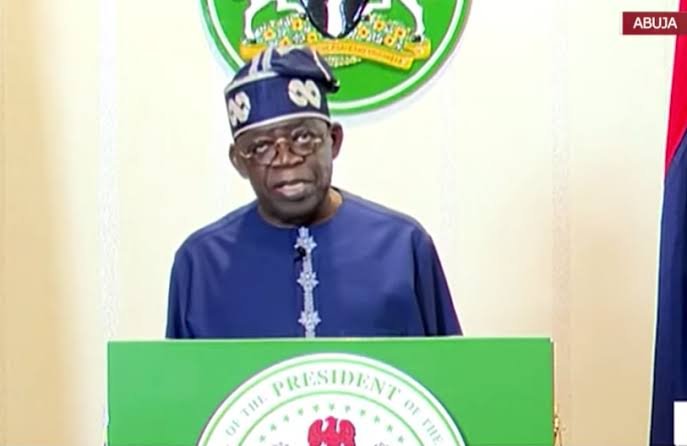
President Bola Tinubu was supposed to be in New York this week. That was what Nigerians were told in July when Nigeria’s Permanent Representative to the United Nations, Ambassador Jimoh Ibrahim, announced that the President had agreed to attend the 81st United Nations General Assembly. Ibrahim even said arrangements had been made for Tinubu to sit close to United States President Donald Trump during the General Debate. There was little ambiguity in the announcement: the President was going to New York.
Two months later, that plan has disappeared.
On September 20, the Presidency announced that Vice President Kashim Shettima would instead lead Nigeria’s delegation to the General Assembly and deliver the country’s national statement. Shettima will also participate in high-level meetings and bilateral engagements during the UNGA week.
The change of plan would be easier to treat as an ordinary adjustment if this were the first time. It is not. Tinubu personally attended the 78th General Assembly in 2023. Shettima represented him at the 79th in 2024, did so again at the 80th in 2025, and will now represent him at the 81st in 2026. The President has therefore been absent from the General Debate for three consecutive years.
That deserves more than the rather convenient response that Nigeria will still be represented.
Nobody is suggesting that Nigeria will disappear from the United Nations because Tinubu is not in New York. Shettima is the Vice President of the Federal Republic of Nigeria, and there is no question that he can deliver a national statement and participate in diplomatic meetings. Nigeria will have ministers, governors and other officials at the Assembly, and the Nigerian mission has made it clear that the country will retain its designated position and participate fully in the proceedings.
But that defence answers the wrong question.
The issue is not whether Shettima can read Nigeria’s speech. The issue is why Tinubu will not be the person delivering it.
There is a difference between asking whether a country is represented and asking why its President has decided not to attend an annual gathering at which heads of government, diplomats, international organisations and development partners converge. The distinction matters because presidential travel is not simply about occupying a seat in a hall. It is also about the meetings that happen around the formal proceedings, the relationships that are cultivated, the conversations that are initiated and the opportunities that sometimes arise precisely because a head of state is physically present.
Nigeria knows this. That is why it sends senior officials to New York every year. It is also why the Presidency describes the country’s UNGA programme in terms of economic diplomacy, strategic partnerships, reform of the global financial architecture, sustainable development and climate finance. Those are not ceremonial interests. They are issues Nigeria says are important to its development and its place in the international system.
So why is the President not there?
The timing makes the question harder to avoid.
On August 30, the State House announced that Tinubu was leaving Nigeria for Europe for a three-week vacation as part of his annual leave. His first destination was London, and the Presidency said he was expected to return after the working vacation to join the campaign ahead of the January 2027 election.
While the United Nations was preparing to bring world leaders together in New York, President Tinubu chose to spend the period on a three-week working vacation in Europe. That choice, more than the presence of Vice President Shettima at the UN, is what Nigerians should be examining.
The General Debate of the 81st UNGA begins on September 22 and runs through September 28. These dates were known long before the President’s European leave was announced.
The issue, therefore, is not whether a President is entitled to take leave. It is why, knowing that this major annual diplomatic gathering was approaching, the President’s chosen period of leave placed him away from an engagement he had earlier been expected to attend.
That does not mean Tinubu is not entitled to take leave. It means the public can reasonably examine the choice of timing.
If the President knew that UNGA was approaching, why was his three-week European leave arranged in a way that would keep him away from New York? If he subsequently decided that he would rather remain in Europe, what changed between the July announcement of his attendance and the September decision to send Shettima? And if there was a compelling reason for the change, why has the Presidency not simply explained it?
Those are not unreasonable demands for an explanation. They go to the heart of presidential accountability.
What makes the matter more curious is that this is not a President who has suddenly become uninterested in international engagement. Tinubu has continued to conduct diplomatic and economic engagements during his European working vacation. The State House has announced meetings connected with investment and other international relationships, including his September 18 meeting in France with business interests and a private dinner with French President Emmanuel Macron.
That raises a question the Presidency should be able to answer without difficulty. If international engagement remains important enough for the President to make time for meetings with foreign leaders and investors while on his working vacation, why has his personal presence at UNGA become expendable?
Perhaps there is a good reason. There may be scheduling considerations the public does not know about. There may be diplomatic or domestic calculations that influenced the decision. But the absence of an explanation leaves room for a question that should not be difficult for government to answer.
The Nigerian public deserves to know what changed.
The government’s other defence is that many countries do not send their presidents to the General Assembly every year. Ambassador Ibrahim has said that more than 60 per cent of those listed to speak this year are represented by vice presidents or foreign ministers. That is useful context, but it does not resolve Nigeria’s particular situation.
Nigeria is not asking whether another country can send its foreign minister. Nigerians are asking about their own President.
Tinubu attended UNGA in 2023. He did not attend in 2024. He did not attend in 2025. He will not attend in 2026. What changed in the President’s calculation of the value of his presence?
The answer matters because the administration has repeatedly presented international engagement as part of its economic strategy. Nigeria needs foreign investment. It needs access to capital. It wants stronger partnerships. It wants a greater African voice in international institutions and has an interest in reform of the global financial system.
These objectives do not become less important because the Vice President can represent the country. If anything, the administration’s own emphasis on economic diplomacy makes the President’s repeated absence a legitimate subject for scrutiny.
There is also something particularly awkward about this year’s reversal.
In July, the Nigerian envoy did not merely say that Tinubu might attend. He said the President had agreed to attend and spoke about the arrangements being made for his participation. The announcement created an expectation that Nigeria’s President would be in New York. Then, after Tinubu left for his European vacation, the Presidency announced that Shettima would represent him instead.
A government that changes an announced presidential itinerary is not necessarily doing anything wrong. Circumstances change. But the public should not have to piece together the reason from speculation, political commentary and competing narratives. The Presidency knows why the decision changed. It should say so.
There is another temptation that should be resisted: turning the President’s absence into a story about rumours concerning American authorities or alleged legal difficulties. Those claims are politically convenient for some people, but they are not necessary to make the legitimate argument here, and repeating unverified explanations would only weaken it.
The facts already raise enough questions.
Tinubu has attended UNGA before. He has missed it for three consecutive years since then. His attendance was publicly announced for this year’s session. He subsequently remained in Europe during a three-week leave, and the Presidency ultimately handed the assignment to his Vice President.
That is the story.
And perhaps the most revealing part of it is not that Shettima is going to New York. The Vice President has done it before and will undoubtedly perform the assignment again. The more important issue is what the President’s repeated absence tells us about the occasions he considers worthy of his personal attention.
A President cannot attend every international meeting. No reasonable person expects that. Delegation is an ordinary part of government. But there are some engagements whose importance is measured not only by what is said at the podium but by who is sitting in the room, who is being met, what relationships are being built and what opportunities are being pursued.
UNGA is one of those occasions.
Tinubu has chosen not to attend it for the third consecutive year, despite having personally attended in his first year and despite this year’s attendance having been publicly announced before the decision was reversed.
Nigerians can accept that decision if the reason is properly explained. What is difficult to accept is being given the substitute answer that Nigeria is represented, as though that settles the matter.
It does not.
Nigeria will have a voice in New York. Shettima will speak for the country. The meetings will take place and the General Assembly will continue with or without the President.
What remains unanswered is why Tinubu, who was expected to be there and whose government says it wants Nigeria to be more influential in the world, decided that this year his presence was less important than whatever has kept him away.
That is not a question about whether the Vice President is capable of doing the job. It is a question about the President’s own priorities, and after three consecutive years, it is a question the Presidency should answer plainly.
Shaakaa can be reached on: shaakaastephanie@yahoo.com