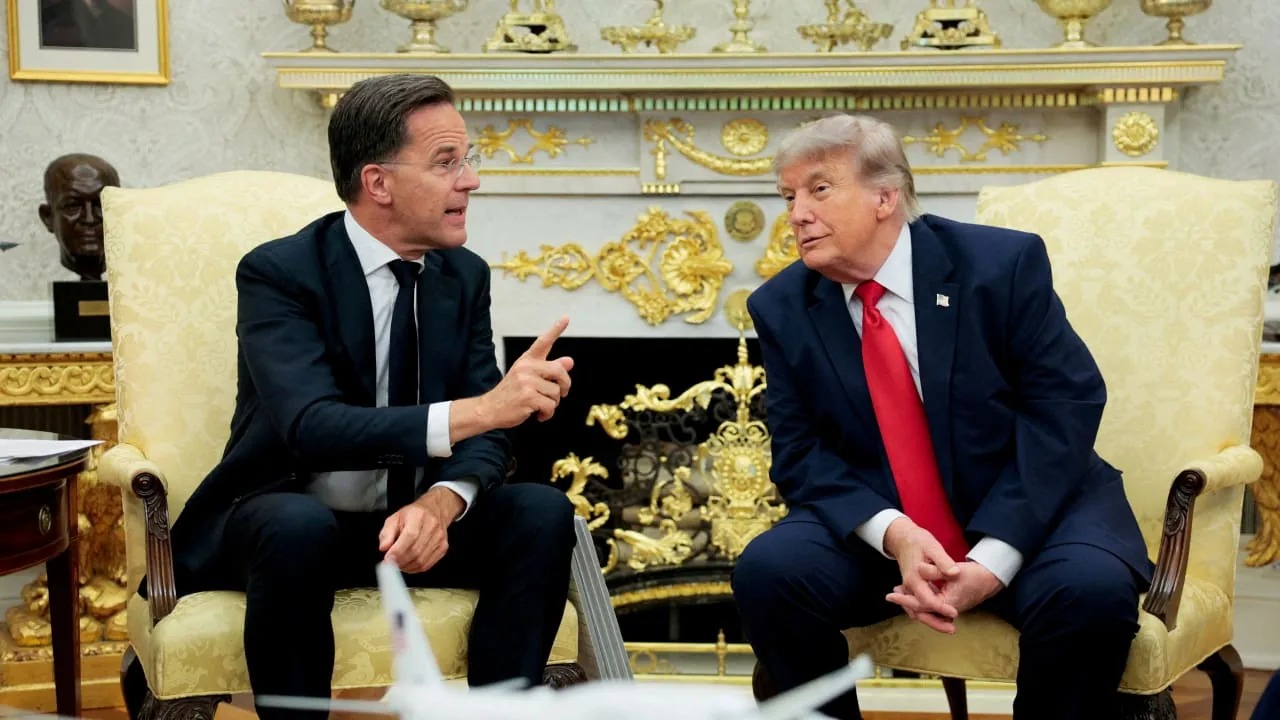
United States President Donald Trump is scheduled to meet with NATO Secretary-General Mark Rutte late this afternoon, Wednesday, November 25, 2026, at his Mar-a-Lago residence in Palm Beach, Florida.
The closed-door summit arrives at a critical juncture for the transatlantic alliance, driven by escalating concerns over European defense, recent Russian airspace violations, and ongoing diplomatic friction surrounding efforts to end the war in Ukraine.
According to a media advisory issued by NATO’s press office on Tuesday, November 24, 2026, Rutte is traveling in Florida from November 24 through today. While the White House press service confirmed the talks will take place in the late afternoon without releasing an exact minute-by-minute timestamp, officials noted that Rutte will also hold separate discussions with senior U.S. administration officials during his trip.
Both NATO and the White House confirmed that the Mar-a-Lago meeting will remain closed to the press, with no media opportunities scheduled, though official photographs will be distributed via NATO’s website afterward.
The diplomatic engagement follows intense scrutiny from alliance communications teams. NATO Spokesperson and Director of Strategic Communications Allison Hart has been at the forefront of alliance messaging this week, confirming on November 23 that NATO’s Supreme Allied Commander Europe is actively evaluating additional force deployments and air-defense postures following recent Russian missile and drone incursions into Polish airspace.
Meanwhile, on the American side, details of the president’s schedule were released via the White House press office, which currently operates without a permanent White House press secretary following the October 16 departure of Katie Zacharia, who succeeded Karoline Leavitt earlier this fall.
Today’s bilateral meeting, the first between the two leaders since they met at the NATO summit in Ankara, Turkey, on July 8, 2026, unfolds against a backdrop of heightened anxiety across European capitals.
Among the most pressing flashpoints expected to dominate the agenda is President Trump’s recent engagement with Russian President Vladimir Putin and Chinese President Xi Jinping during a summit in Asia last week, where Trump publicly referred to both leaders as his “friend.”
While those remarks drew sharp pushback from European allies and domestic critics, Rutte, who has frequently acted as an interlocutor to keep Washington committed to the alliance, downplayed the controversy ahead of his flight, stating that it is normal for major nuclear powers to engage in dialogue.
Alongside concerns over U.S. diplomacy with Moscow and Beijing, the two leaders are expected to address the trajectory of Ukraine peace negotiations. European leaders and Ukrainian President Volodymyr Zelenskyy have increasingly pressed Washington to ensure Europe is directly included in U.S.-backed peace talks with Moscow, warning against any bilateral settlement reached without European and Ukrainian participation.
Finally, the discussions will center heavily on the alliance’s broader defense posture. With Russian aerial incursions into NATO territory, specifically Poland, raising alarms along the eastern flank, Rutte is expected to seek concrete assurances regarding continued U.S. military backing, weapons shipments to Kyiv, and long-term burden-sharing commitments among member states.