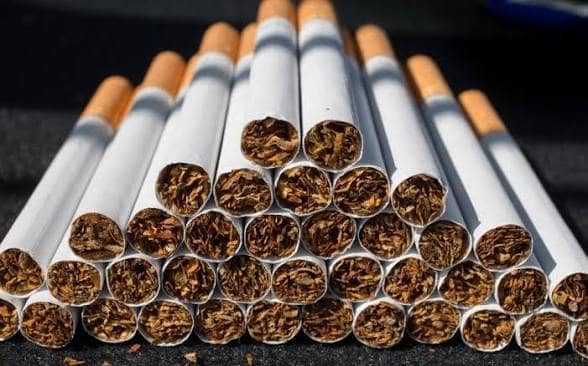
Civil society leaders have mounted pressure on President Bola Ahmed Tinubu to veto the National Tobacco Control Act (Amendment) Bill 2025, warning that quietly added clauses threaten to roll back key public health protections across Nigeria.
The coalition, operating as the Nigeria Tobacco Control Community, made the call during a press conference held on Monday, August 10, 2026, in Abuja under the theme “Why Nigeria Must Reject Harmful Amendments to the National Tobacco Control Act.”
Advocates revealed that while the original intentions behind updating the 2015 Act were sound, the final 31-page consolidated draft creates significant regulatory exemptions for non-combustible products, vapes, and novel nicotine items.
Exclusion of Non-Combustible Products; Clause 16 amends Section 45 of the 2015 Act, explicitly removing non-combustible items including heated tobacco products from the statutory definition of a tobacco product.
Reintroduction of Direct Marketing; The bill restores previously banned channels, enabling online sales, direct courier deliveries, point-of-sale displays, and indoor retail sampling for non-combustible items.
Warning requirements for nicotine pouches are scaled back to text-only notices covering just 10% of the front package, while e-liquids face maximum warning caps rather than mandatory global minimum thresholds.
Trade Secret Protection Provisions allow manufacturers to conceal chemical ingredients under the guise of “trade secrets,” preventing public health researchers from analyzing potential toxic risks.
Speaking at the event, Akinbode Oluwafemi, Executive Director of Corporate Accountability and Public Participation Africa (CAPPA), cautioned against creating separate, weaker standards for modern nicotine devices.
”Modernising our legal framework must not mean rolling out a red carpet for new and emerging nicotine and tobacco products,” Oluwafemi stated. “We cannot protect public health by carving out weak rules and loopholes for vapes, heated tobacco products, and nicotine pouches.”
Adding to the critiques, coalition representative Mr. Olaniyan highlighted how key provisions were introduced after the initial public hearing on November 22, 2024, granting wide discretionary power to the Health Ministry.
”The bill introduces a maximum size cap for health warnings that could practically be reduced to zero, contradicting global standards of setting mandatory minimum health warning thresholds,” Olaniyan noted.
To prevent the bill from being enacted in its current state, the coalition urged the following steps: President Tinubu should withhold assent and return the legislation to the National Assembly with specific public health objections.
The National Assembly should immediately recall the consolidated bill for a complete, transparent review. Legislative committees must publish all committee reports, voting histories, and stakeholder submissions used during drafting.
The Federal Ministry of Health and Social Welfare should issue a formal public statement clarifying its position on the controversial draft.