The Federal Government of Nigeria has issued a stern warning regarding the escalating pollution pressures facing the country’s rivers and major waterways, citing rapid population growth, uncoordinated urbanisation, untreated wastewater disposal, and destructive human activities as primary drivers.
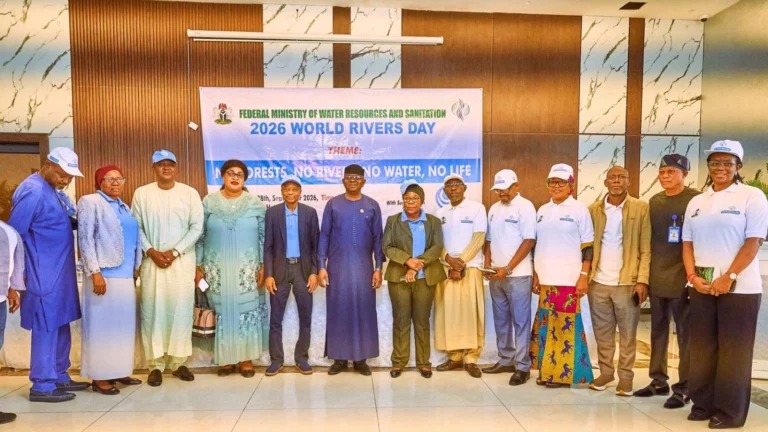
The Minister of Water Resources and Sanitation, Engr. Prof. Joseph Terlumun Utsev, gave the warning on Monday, September 28, 2026, at 10:00 AM, during a press briefing organized to commemorate the 2026 World Rivers Day at the Ministry’s Press Centre in Abuja.
Addressing journalists, civil society organisations, and environmental stakeholders, Prof. Utsev highlighted that major hydrological channels, including the Niger and Benue rivers, along with numerous local tributaries and wetlands, are suffering severe ecological degradation.
”Nigeria’s rivers are facing increasing pollution pressure from population growth, urbanisation, untreated wastewater, indiscriminate refuse disposal, and unmonitored human activities along river corridors,” Prof. Utsev stated. “When untreated sewage, toxic industrial effluents, and plastics enter our waterways, the consequences extend beyond immediate environmental degradation—they directly endanger public health, disrupt agricultural yields, threaten food security, and destroy aquatic biodiversity.”
Speaking under the theme for the 2026 observance—“No Forests, No Rivers, No Water, No Life”—the Minister emphasized that protecting water bodies requires an integrated approach to ecosystem management. He noted that forests, wetlands, and floodplains serve as natural filters and recharge zones essential for maintaining water flows and quality.
To address these ongoing environmental challenges, Prof. Utsev urged state governments, local authorities, industrial bodies, and local communities to adopt stricter waste management protocols. He outlined several immediate recommendations such as:-
The Ceasing open defecation and the dumping of domestic or industrial refuse into drainage channels and riverbeds. Expanding regional wastewater treatment facilities to ensure safe disposal.
Enforcing strict catchment management to prevent unregulated urban encroachments along river corridors and strengthening cross-sectoral research, water monitoring systems, and hydrologic data collection.
Reinforcing the Minister’s position, the Permanent Secretary of the Ministry, Mr. Richard Pheelangwah (represented by the Director of Water Resources Planning and Technical Support, Dr. Abubakar Dallah), stressed that safeguarding water resources cannot be left to the central government alone.
He called for stronger partnerships among grassroots communities, industrial operators, and civil society groups to monitor and protect watersheds from pollution.
The event concluded with a vote of thanks delivered by the Director of River Basin Operations and Inspectorate, Engr. Christy Odu, who reaffirmed the ministry’s commitment to collaborating with state governments and international partners to safeguard Nigeria’s aquatic ecosystems.