The Federal Government of Nigeria has approved a total of ₦4 billion as take-off grants for two newly established tertiary institutions: Bola Ahmed Tinubu Federal Polytechnic in Abuja and the Federal University of Science and Technology, Epe, Lagos State.
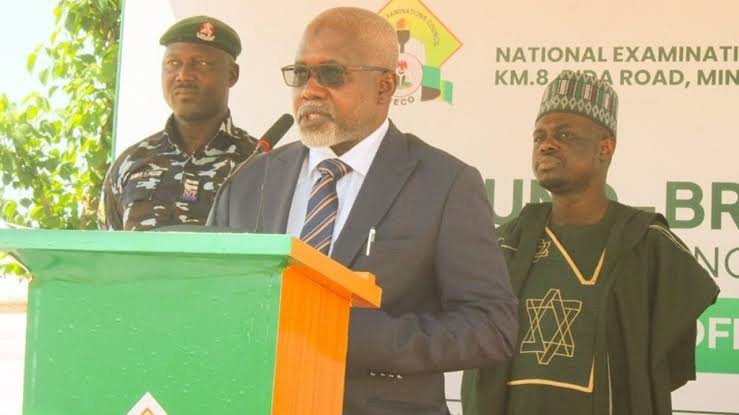
Each institution will receive ₦2 billion naira to support their initial operations and institutional development. The announcement was made by the Minister of Education, Tunji Alausa, during the inauguration of principal officers appointed to lead the institutions.
The grants are part of the Federal Government’s strategy to expand access to higher education, strengthen Nigeria’s capacity in science and technology, and promote national development through education.
Background to the Institutions
The two institutions—Bola Ahmed Tinubu Federal Polytechnic and Federal University of Science and Technology, Epe—are newly created federal tertiary institutions designed to broaden Nigeria’s educational infrastructure.
Their establishment aligns with the education agenda of the administration of President Bola Ahmed Tinubu, which seeks to increase access to quality tertiary education and strengthen Nigeria’s science, technology, and innovation ecosystem.
According to the Minister of Education, the institutions were strategically located in Abuja and Epe in Lagos State to harness the economic and human capital potential of the regions while addressing national development needs.
Details of the Take-Off Grants
The Federal Government approved ₦2 billion for each institution, bringing the total to ₦4 billion. The funds are intended to support the early-stage development of the institutions.
Key Uses of the Grants
- The take-off funds are expected to help the institutions:
- Establish administrative and governance structures
- Develop academic programmes and faculties
- Build or upgrade basic infrastructure and facilities
- Recruit and support academic and non-academic staff
- Facilitate the smooth commencement of operations
According to the Minister, these grants will enable the institutions to build foundational systems necessary for long-term academic and institutional stability.
Appointment and Inauguration of Key Officials
During the announcement, the government also inaugurated key officials responsible for leading the new institutions.
Principal Appointments
Nosiru Onibon – Pioneer Rector, Bola Ahmed Tinubu Federal Polytechnic, Abuja
Adeola Oshikoya – Vice-Chancellor, Federal University of Science and Technology, Epe
Angela Ajala – Executive Secretary, National Commission for Colleges of Education (NCCE)
These appointments are expected to provide leadership and institutional direction as the schools begin academic and administrative operations.
Government’s Rationale for Establishing the Institutions
The Federal Government explained that the creation of the institutions forms part of broader efforts to strengthen Nigeria’s higher education sector and improve human capital development.
Key objectives include:
Expanding access to tertiary education
The institutions are expected to create more admission opportunities for Nigerian students, particularly in science and technical fields.
Promoting science and technological advancement
The Federal University of Science and Technology, Epe, will focus on research and innovation in areas such as technology, climate change, and renewable energy.
Supporting national development goals
Graduates from the institutions are expected to contribute to Nigeria’s workforce in sectors critical to economic growth.
Addressing skills shortages
Technical and science-based education is considered vital for Nigeria’s industrial and technological development.
The Minister emphasized that the government aims to build an education system capable of producing skilled manpower for national transformation.
Expected Academic Focus Areas
The new institutions are expected to develop programmes that address both national and global challenges.
Areas of focus include:
- Technological innovation
- Renewable energy development
- Climate change adaptation
- Disaster risk management
- Scientific research and industrial technology
These academic priorities are designed to position the institutions as centres of excellence in science and technology.
Implications for Nigeria’s Education Sector
1. Increased Higher Education Capacity
Nigeria faces significant demand for tertiary education. The establishment of additional institutions helps reduce admission pressure on existing universities and polytechnics.
2. Strengthening Technical Education
The creation of a federal polytechnic named after President Tinubu underscores the government’s emphasis on technical and vocational education as a pathway to economic development.
3. Regional Development
Locating the university in Epe and the polytechnic in Abuja could stimulate economic and educational growth in their respective regions through infrastructure development, research activities, and job creation.
4. Advancement of Research and Innovation
The focus on science and technology aligns with Nigeria’s broader ambition to build a knowledge-driven economy.
Conclusion
The approval of ₦4 billion in take-off grants for Bola Ahmed Tinubu Federal Polytechnic and the Federal University of Science and Technology, Epe, represents a significant step in Nigeria’s efforts to strengthen its higher education system.
By providing initial funding, appointing leadership, and outlining a strategic focus on science and technology, the Federal Government aims to establish institutions capable of contributing to national development and global competitiveness.
If effectively implemented, the initiative could enhance access to education, technological innovation, and workforce development in Nigeria.