A Democracy Day Poster, Ten Familiar Faces, and the Long Betrayal of Nigeria’s Youth
By Agbeze Ireke Kalu Onuma, AI-KO
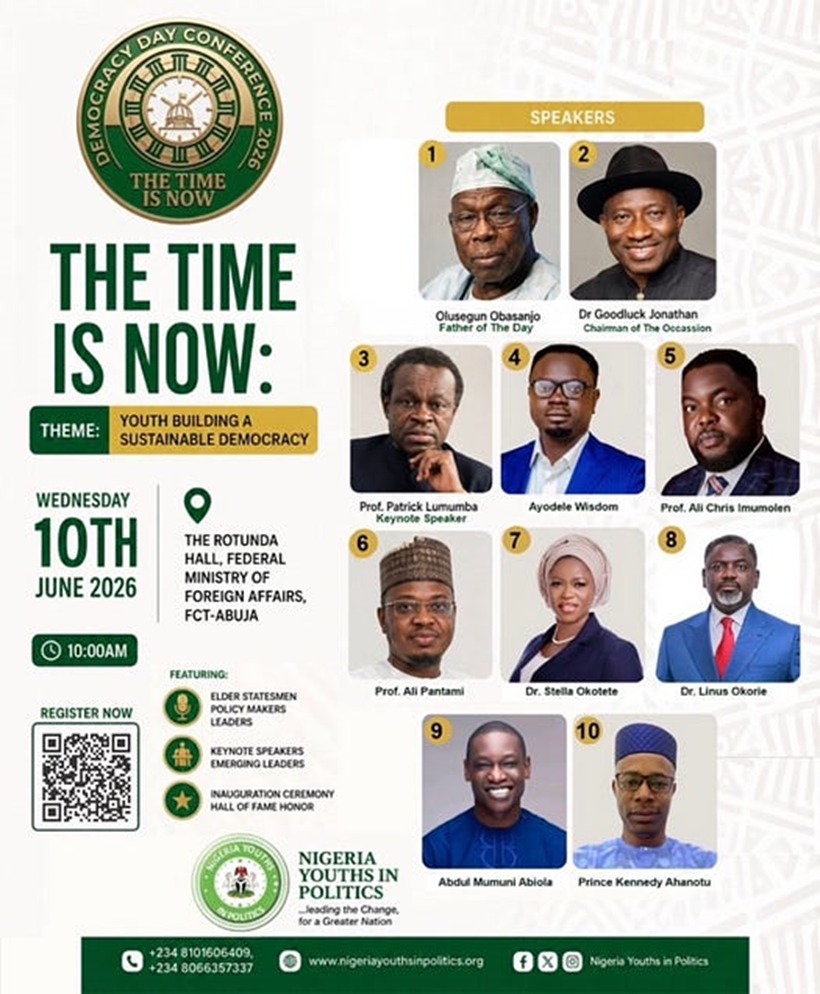
WhatsApp has this uncanny way of delivering things you didn’t plan to confront. On an ordinary morning, a polished graphic landed across multiple group chats simultaneously – the kind of confident digital dispatch that announces itself as important before you have had time to decide whether it is. The poster was for a Democracy Day Conference 2026, organised by a body calling itself Nigeria Youths in Politics. The theme, bold and aspirational, declared: Youth Building a Sustainable Democracy.
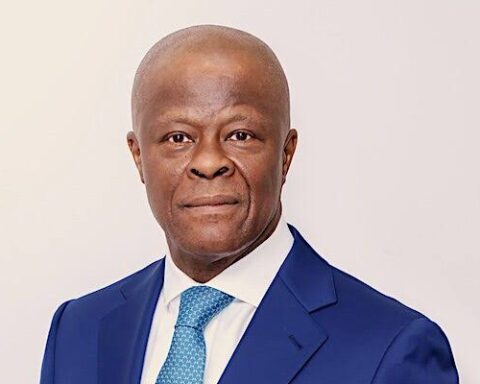
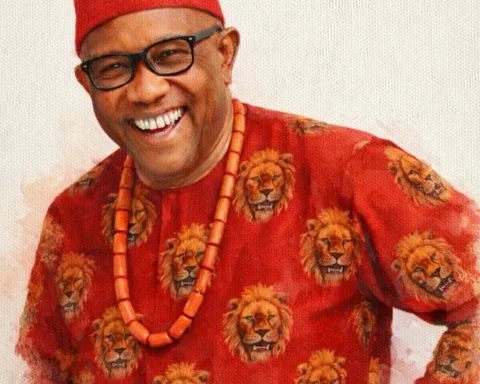
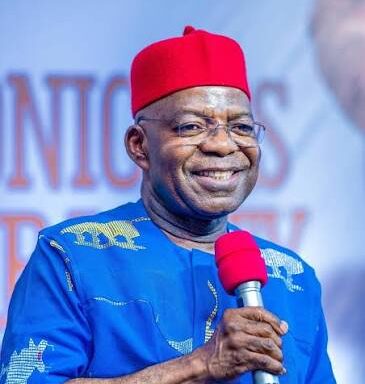
The tagline, even bolder, insisted: The Time Is Now. I adjusted my glasses and looked at the faces. Ten of them. Distinguished. Accomplished. Some legendary. And then a cold dread, mixed with entirely familiar fury, washed over me. Where are the youths? Not one face under forty. Not one voice from the generation the conference claimed to empower. The youths were not speakers. They were not panelists. They were not chairs. They were the theme. They were the branding. They were the poster’s loudest claim and its most conspicuous absence.
I first saw the poster through a WhatsApp acquaintance a few weeks before June 12, and at the time it barely…
After the event, I went searching for traces of its outcome – photos, reflections, attendance reports, even a simple acknowledgment that it happened. Nothing. Not a whisper. That silence was louder than the poster itself. It made me realise that this was not about one event; it was about a recurring pattern in our civic culture, a phenomenon worth interrogating more deeply. And so I knew I had to reflect, not just on the poster, but on what it represents within the broader landscape of youth political engagement, public accountability, and Nigeria’s democratic culture.
I have been watching Nigeria long enough to recognise this performance. The phrase “youth building” in that conference title is not a programme description. It is a political costume – the velvet glove on the iron hand of an entrenched order that has mastered the art of wearing the language of change while refusing the substance of it. The poster is not merely a badly designed advertisement. It is a political artefact, a document that tells us, with inadvertent honesty, exactly how power works in Nigeria: by invoking youth as justification while excluding them from participation.
To understand what this poster represents, you must understand the long and particular history of youth in Nigerian politics – a history that is simultaneously inspiring and maddening, full of moments when young people changed everything and long periods when the system conspired to ensure they changed nothing. Nigeria is, by every demographic measure, a young nation. The United Nations Population Fund estimates that seventy per cent of Nigeria’s more than 220 million people are under the age of thirty. The median age in Nigeria hovers around eighteen years. In any functioning democracy, these numbers would translate into political power. In Nigeria, they have translated primarily into audience size at events organised by their elders.
It was not always thus, and the divergence matters. When Nigeria drew its first independent breath in October 1960, the men who shepherded that birth were not old. Tafawa Balewa, the first Prime Minister, was forty-five. But the parliamentary generation below them – the activists, journalists, trade unionists, and lawyers who had fought colonialism in courtrooms and newspapers and street corners – were younger still. The generation that made independence imaginable was, in significant part, a youth movement wearing the borrowed clothes of elder diplomacy. Obafemi Awolowo founded the Action Group in 1950 when he was forty-one. The independence generation was not ancient. It was urgent.
The military era introduced a strange correction. When Yakubu Gowon assumed power after the 1966 coup, he was twenty-nine years old – the youngest head of state in the world at that moment. Murtala Muhammed was thirty-seven when he seized power in 1975. The first military tenure of Olusegun Obasanjo – the same man now named “Father of the Day” at youth conferences – began when he was thirty-nine. Whatever else may be said of military governments, they at least distributed the experience of command to young men early, even if the manner was catastrophic for democratic culture.
The irony is that the return to civilian democracy – the vehicle of popular participation and youth expression – has produced an older and older ruling class. Obasanjo’s civilian comeback in 1999 was at sixty-two. Umaru Yar’Adua was fifty-six when he became president. Goodluck Jonathan – the man now serving as “Chairman of the Occasion” at this youth conference – was fifty-three when he assumed the presidency after Yar’Adua’s death. Muhammadu Buhari was seventy-two at inauguration in 2015. Bola Tinubu was seventy-one when sworn in as president in 2023. The arc of Nigerian democratic leadership bends relentlessly toward age.
The National Assembly reflects this pattern even more starkly. A 2022 analysis by Yiaga Africa, a civic organisation tracking legislative inclusion, found that members under thirty-five stood for a negligible fraction of either chamber – a disproportion staggering in a country where the majority of voters are under thirty. This is the tradition into which the Democracy Day Conference 2026 poster falls. It is not an anomaly. It is the default setting.
In 2018, something remarkable happened. A coalition of youth activists, civic organisations, and sympathetic legislators pushed through what became known as the Not Too Young to Run Act – an amendment to Nigeria’s electoral laws reducing the minimum age for presidential candidates from forty to thirty-five, for governorship from thirty-five to thirty, for the House of Representatives from thirty to twenty-five, and for state assembly seats from thirty to twenty-five. President Buhari signed it into law in May 2018. For a moment, it felt like a turning point. It was not.
Law and practice are different countries. The Not Too Young to Run Act made eligibility younger without making parties nominate younger candidates, without making the expensive machinery of Nigerian electoral politics accessible to young men and women without dynastic connections or generational wealth, and without dismantling the cultural architecture that makes youth political participation dangerous. Student union leaders are routinely expelled or arrested for speaking truth to power.
Young civil society voices are surveilled. Political party structures in Nigeria are not designed to accommodate ideological commitment; they are designed to absorb loyalty and distribute patronage. The act opened a door that the occupants of the house declined to open from within. It lowered the bar without flattening the mountain.
If you want to understand what young Nigerians are capable of when permitted to organise themselves, look at October 2020. In the space of days, young Nigerians mounted what became the most significant mass protest movement in the country’s post-military history. The #EndSARS protests – demanding an end to the brutality of the Special Anti-Robbery Squad of the Nigeria Police Force – began on social media and within days filled streets in Lagos, Abuja, Port Harcourt, Kano, Enugu, and dozens of other cities. The movement was organised without a central committee, without elder statesmen, without professors of political science issuing keynote speeches. It was organised by young people on Twitter, funded through fintech platforms largely built by young Nigerians, and stewarded by women and men in their twenties who had never held political office and had never been invited to a single democracy conference.
For ten days, they shut down the conversation. They forced the Federal Government to announce the dissolution of SARS. They produced collective energy that no election in recent memory had matched. And then, on October 20, 2020, the state responded at the Lekki Toll Gate in Lagos with what witnesses and human rights investigators described as the shooting of unarmed protesters.
The Nigerian government disputed many aspects of the account. The youth were dispersed. SARS was never meaningfully dissolved. The young leaders of #EndSARS were not subsequently invited to the table of power. Some fled the country. Some were arrested. None became featured speakers at Democracy Day Conferences. The lesson absorbed by the system was not that these young people should be empowered to govern. The lesson was that they could be managed.
The 2023 general elections produced another demonstration of youth political awakening, and another systematic frustration of it. The Labour Party’s Peter Obi – not himself young, but the candidate adopted by young Nigerians as a vessel for generational change – galvanised what became known as the Obidient movement: a mass mobilisation of first-time voters, young professionals, and disillusioned educated Nigerians who saw in his candidacy a repudiation of the established political duopoly. The movement was powered almost entirely by social media, digital organising, and the energy of young people who had grown up under the twin failures of PDP and APC governance.
Obi did not win the declared result. The controversy – legal challenges, allegations of electoral irregularities, conflicting data – is still being processed by history. But the Obidient movement demonstrated that Nigerian youth, when sufficiently motivated, can generate extraordinary political force. The question the Democracy Day Conference 2026 poster refuses to answer is: where does that force go when the older establishment reclaims the narrative? The answer, embedded in the poster itself, is: nowhere near the podium.
Let us return to the poster itself, because the details repay attention. Chief Olusegun Obasanjo, born March 5, 1937, is eighty-nine years old. He has been a presence in Nigerian political life for more than half a century – military head of state, democratic president, continental elder statesman, and author of letters to sitting presidents that have become a genre unto themselves. His designation as “Father of the Day” raises a question that the poster does not answer: what does his presence contribute to youth empowerment, beyond the implication that youth cannot be empowered without the blessing of those who have held power longest?
Dr. Goodluck Jonathan, the “Chairman of the Occasion,” is sixty-eight. His presidency, from 2010 to 2015, ended in an electoral concession widely praised internationally for its graciousness. But his tenure also included the Chibok schoolgirls kidnapping in 2014, and an initial response so inadequate that it generated the #BringBackOurGirls movement – a movement driven largely by young women and men on social media. Jonathan is a figure of both concession and complexity, but his role as chairman at a youth conference is, at minimum, paradoxical.
Prof. Patrick Lumumba, the Keynote Speaker, is a Kenyan lawyer and Pan-African orator of considerable distinction, now sixty-six years old. His oratorical gifts are real and his message is consistently anti-corruption and pro-African dignity. But the question posed by his Keynote designation is not about his quality; it is about the choice. Is there truly no young Nigerian or young African voice whose keynote could have set the stage for a conference about youth building democracy? Is there not a twenty-eight-year-old constitutional lawyer, a thirty-two-year-old community organiser, a thirty-five-year-old civic technologist who could have delivered the keynote address? The answer is that there are hundreds. They were not chosen. And the choosing is the message.
Prof. Ali Pantami, former Minister of Communications and Digital Economy, is a figure well embedded in the established order. The remaining speakers – Dr. Stella Okotete, Dr. Linus Okorie, Abdul Mumuni Abiola, Prince Kennedy Ahanotu – include individuals whose careers and titles place them squarely in the same tradition. Only Ayodele Wisdom, listed without a professorial or doctoral prefix, represents something ambiguous – possibly a younger voice, though the poster does not tell us. In a conference of ten featured speakers, the youth are left to find themselves in a name without a prefix and hope for the best.
This is not merely a design oversight or a poorly curated guest list. It is a symptom of what scholars of gerontocracy have described as the self-reinforcing logic of elder-dominated systems: the people with the power to convene the conference are the people who have been convening conferences for decades, and they invite the people they know, trust, and have shared platforms with. Youth, by definition, have not shared those platforms. They have not accumulated the social capital of the conference circuit, sat in the right rooms, published in the right journals, or served on the right boards. The structure reproduces itself not by active conspiracy but by passive default – by the simple gravitational pull of existing networks.
“The trouble with Nigeria is simply and squarely a failure of leadership.” – Chinua Achebe, The Trouble with Nigeria, 1983
Achebe wrote that with surgical precision in 1983. What he diagnosed was not merely the failure of specific leaders but the failure of the leadership system – its inability to renew itself, its tendency to protect its own continuity at the expense of national development. Four decades later, the Democracy Day Conference 2026 poster is a small but precise illustration of that same failure in miniature.
The “Nigeria Youths in Politics” organisation, which hosts the event, compounds the irony. An organisation bearing that name – with its tagline “leading the Change, for a Greater Nation” – constructs a speakers list in which the young are, at best, decorative. It suggests something disturbing: that organisations nominally dedicated to youth empowerment are themselves sometimes captured by the older political class, used as vehicles for elder legitimacy rather than genuine youth mobilisation. The youth organisation becomes a rebranding exercise. It allows established figures to claim the language of the future without surrendering any portion of the present.
The contrast with other democracies is instructive. Sanna Marin became Prime Minister of Finland in 2019 at thirty-four. Gabriel Boric became President of Chile at thirty-five in 2022. Jacinda Ardern led New Zealand from thirty-seven from 2017. Rwanda’s parliament, shaped by post-genocide reconstruction, has built constitutional mechanisms for youth and women’s representation that have made it one of the most demographically inclusive legislatures in the world. These are not statistical flukes; they are the results of political systems that have, imperfectly but meaningfully, built genuine pipelines for generational succession. Nigeria has the rhetoric. It has not built the pipeline.
The Rotunda Hall at the Federal Ministry of Foreign Affairs in Abuja is a venue choice that speaks before anyone opens their mouth. It communicates gravity, protocol, and institutional prestige – which is fine, because democracy deserves serious spaces. But it also communicates permission. To enter a federal ministry rotunda for an official function, you navigate layers of security, accreditation, and the invisible architecture of institutional favour. For a young person without political connections, it is a venue that says: you are welcome as an audience member, not as a principal. The hall is not where youth build democracy. It is where democracy is announced to youth.
The “Featuring” section of the poster tells a similar story. It lists, in order of apparent priority: “ELDER STATESMEN POLICY MAKERS LEADERS” first, “KEYNOTE SPEAKERS EMERGING LEADERS” second, and an “INAUGURATION CEREMONY HALL OF FAME HONOR” as the crowning activity. The language is revealing. Youth are categorised as “emerging” – a word that locates them permanently in the antechamber of power, forever on the threshold, never quite arrived. Elder statesmen have arrived; youth are emerging. And the Hall of Fame Honour, a ceremony that celebrates the past, sits as the summit activity of an event that claims to be about the future.
When a young Nigerian sees a poster like this, the message received is not about a single conference. It is cumulative. It is the latest instalment in a lifetime of messages that say: the serious decisions are made by people who look like your grandfather, not like you. It accumulates into a worldview, and the worldview is: politics is not for me. Not yet. Maybe never. This is the deeper harm of the poster. Its exclusion does not represent one bad event; it participates in the manufacture of political apathy. Youth are taught, repeatedly and by example, that the podium belongs to their elders. Some draw the logical conclusion: they stop attending. They stop registering. They stop voting. And then the elder class laments youth apathy, convenes a conference about it, fills the conference with elder statesmen, and produces a new poster destined for exactly the same WhatsApp groups.
Nigeria’s youth did not lead #EndSARS because they were invited. They led it because they were furious and organised and the system had left them no other architecture of participation. The question any honest democracy must ask is: why do we keep producing conditions in which youth agency can only express itself through protest rather than governance? Why is the street consistently more accessible to young Nigerians than the podium?
“The time is now” – the conference’s own tagline – is the most honest thing on the poster, though not in the way the organisers intended. The time is now for Nigerian youth to refuse this arrangement. The time is now to insist that a conference about youth must be led by youth. The time is now to name this pattern for what it is: political tourism. The elder class visits the territory of youth, plants a flag that says “we were here and we cared,” and returns to the compound of power. The youth are left with the flag and a WhatsApp notification confirming their attendance.
What would a genuinely youth-led democracy conference look like? It would have young people as keynote speakers – not “emerging leader” panelists, not token youth representatives in the question-and-answer segment, but the main event. It would produce outputs with institutional consequences: a youth-authored democratic reform agenda, a youth-led accountability mechanism for promises made at the event, a binding commitment from elder participants to specific actions that young people could monitor and enforce. It would not be held at a federal ministry rotunda accessible only by invitation. It would be held in a space that young people actually inhabit and control. And it would measure its success not by the seniority of its speakers but by the agency transferred to its youth participants.
Nigeria’s youth are not missing from national life. They are everywhere – in tech hubs, in creative studios, in community groups, in classrooms, in markets, in digital spaces. They built the fintech infrastructure that now processes billions of dollars in transactions. They are creating the global cultural moment that has made Afrobeats and Nollywood not merely local phenomena but genuine world exports. They are winning international literary prizes before they are thirty. They are, by any honest measure, the most capable and globally connected generation of Nigerians in history. The only thing preventing their full participation in governance is the decision, made by the people who design these posters, not to make room.
I want to see the young woman who organised her community to register voters. I want to see the young man who survived police brutality and still believes in democracy. I want to see the teenage activist who has read more policy documents than some commissioners. I want to see the corps member who used his allowance to print civic education pamphlets. I want to see the Gen Z coder who built an app that tracks constituency projects. These people exist. They are everywhere. But they are not on your poster because your poster is not a reflection of reality. It is a monument to the very problem Nigeria faces: a leadership class that speaks about change but cannot change itself.
I am not arguing that Obasanjo’s experience is worthless, that Lumumba’s oratory does not inspire, or that Jonathan’s institutional memory has no value. I am arguing that their presence at a youth conference – without substantial, structural youth co-leadership – transforms the event from a youth-building exercise into a youth-themed showcase for elder authority. There is a difference. It is not subtle. It is the difference between treating youth as subjects of empowerment and treating them as objects of it.
Democracy built by elders for youth is not the same as democracy built by youth for everyone. The first model produces paternalism. The second produces succession. Sustainable democracy requires succession planning that is real, not theatrical. It requires that young people learn governing skills by governing – not by being lectured on governance. If “the time is now” means anything at all, it means that youth must chair sessions, moderate panels, craft resolutions, sign off on outcomes, and commit the older authorities to specific follow-through that youth can monitor and enforce. Without that, the event is another instalment in the long national habit of promising youth empowerment while preserving senior control of the narrative.
WhatsApp delivered the poster. I paused. I looked. I searched every name for someone under forty, someone who is not a “Professor” or “Dr.” or “Prince” or “Former President.” I found nothing. Another convenient fiction. More adults speaking about youth and for youth. But the title of this essay is a question, and I am still waiting for an answer. The youths are not simply missing from a photograph. They are missing from power. They are missing from the seat. They are missing from the authorship.
The time is indeed now. Not for elders to speak about youth. For youth to speak. To act. To build. To lead. For Nigeria where the poster of the next Democracy Day Conference features ten faces under forty, and the elder statesmen sit in the audience, learning. Until we get there, do not be surprised if the youths you claim to love decide to organise their own event – without you. And if they do, it will not be held in a federal ministry rotunda. It will be held somewhere you have to look up to find.