By Noble Fred Chukwuelobe, FNIPR
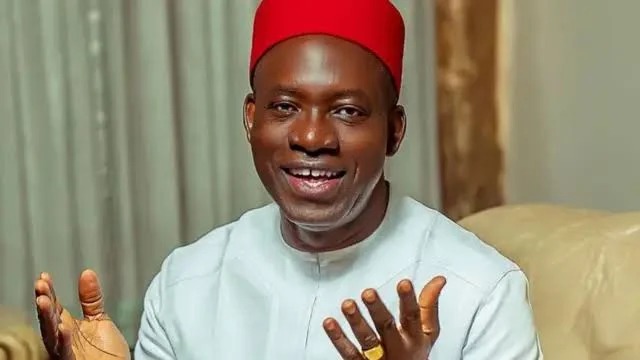
It is trending that His Excellency, Governor Chukwuma Soludo, spoke in Asaba, Delta State, yesterday and delivered his remarks extemporaneously. The occasion was Delta State Economic and Investment Summit 2026. Videos of the speech are being widely shared online. There is no doubt that the governor is a gifted speaker, so no one should be surprised by the ease and fluency with which he delivers his speeches.
As a keen observer, however, I picked out two key points from his address. And I point them out respectfully.
Firstly, he said he arrived late because he was caught in traffic in Onitsha, which he attributed to the end of the senseless sit-at-home order that had disrupted the area for over five years. (The word “senseless” is mine because that is how I have always viewed the sit-at-home exercise.)
Secondly, he said that since assuming office, his administration has not borrowed a single kobo, attributing that achievement largely to the economic policies of the Tinubu administration.
Ordinarily, both points would deserve applause. But I have reservations. Forgive me for expressing them.
To begin with, I am informed that there was no unusual traffic in Onitsha yesterday. There is also a video circulating online showing the governor’s convoy parked by the roadside, reportedly because one of the staff Sport Utility Vehicles (SUVs) developed a mechanical fault. I can independently confirm that this lacks authenticity as it happened about two years ago. It therefore, inaccurately reflects what happened. I would be deeply disappointed if the those sharing that video set out to accuse the governor of giving his audience a different account. He was not delayed by that incident.
On the issue of borrowing, I commend Governor Soludo for maintaining a no-loan policy. Fiscal discipline is always desirable. However, his explanation raises an important question. If the increased allocations to states, resulting from subsidy removal and other federal economic reforms, have made borrowing unnecessary for states like Anambra, why has the Federal Government itself continued to borrow so heavily? That contradiction deserves an explanation. It also pokes holes in his argument.
While I applaud the governor’s prudence in avoiding debt, I remain unconvinced about the quality of some of the projects executed by his administration. In my view, the new government house called The Light House, I understand, several of the expressways, including the Ekwulobia flyover, have shown signs of distress far earlier than one would reasonably expect. Likewise, whenever I pass the mini-markets and bus terminals emblazoned with the slogan “Solution Is Here,” I cannot help but wonder whether sufficient attention was paid to aesthetics. The dominant black and yellow colours’ scheme and overall finishing leave much to be desired.
Therefore, while the governor’s supporters are understandably celebrating his eloquence in Asaba – something anyone familiar with him already knows – I believe the more important issues lie beyond the quality of his speech. I also think he should pay less attention to the sit-at-home issue and allow it to fade naturally. Constantly revisiting it only serves to keep it in public discourse.
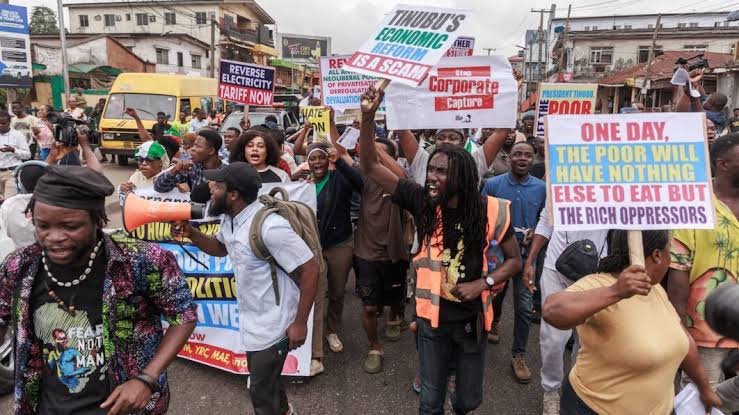
If Governor Soludo believes that the Tinubu administration’s economic reforms have significantly improved the finances of the states, he should also acknowledge that many ordinary Nigerians do not share that optimism. Their daily economic realities tell a different story. That was what the Catholic Bishops Conference of Nigeria (CBCN) told the president and for which his attack dogs are baying for the blood of emeritus Archbishop of Abuja Archdiocese, John Cardinal Onaiyekan.
Since he has chosen not to borrow, and I once again commend him for that, I hope he will continue to manage the state’s increased revenues with prudence. I also believe that the proposed second airport at Ndikelionwu represents a questionable use of scarce public resources. Those funds, in my opinion, could be deployed to projects with greater economic and social impact.
The Soludo story told in Asaba may make for compelling political communication, but when measured against the realities on the ground, it appears to be stronger on political optics than on practical outcomes.