If Nigeria was a serious country, heads of agencies and powerful appointees and politicians would have resigned or get arrested because of this case.
Let me explain it for those who have not been following.
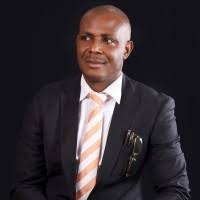
For months, a man named Prince Adeniyi Adeyemi Matthew allegedly operated a federal agency that does not exist. He called it the Presidential Foreign Intervention Promotion Council. No law created it. No gazette announced it. Yet this phantom agency had an office inside the Federal Secretariat Complex in Abuja, the very heart of Nigeria’s civil service.
From that office, he allegedly held meetings with Nigerians and foreign nationals as a Director General appointed by the President. He convened a meeting with ambassadors at a hotel in Asokoro. He wrote to the Ministry of Foreign Affairs requesting a note verbale to the US Embassy to secure visas for his “staff.” He walked through the corridors of power and the corridors opened for him.
Then it gets worse.
According to the Presidency’s own statement, this man operated 34 bank accounts, nine of them opened in the names of fictitious government agencies. And the most damning of all: he allegedly opened an account with the Central Bank of Nigeria itself, by misleading the Office of the Accountant General of the Federation with forged documents. The apex bank. The ultimate gatekeeper of our financial system. The institution that lectures commercial banks on Know Your Customer protocols allegedly opened an account for an agency that does not exist.
But hold on. Here is the part that should point Nigerians to how deeply decayed the system has become. 
This “non-existent” agency is sitting inside the 2026 national budget. Pages 50 and 51 of the Appropriation Act. Over N1.3 billion allocated to it. Salaries. Allowances. Even N182 million budgeted for it to host a World Investment Summit. A budget that passed through the Budget Office. Through the Federal Executive Council. Through the National Assembly. Signed into law by the President himself.
Think about what that means. A federal budget does not write itself. Line items do not smuggle themselves onto pages 50 and 51 of an Appropriation Act. Somebody prepared that proposal. Somebody reviewed it. Somebody approved it. Somebody voted on it. Somebody signed it.
Let me be clear. We do not know the entire truth yet. The matter is in court, and the accused has made his own explosive allegations against the Chief if Staff to the President, allegations that remain unproven. But I am certain of one thing: if this case is truly what it appears to be, one man sitting in a borrowed office could not have pulled it off alone. A scheme of this scale, reaching into the Federal Secretariat, the Accountant General’s office, the Central Bank, and the national budget itself, could not have been possible without the aiding and abetting of powerful government officials and heads of agencies.
This so-called fake agency was not built for decoration. Everything about its design points to one purpose: positioning to extract public money. And the budget allocation is the smoking gun, because that is precisely how public money would have flowed to it, legally, quietly, with the full authority of the Nigerian state.
That is the real scandal. Not the impostor. The system that budgeted for him.
Now, why should this worry you?
Because if a phantom agency can enter a signed federal budget, then you no longer know what else is hiding in that budget. How many other line items are feeding entities that exist only on paper?
Because if forged letters can move the Accountant General’s office to facilitate a CBN account, then every safeguard we boast about is a safeguard on paper.
Because every foreign investor reading this story is asking one question: if their central bank cannot detect a fake agency, what happens to my money in their commercial banks?
In serious countries, this kind of breach triggers resignations, independent panels, and prosecutions that climb upward, not just downward. In Nigeria, it triggers press statements defending the powerful and warnings to the public not to draw conclusions.
One man is standing trial. But the people who prepared, reviewed, approved, and signed a budget for a “non-existent” agency are not on trial. The network is not on trial. And until it is, nothing has been solved. It has only been postponed until the next phantom agency, and the next budget.
A country that punishes the small fraudster but shields the big enablers is not fighting corruption. It is managing it. It’s corporating with it. It’s enabling it.
If you ask me, Adeniyi is the smallest criminal in all of this. The people who established the phantom agency and placed him there are still the same people prosecuting the man.