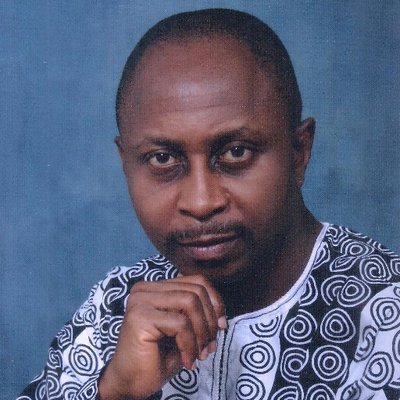
By Charles Obiajulu Ugwu -PhD
A Note from the Author
I should say at the outset that I have never trusted settled positions. The ones offered to me by my education, the ones held confidently by institutions I worked inside, the ones repeated with the most certainty in the rooms where careers are made. The more settled a position, the more I want to take a hammer to it and see what is actually holding it up. This is not contrarianism for sport. It is a working assumption, formed over years of watching what calcified thinking does to people, to organisations, and to countries. Frozen frames produce frozen futures. The mind that stops questioning its own scaffolding eventually finds itself defending arrangements it would not have chosen if it had been awake.
The essay that follows began as an irritation. I had been watching, in too many places at once, the same pattern. Professionals who had achieved what they set out to achieve and were quietly unhappy about it. Organisations that had completed the transformation they had promised their boards and were already planning the next one. Governments closing reform programmes with ceremony while the next set of dysfunctions was already visible from the podium. Nobody seemed to want to say what was obvious in the room. The arrival they had been promising themselves was not arriving. The mirage was holding its distance with the patience of a structural fact.
I write this for the reader who has felt that same disquiet and not yet found a frame for it. The essay is meant to disturb, not to console. If it succeeds, it should leave you slightly less comfortable with the assumptions that organised your last decade, and slightly more curious about the assumptions you are using to organise the next one.
A mirage works by offering exactly what the eye most wants to see. The traveller in the desert looks ahead and finds water, sometimes a city, sometimes an entire shoreline trembling in the heat. The image is not invented by the desert. It is assembled by the mind out of light, expectation, and need. The closer one walks, the further the water retreats. The mirage does not deceive by being false. It deceives by being persuasive in proportion to one’s thirst.
Watch humanity in motion long enough and a similar pattern asserts itself. Across boardrooms in Lagos and Frankfurt, on the trading floors of Singapore, in the corridors of universities and the back offices of family firms, an entire species moves with the conviction of pilgrims who can see their destination. The destination has many names. People call it security, or recognition, or the next milestone, or simply making it.
Whatever the name, the structure of the belief is identical. Somewhere ahead lies a place where striving ends, where uncertainty quiets, where the accumulated trophies of effort deliver permanence at last. The closer one walks, the further the place retreats. The race continues, conducted with the same urgency, the same anxiety, and the same conviction that this next acquisition, this next title, this next round of validation will finally settle the matter.
One would expect, after enough disappointments, a quiet correction. One would expect a mind faced repeatedly with the dissolution of its own expectations to revise its assumptions. Instead, each generation rehearses the same urgency as though the prior generation had not lived. The illusion is not merely tenacious. It is generative. It manufactures itself anew in every life, in every institution, in every civilisation, and it does so with extraordinary efficiency.
The Anatomy of the Mirage
Psychologists have a name for part of this. In 1971, Philip Brickman and Donald Campbell described what they called the hedonic treadmill, the tendency of human beings to return to a stable baseline of well-being regardless of what happens to them. Subsequent studies followed lottery winners and accident victims through the years after their lives were transformed. The lottery winners did not stay euphoric. The accident victims did not stay devastated. Within a surprisingly short period, both groups had recalibrated their expectations to their new circumstances, and the felt quality of their daily lives had returned, more or less, to where it had been before the transformation.
This finding is one of the more disturbing pieces of empirical psychology, because it implies something the human mind resists. The very acquisitions on which we have staked our happiness possess only a brief capacity to deliver it. The new position, the new house, the new title, the new degree of recognition. Each is metabolised. Each becomes the new floor below which one must not fall. The pay rise chased for two years becomes, within a quarter, the salary one expects. The recognition that once mattered becomes the recognition one no longer feels.
This is not greed in the moral sense. It is the way human appetite operates inside a continuous reality. The difficulty is not the wanting. The difficulty is the belief that the wanting can be exhausted, that there is some final acquisition after which one will no longer want. The race continues not because the finish line is distant. The race continues because no finish line exists.
The Case of Maximal Arrival
If arrival were possible, history should have preserved at least one example of someone arriving. The historical record is unhelpful on this point. Consider Mansa Musa, ruler of the Mali Empire in the fourteenth century, who is reckoned by most economic historians to have been the wealthiest individual in recorded history. His 1324 pilgrimage to Mecca passed through Cairo with such a quantity of gold that the price of the metal in Egypt collapsed and did not recover for a decade. He commanded territory larger than most of Europe, controlled the trans-Saharan trade in salt and gold, patronised the scholars of Timbuktu, and entered the European imagination as a figure of almost mythic abundance. He had, by any measure available to a fourteenth-century mind, arrived.
Within a century of his death, the empire he built had fractured under succession disputes. The university of Sankore at Timbuktu, which his wealth had elevated to one of the great seats of African learning, was overrun in 1591 by a Moroccan invasion that scattered its libraries. The dynasty he secured did not endure. The gold he distributed did not stabilise. What persisted of him was the name and the story, which is to say, the very things he had not been pursuing.
The pattern repeats across the historical record with such regularity that it acquires the force of a structural observation. The figures we recognise as having achieved the most are not the figures who report having arrived. They are the figures whose striving continued until it stopped, at which point the world reassigned the meaning of what they had done according to criteria they did not set.
The mirage does not deceive by being false. It deceives by being persuasive in proportion to one’s thirst.
The Illusion of Control
Underneath the mirage of arrival sits a second illusion, less remarked but equally consequential. It is the belief that the running can be controlled. Human beings construct plans, targets, timelines, and milestones as though life were a machine responding faithfully to intention. The plan survives until the plan meets the world. The target holds until the target meets the next quarter. The five-year roadmap, drafted with such care, becomes within eighteen months a document whose only function is to remind one how unpredictable the intervening period turned out to be.
Tolstoy gave this its sharpest fictional treatment in his 1886 story How Much Land Does a Man Need?, in which a peasant named Pahom is offered all the land he can walk around between sunrise and sunset, on the condition that he return to his starting point by nightfall. Pahom calculates carefully. He sets out at dawn. The land is so good, and the next ridge so promising, that he extends his arc again and again. As the sun begins to descend, he realises he has gone too far. He runs with the strength of a man whose entire future depends on the next few minutes. He reaches the starting point at the exact moment the sun touches the horizon, collapses, and dies. His servant buries him in a grave six feet long. That, Tolstoy answers, is how much land a man needs. The length of his grave.
The story is not a parable against ambition. It is a parable against the conviction that one’s plans are tracking reality. Pahom’s error is not that he wants land. His error is that he believes the day belongs to him, that the calculation will hold, that the sun will wait. The world refuses to behave as a closed problem. It insists on remaining open. The wise institution learns to plan without confusing the plan for the outcome. The unwise institution mistakes the plan for control and is repeatedly surprised by the world’s unwillingness to cooperate.
Even the most disciplined operators discover this. Sovereign states with vast bureaucracies, corporations with expensive forecasting apparatus, families with careful succession plans. All encounter the same recurring lesson. The plan is one of the ways minds engage with the future. It is not a method by which the future is subdued.
Nothing Left to Conquer
Plutarch preserves a story about Alexander, conqueror of an empire stretching from Macedonia to the Indus, which deserves repeating not because it is necessarily true in detail but because it has been remembered for two millennia for a reason. Alexander, the story goes, sat down and wept when he learned there were no more worlds to conquer. The tears are the point. A man who has acquired everything has not acquired the thing he was pursuing, because the thing he was pursuing was not, in fact, the territory. It was the arrival that the territory was supposed to deliver. The territory came. The arrival did not.
Modern variants of this case are easier to verify and less flattering. Howard Hughes ended his life as one of the wealthiest men in the world, isolated in a darkened hotel suite, his fingernails grown to a length that could not be measured by any criterion of human flourishing. John D. Rockefeller, asked late in life how much money was enough, is reported to have answered, just a little bit more. The reports may be apocryphal.
The pattern is not. The very rich, the very accomplished, and the very recognised do not, by and large, report the experience of arrival that their circumstances would seem to predict. They report that the mirage has held its distance, that the water still trembles ahead, that whatever was supposed to happen at the point of acquisition did not happen. There is no arrival because arrival is not in the category of things that exist. The trophies are real. The achievements are real. The arrival they were promising is not.
The Institutional Mirage
The same illusion operates at the level of organisations and states. Corporations restructure as though renewal could be concluded. A company arrives at the operating model it spent three years pursuing, and within months it begins to feel the pull of the next reorganisation. Governments complete the reform programme on which their credibility depended, and immediately discover that the reform has produced a new set of dysfunctions requiring their own reform. Nothing settles.
General Electric under Jack Welch was, for two decades, the most admired corporation in the world, a model studied in every business school. The arrival was complete. Within fifteen years of his retirement, the same company was being dismantled into pieces, its conglomerate logic discredited, its valuation a fraction of what it had been at its peak. The arrival had been real. The permanence had not. The cost of mistaking one for the other is operational as well as psychological. An organisation that believes its current restructuring is the last will under-invest in the capacities required for the next one. A state that believes its current reform is terminal will fail to build the institutional muscle that continuous reform actually requires.
What the Older Traditions Knew
Seneca, writing in the first century, observed of a certain kind of man that he is always arranging to live and never living. The remark survives because every generation recognises the figure being described. The student preparing to begin life after the next degree. The professional preparing to begin life after the next promotion. The executive preparing to begin life after the next exit. The retiree preparing to begin life after the next move. The arrangement is always almost complete. The life is always almost about to start.
The classical traditions that thought longest about how to live well converged on a similar recognition. Eudaimonia, in Aristotle, is not a destination one reaches but a quality of activity one inhabits. Cultivation, in the Confucian tradition, is a lifelong practice rather than an achievable state. The wisdom literature of the Hebrew Bible, the Stoic discipline, and the contemplative practices of the medieval monasteries return to a version of the same insight. The worth of a life is not concentrated at its endpoint, because the endpoint is not where the life is happening. The life is happening now, in the continuation, in the quality of attention one brings to what one is currently doing.
The modern project model, with its quarterly outcomes and its careers measured by their conclusions, has not refuted these older traditions. It has simply forgotten them. The forgetting has costs. A civilisation that organises its psychology around finite victories within an infinite landscape will produce, with statistical regularity, the very anxieties that now define its public life. The constant sense of falling behind. The recurring suspicion that one has not yet arrived. The exhausted recognition, somewhere in middle age, that the arrival one has been promised since adolescence is not coming and was never coming.
The Reorientation
None of this is an argument against ambition. Ambition is not the problem. Achievement is not the problem. Aspiration is not the problem. The problem is the conceptual frame that places ambition, achievement, and aspiration inside a myth of completion that does not match the reality in which they unfold. Reframe the pursuit, and the pursuit can continue, freed from the false promise that it will conclude. Insist on the false promise, and the pursuit becomes a long preparation for a disappointment that arrives, on schedule, with every supposed arrival.
What this asks of us is a quieter posture toward our own striving. To run, since running is part of what it means to be alive, but without the lie that running ends. To plan, since planning is how minds engage with the future, but without confusing the plan for control. To want, since wanting is the engine of any productive life, but without believing the wanting can be exhausted. To measure our lives, finally, not by the destinations we reach, since reaching is a fiction, but by the quality of the continuation we sustain.
This is not resignation. It is realism. The reorientation is not a smaller life but a more honest one. It accepts continuation as the form of existence and asks the only question continuation permits. Not whether one has arrived, since one has not and will not, but whether the continuing is being conducted with attention, with seriousness, and with some sense of where one wants the larger conversation to go.
The Urgency Now
I would have written this essay in roughly the same form ten years ago, and it would have been a private philosophical observation. It is no longer that. The mismatch between an infinite landscape and a finite-arrival psychology has stopped being a personal inconvenience and become a civilisational liability. The bills are coming due, and they are larger than any individual life.
Look at what is in front of us. A climate system whose disruption no five-year plan was designed to price, behaving exactly as a complex system behaves when it is treated as a closeable problem. Public institutions hollowed out by reform cycles that promised arrival and produced fatigue. Mental-health figures rising fastest in the populations that, by every external indicator, have most thoroughly arrived. Geopolitical arrangements fracturing under the strain of leaders who built their legitimacy on the promise of stable destinations and now cannot account for the instability they themselves helped manufacture.
Technological accelerations that obliterate professional plans before the ink is dry. Young people refusing the bargain their parents accepted, not because they are lazy, as the older generation prefers to imagine, but because they have looked at the destination and noticed that nobody who reached it seems to be there.
These are not separate crises. They are the same crisis wearing different uniforms. They are what happens when a species organises its institutions, its economies, its psychologies, and its planet around a finish line that does not exist. The fractures are not anomalies. They are the predictable output of running, at scale, as if there is somewhere to arrive. The mirage held its distance for a long time. We are now close enough to see that there was never any water there.
This is why the rethinking is no longer optional. It is not a self-help recommendation. It is a structural correction overdue by at least a generation. We need to pause long enough to notice what we have actually been doing. We need to reflect with a seriousness that the running has never permitted. We need a more purposeful posture toward our place in the larger system, the ecosystem in the proper sense, the one that includes our own institutions, our own minds, our own relationships, and the planetary conditions that hold the entire arrangement together.
The pause is not a holiday from striving. It is a prerequisite for striving that does not consume the ground it stands on. The reflection is not contemplation as an escape. It is the basic operation of intelligence applied to its own assumptions. The more purposeful approach is not virtue signalling. It is the working recognition that we are part of a continuation we did not begin and will not end, and that the only honest question is what we contribute to that continuation while we are inside it.
I do not know how much time the species has to make this correction. I suspect less than the comfortable estimates allow. What I do know is that the costs of postponing the correction are now visible enough that no serious person can pretend not to see them. We can keep running toward water that is not there, organising our lives, our institutions, and our civilisation around an arrival that the universe is not arranged to provide. Or we can stop, look properly at what we have been doing, and begin again with our eyes open.
The desert traveller who understands the mirage does not stop walking. The water is still needed. The journey must still be made. But the walking becomes different. It is no longer the desperate pursuit of an image that retreats with every step. It becomes the patient management of a real situation, conducted with eyes open, calibrated to what is actually there. Life is a conversation without a final sentence. It is a horizon that recedes as we advance. The race continues. It was always going to continue. The question is not how to reach the line that does not exist. The question is how to run in a way that makes the running itself worth the doing, while there is still time to choose.
About the Author
Charles is a contrarian thinker writing from Lagos