By Kunle Solaja
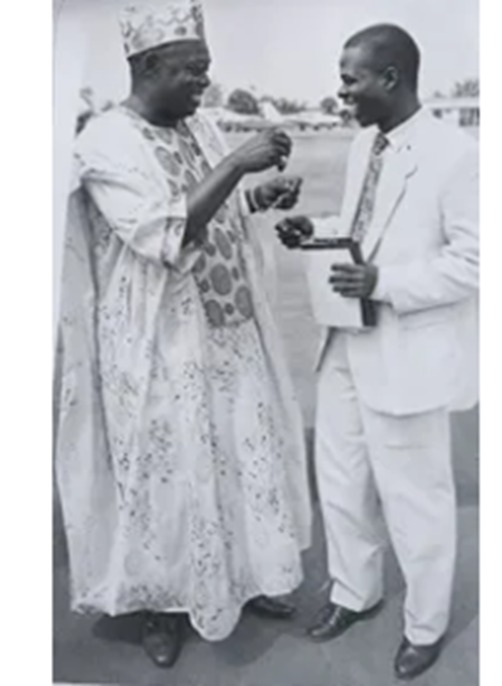
This Tuesday, July 7, Nigeria will pause once again to remember Bashorun Moshood Kashimawo Olawale Abiola, the man whose name has become inseparable from the nation’s democratic struggle. But for many in Nigerian sports, MKO Abiola represents something else entirely.
He was the benefactor who opened doors. The dream-maker who invested in athletes, journalists and administrators alike. The sports enthusiast whose generosity transformed careers and whose vision helped elevate Nigerian sports to unprecedented heights.
As the 28th anniversary of his death approaches, I find myself reflecting not on the politician or the business magnate, but on the man whose handwritten note altered the course of my professional life forever.
It is a story that began amid turmoil.
In August 1989, I was quietly working as a reporter with African Concord, the influential pan-African news magazine within the Concord Press stable. Unknown to me, a storm was raging elsewhere in the organisation.
Following internal crises within the sports department and the fallout from the tragic death of Nigerian international Samuel Okwaraji during the World Cup qualifier against Angola, management had decided drastic action was necessary. An investigative panel had recommended the dissolution of the sports desk, and plans were already underway to rebuild it from scratch.
While all of this was unfolding, I was immersed in preparing what would become a major cover story on the shocking death of Okwaraji.
Three days after the tragedy, as I returned from an assignment alongside Larry Echiejile, now Dr Larry Izamoje, founder of Brila FM, we encountered Mike Awoyinfa and Dele Momodu within the Concord premises.
Their expressions suggested they knew something we did not.
“They don’t know yet,” one of them whispered.
Moments later, the bombshell landed.
I had been appointed Group Sports Editor of Concord Press.
Larry was to be my deputy.
The announcement stunned me.
What happened behind the scenes was even more dramatic.
My name had reportedly not featured at all during heated deliberations over who should rebuild the sports department. Then a personal aide walked into the management meeting carrying a sealed note from the publisher himself, Bashorun MKO Abiola.
The room reportedly fell silent.
Dr Doyin Abiola, Managing Director of Concord Press, opened the note and read its contents aloud:
“I hereby appoint Mr Kunle Solaja of the African Concord as the Group Sports Editor with immediate effect.”
That single sentence ended all arguments.
The debate was over.
A handwritten instruction from MKO Abiola had settled the matter.
I did not know it then, but that brief note would become one of the most consequential documents of my life.
Ironically, when the appointment was announced, I had never met Abiola.
Rumours immediately spread across the organisation.
Some speculated that I must be related to one of his wives. Others assumed I enjoyed some hidden connection to the publisher.
The truth was simpler.
I was just as surprised as everyone else. I later got to know that he had been reading my write-ups in the pan-African magazine, the African Concord, where I ran a one-man sports desk and had elevated sports news to the cover pages.
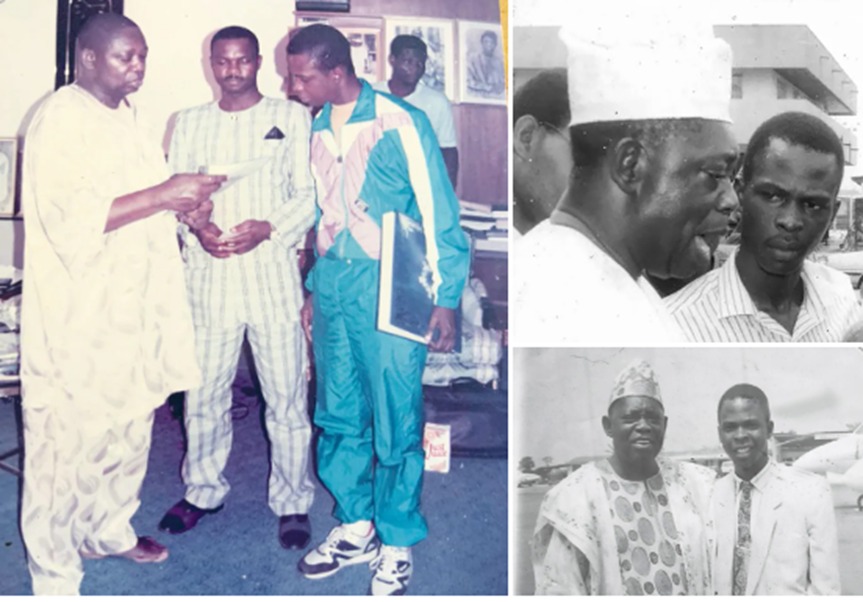
My tenure as Group Sports Editor of Concord Press brought me into close professional contact with Chief M.K.O. Abiola, whose unwavering passion for Nigerian sports and commitment to excellence made him one of Africa’s most influential sports patrons and media proprietors.
My first encounter with him came barely ten days later in Yaoundé, Cameroon, on August 27, after Nigeria’s painful 1-0 defeat to Cameroon that ended the Super Eagles’ hopes of qualifying for Italia ’90. I stayed in a downtown low-budget hotel and had to go to the high-brow Hotel Sofitel, where Lelex facilities were available to file my reports.
Having filed my report from the Hotel Sofitel, I spotted Abiola emerging from an elevator. It was my closest contact with him.
I introduced myself.
For a moment, he looked puzzled.
Then recognition dawned.
Turning to those around him, he exclaimed:
“So you’re the new sports editor? Are you this small? With the way you recall events, I thought you were an old man! Keep up the good work.”
It was a brief exchange.
But it marked the beginning of a remarkable professional relationship.
Within months, I found myself moving from relative obscurity into the inner circle of one of Africa’s most influential personalities.
I began writing speeches for him.
I advised him on sporting matters.
Occasionally, I represented him at official functions.
And through it all, I witnessed firsthand the extraordinary passion he had for sports.
Many people knew Abiola as a businessman.
Many knew him as a politician.
Sports people knew him as something else entirely.
He was a benefactor without equal.
Before almost every major assignment abroad, he found a way to support me personally, even when Concord Press had already approved official funding.
One of the earliest examples came when he instructed that I be sent to Barcelona for the IAAF (now World Athletics) World Cup in September 1989. He even left £4,000 for my upkeep through a trusted associate.
Fate intervened.
A Spanish public holiday prevented me from securing a visa, and the trip collapsed before it began.
The money disappeared with the opportunity.
But many more opportunities followed.
At the 1990 Africa Cup of Nations in Algeria, Abiola personally facilitated my trip despite the organisation already having a reporter assigned to the tournament.
When Nigeria recovered from a humiliating 5-1 opening defeat to reach the semifinal, I found myself seated beside him in the VIP section in Annaba.
Security initially refused me access.
Abiola spotted me from afar.
He waved me over.
After the match, he invited a small group of journalists for further discussions.
Then came another unforgettable gesture.
He gave me $2,000 and further instructed me to distribute $1,000 each to every Nigerian journalist covering the tournament. There were 20 of them.
One recipient joked that the amount exceeded his annual salary.
That was classic MKO.
His generosity was never calculated.
It flowed naturally.
Yet perhaps the most profound impact he had on my life came a few months later.
Armed with a FIFA accreditation letter as Nigeria’s only officially recognised print journalist for Italia ’90, I informed him of my plans to attend the World Cup.
He listened carefully.
Then he smiled.
“Please see me before you travel.”
That simple sentence was all the assurance I needed.
And true to his word, he ensured that my journey to Italy became a reality.
That World Cup changed everything.
It launched a journey that would eventually span ten FIFA World Cups, multiple Olympic Games and countless international sporting events.
Looking back today, it is impossible not to see the connection.
Without that handwritten note of 17 August 1989, there might have been no World Cup memoir.
There might have been no decades-long global sports reporting career.
There might never have been the experiences that shaped my professional life.
MKO Abiola was often called the “Africa’s Pillar of Sports,” an honour bestowed on him by African sports journalists.
The title was richly deserved.
He invested in clubs.
He supported athletes.
He empowered journalists.
He believed sport could unite people and elevate nations.
For me, however, his legacy is even more personal.
Every time I walk into a World Cup stadium, every time I sit in a press box thousands of kilometres away from home, I remember the man who saw potential in an obscure magazine reporter and changed his life with an 18-word memo handwritten on a piece of paper.
Twenty-eight years after his passing, Nigerian sports continue to celebrate MKO Abiola’s immense contributions.
I celebrate him for something even simpler.
A handwritten note.
A chance.
And a life transformed.