The Lagos-Calabar Coastal Highway is currently one of Nigeria’s most significant “legacy projects,” and as of May 2026, the status of its phases is a major point of public and economic interest.
While the project is a “game-changer,” there is a slight nuance regarding the “inauguration” timeline as of this week.
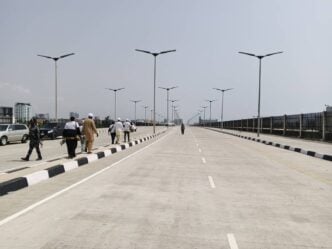
The first section, covering approximately 47.47km from Ahmadu Bello Way in Victoria Island to Eleko, has reached 98%–100% completion. The Minister of Works, Dave Umahi, recently confirmed that this section is substantially ready for formal inauguration by President Tinubu this month (May 2026).
Work on Section 2 (which extends toward the Dangote Refinery axis and beyond) is currently in full swing. The government has set a target for its completion by November 2026. This section includes complex engineering like flyovers, underpasses, and interchanges, which are currently visible to commuters along the corridor.
Construction has also been flagged off on other sections at the opposite end of the alignment in Akwa Ibom and Cross River states to ensure work progresses from both ends of the 700km route.
The highway is designed to link nine coastal states, creating a direct artery from the Southwest (Lagos) to the South-South (Calabar).
While progress is visible, the project has faced its share of hurdles, including over ₦15 billion has been disbursed to property owners affected by the right-of-way, though some legal and social disputes regarding demolitions (like the Landmark Beach area) remain part of the public discourse.
The Ministry of Works has expressed concern over the theft of metal fencing and solar streetlights along the newly completed sections, leading to calls for stricter security patrols.
While Section 1 is the part being “cut” this month, the momentum on Section 2 is what will truly begin to bridge the gap toward the South-South in the coming months.