By Charles Obiajulu Ugwu -PhD
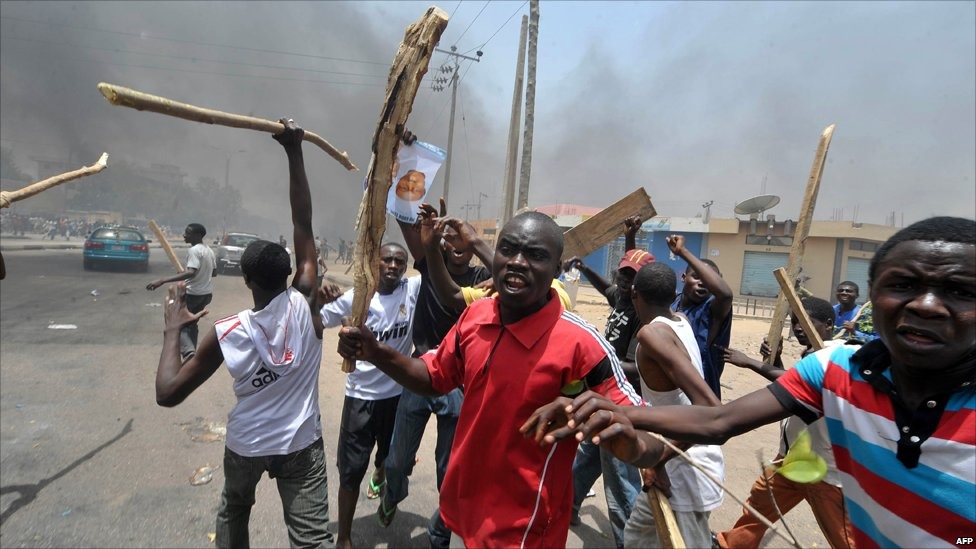
The Nigerian state is undergoing something far more sinister than a security crisis; it is witnessing the competitive deregulation of violence. What began as a geographically contained insurgency in the northeastern frontier has cascaded down into the southern rain forests, mutating from an ideological war into a highly decentralized, low-risk, and hyper-lucrative extraction industry. Across the country, the traditional indicators of statehood are collapsing in plain sight. Farmers are systematically evicted from their lands, ancestral forests are occupied by heavily armed syndicates, and highways have been transformed into toll gates of human misery where life is bartered for mind-boggling ransoms.
Yet, the truly terrifying dimension of this reality is not the cruelty of the perpetrators, but the functional abdication of the state. The traditional monopoly on physical force, which defines the modern nation, has been broken. In its place is a bizarre, macabre theatre of co-sovereignty. Terrorists and bandit commanders no longer skulk in the shadows; they attend formal dialogue sessions with state representatives clad in full combat gear, defiantly displaying sophisticated weaponry.
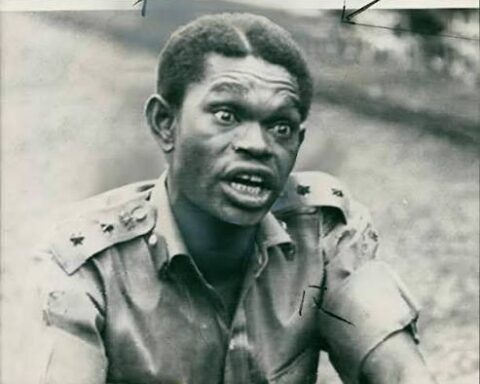
In one egregious and celebrated instance, a militant leader arrived at a government negotiation wearing the official uniform of a senior police officer he had slain. This is no longer a government fighting an outlaw; it is an establishment treating peer competitors with the diplomatic protocol reserved for sovereign entities.
While the geopolitical foundations of the country erode, the political class remains entirely consumed by the pageantry of an upcoming regime change. Over a trillion Naira is aggressively being marshaled and spent on electioneering logistics, advertising, and factional maneuvering. The stark, surreal contrast defines contemporary Nigeria: an elite class fiercely competing for the keys to a mansion while the foundation of the house is being actively dismantled. To analyze this drift through the conventional tropes of “poor governance” or “corruption” is to completely miss the point. The current catastrophe is not a failure of the system; it is the system operating at its logical, unregulated conclusion.
The Illusion of the Failed State
For decades, international observers and domestic analysts have used the phrase “failed state” to describe Nigeria’s periodic convulsions. This diagnosis is comforting because it implies an accidental departure from a norm, a temporary breakdown that can be remedied with institutional repairs, technical assistance, and increased budgetary allocations. But the structural reality is far more cold-blooded. The Nigerian state is not failing; it is functioning precisely as it was designed to by its current custodians.
The modern Nigerian apparatus operates on an extractive philosophy that dates back to its colonial inception. The primary objective of the central machinery has never been the holistic protection of its citizenry, but the centralization and distribution of economic rents. In times of relative peace, these rents took the form of crude oil revenues, import monopolies, and inflated public contracts. Today, as those traditional revenue streams dwindle or fail to satisfy the appetites of an expanding political class, the matrix of extraction has expanded to include the commercialization of insecurity.
When a state regularly earmarks billions of dollars for defense spending with zero accountability, peace becomes an economic liability. In a distorted ecosystem where conflict justifies bottomless security slush funds, the permanent elimination of banditry or terrorism represents a direct budget cut for the very entities tasked with law enforcement. Therefore, the kinetic responses of the state are intentionally designed to be performative rather than decisive. Troops are deployed to hold perimeters rather than reclaim territory; investigations are opened to manage public outrage rather than dismantle criminal networks.
This financialization of violence explains why traditional prescriptions are completely useless. Recommending community policing, enhanced military hardware, or intelligence-sharing frameworks to the current setup is like offering financial advice to a casino owner. The system does not want to change the rules of the game because the game itself is highly profitable. The bandits who occupy the southern forests are not external invaders; they are the informal, armed sector of a predatory political economy. They extract capital from the populace through kidnappings, while the formal sector extracts capital through inflation, taxation, and debt accumulation. Both sectors coexist because they ultimately feed into the same broader network of capital flight and elite preservation.
The Political Economy of the Forest
The expansion of banditry into the southern region marks a fundamental shift in the geography of Nigerian survival. The southern forests are not merely collections of trees; they are the agricultural lungs of the nation and the economic lifeline of millions of smallholder farmers. By occupying these spaces, the criminal syndicates have executed a brutal project of territorial enclosure. This is primitive accumulation by force of arms, mimicking the historic clearances that preceded industrial transitions elsewhere, but without any productive output.
When farmers are sacked from their lands, the immediate consequence is food insecurity, but the structural consequence is the destruction of rural autonomy. A population that cannot feed itself is a population that cannot resist political manipulation. The displacement creates a desperate, urban underclass entirely dependent on state handouts, pittance wages, or the patronage networks of the very politicians who profit from the instability.
Furthermore, the ransom economy has matured into a sophisticated financial market. The billions of Naira demanded from distraught families do not vanish into thin air, nor do they remain buried in forest dugouts. This liquid capital moves through the formal banking sector, buys real estate in urban centers, purchases sophisticated weaponry from international black markets, and pays for the logistics networks that supply food, fuel, and ammunition to the forest camps. The kidnapee is merely the raw material in a vast manufacturing process that converts human terror into clean, investable capital.
The complicity of the formal financial system is the most damning proof of the structural nature of this drift. In an era of mandatory digital identification, bank verification numbers, and intense financial surveillance, the seamless movement of hundreds of millions of Naira in ransom payments cannot happen without deliberate institutional blindness. The institutions of the state do not track these funds because doing so would expose the umbilical cord connecting the forest commander to the high-rise corporate office and the suburban political villa.
The Grand Electioneering Distraction
Against this backdrop of systemic collapse, the aggressive focus on the coming regime change takes on an almost surreal quality. The political class behaves like passengers fighting over the first-class seats on a sinking ocean liner. The trillion-Naira election cycle is a massive diversionary exercise, a grand piece of political theatre designed to channel the anxieties of the populace into a harmless, predictable ritual.
The illusion of choice presented by the ballot box is the primary mechanism through which the existing inertia maintains its grip. Every four years, Nigerians are told that their salvation lies in replacing one set of managers with another, while the underlying architecture of the state remains completely untouched. The candidates travel the country making spectacular promises of security and economic revival, using the very body counts generated by the insecurity as campaign ammunition to discredit their opponents.
Yet, whoever inherits the state house inherits the same broken machinery, the same compromised military command structure, and the same structural dependency on the extraction of oil and human flesh. The election does not represent a potential turning point; it represents the renewal of the leasehold. The massive financial investments made by political godfathers and corporate backers during the campaign season are not acts of patriotism; they are capital outlays that must be recouped with massive returns once power is secured. And the quickest way to recoup those investments is through the exploitation of the national security apparatus.
This is why the tales of woe from the highways and villages are treated by the political headquarters as mere noise and distractions. For the professional politician, a mass kidnapping or the massacre of a community is not a tragedy that requires the suspension of campaign activities; it is a public relations crisis that needs to be managed with a well-drafted press release and a temporary increase in police visibility. The show must go on because the show is where the money is.
Bypassing the Inertia: A Strategy of Systematic Defiance
If the existing system is perfectly calibrated to produce the current state of fear and decay, then any solution that relies on the goodwill, reform, or restructuring of that system is dead on arrival. The national drift cannot be arrested by appealing to the conscience of an elite that has no skin in the game. Their children are educated abroad; their medical needs are met in European hospitals; their wealth is stored in foreign currencies. They are completely insulated from the consequences of their actions.
To chart a completely new path, we must abandon the standard playbook of advocacy, civil society protests, and electoral politics. We must design strategies that are structurally impossible for the existing inertia to absorb, neutralize, or monetize. This requires a transition from passive citizenship to systematic defiance, a cold, calculated exercise of counter-power that targets the structural leverage points of the establishment.
Dismantling the Financial Pipeline
The first vulnerability of the security industrial complex is its reliance on the formal financial system to clean and move its capital. Since the state regulatory bodies have shown a complete lack of will to police these channels, the responsibility must be assumed by decentralized, open-source citizen intelligence networks.
Instead of begging the government to arrest sponsors of terrorism, an international, independent coalition of data analysts, investigative journalists, and financial hackers must bypass state agencies entirely. By utilizing public court records, leaked financial data, and blockchain analytics, this coalition can map the financial footprints of ransom payments and arms procurement.
The strategy is not to hand this information over to domestic law enforcement to be filed away, but to publish it globally in real-time, naming and shaming the specific commercial banks, corporate directors, and political actors facilitating these transactions. By exposing these institutions to international sanctions, reputational ruin, and global asset freezes, the economic cost of complicity becomes too high for the banking sector to bear. If you cut off the capacity to launder the proceeds of violence, you collapse the business model of the forest enterprise.
The Construction of Fortress Agriculture
The second leverage point lies in the physical reclamation of the southern forests. Waiting for a compromised military command to launch operations is a strategy of collective suicide. The communities and agricultural conglomerates of the south must shift from a posture of vulnerable defense to one of autonomous sovereignty through the concept of Fortress Agriculture.
This involves the organized, corporate-scale consolidation of agricultural lands into highly fortified, technologically sovereign clusters. Funded directly by diaspora syndicates, agricultural cooperative unions, and private investors, these clusters must bypass the traditional state security architecture entirely. They must deploy advanced civilian technologies—autonomous drone surveillance grids, thermal imaging perimeters, and decentralized early-warning communication networks that do not rely on state-controlled telecommunications infrastructure.
These agricultural zones must be managed as high-security infrastructure projects. The personnel defending these perimeters should not be unstructured local vigilantes waiting for police permits, but highly trained, corporatized security professionals whose allegiance is directly tied to the preservation of the economic asset. If the state cannot guarantee property rights, then economic actors must build their own private perimeters of deterrence, forcing the state to either validate their autonomy or watch its nominal authority over the countryside vanish completely.
The Fiscal Strike
The ultimate leverage point against a predatory political class is its stomach. The political elite and the sprawling bureaucracy they command are entirely parasites on the productive output of the formal corporate sector, the manufacturing unions, and the professional middle class. They require the steady inflow of Value Added Tax, corporate income tax, and various licensing fees to fund their luxurious lifestyles and their multi-trillion Naira election cycles.
The most potent, non-violent weapon available to the citizenry is a synchronized, nationwide fiscal strike. Organized by major chambers of commerce, manufacturing associations, professional bodies, and market unions, the doctrine must be absolute: No Security, No Taxes.
Under this framework, corporate entities and small businesses would legally deposit their tax obligations into independent, community-managed escrow accounts rather than remitting them to the federal purse. The release of these funds to the state would be strictly contingent upon the verification of specific, measurable security benchmarks—such as the complete clearance of specific transport corridors, the arrest of known bandit commanders, and the restoration of farming communities.
By cutting off the financial oxygen that feeds the state apparatus, the political class is instantly stripped of its capacity to ignore the populace. Their focus would shift immediately from the long-term theatrics of regime change to the immediate realities of physical and economic survival. A government that cannot access tax revenues cannot pay its security details, cannot maintain its fleets, and cannot sustain the patronage networks that keep it in power.
Criminalizing Complicity on the Global Stage
Finally, we must destroy the international legitimacy of the officials who negotiate with terrorists. When a government representative sits across a table from a militant commander who is wearing the uniform of a murdered senior police officer, that representative is no longer performing a state function; they are participating in a criminal conspiracy.
Civil society organizations and international legal networks must document these encounters with meticulous detail. These dossiers must be filed directly with international bodies, including the International Criminal Court and global sanctions committees, not under the vague category of human rights abuses, but under the specific, legal definitions of aiding and abetting terrorism.
The objective is to make the political elite international outcasts. If a politician knows that meeting a bandit commander in the forest or signing a clandestine peace treaty with an insurgent group will result in the immediate revocation of their foreign visas, the freezing of their overseas assets, and the issuance of an international arrest warrant, the calculus of co-sovereignty changes instantly. The political class maintains its domestic tyranny precisely because it enjoys international luxury. By collapsing the bridge between their misgoverned territory and their foreign sanctuaries, you force them to confront the monster they have allowed to grow.
The Choice Ahead
The gathering cloud over the Nigerian landscape will not be dissolved by the regular rhythms of the political calendar. The belief that a new president, a new cabinet, or a new set of legislative bills will magically reverse this deep structural rot is a dangerous delusion. The existing establishment is locked in a suicide pact with history, content to strip the state of its remaining assets before the final, inevitable collapse.
To arrest the drift requires an entirely different quality of mind, one that replaces the language of grievance with the language of structural defiance. The people must stop looking at the state as an errant parent that needs to be begged for protection, and start viewing it as a compromised entity that must be bypassed, pressured, and structurally reconfigured from the ground up.
The counter-strategy is not an armed insurrection; it is a cold, methodical withdrawal of consent and cooperation. It is the realization that the power of the oppressor relies entirely on the compliance of the oppressed. When the farmer fortifies his land, when the businessman locks his safe against the tax collector, and when the international community closes its borders to the complicit elite, the illusion of the state’s power dissolves. Only then, on the ruins of this old, predatory arrangement, can a genuine, resilient, and protective social contract be built.
Charles is a Contrarian thinker writing from Lagos