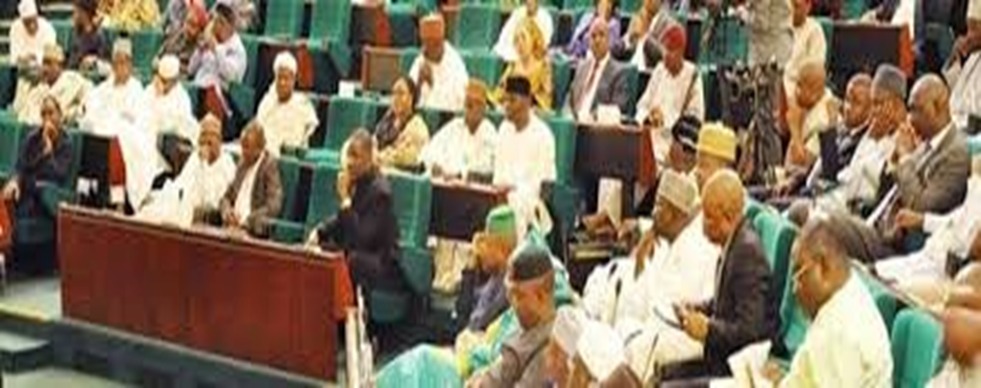
The 10th National Assembly is currently in a high-stakes legislative season, with both the National Security Enhancement Bill, 2026 and the Sixth Alteration to the 1999 Constitution moving through the chambers as of late April.
Introduced in the Senate in March 2026 (sponsored by Sen. Ani Anthony Okorie), this bill is a central pillar of the “Security First” agenda. It aims to modernize Nigeria’s defense architecture to meet current unconventional threats.
Key provisions include Terrorist Reclassification which Formally classifies all armed non-state actors, including bandits, kidnappers, and violent cult groups as terrorists, along with their financiers and “political enablers.”
Intelligence Coordination Mandates the creation of a Unified Intelligence Command to force better data sharing between the DSS, NIA, and Military Intelligence.
Financial Teeth will Increase the penalties for money laundering linked to insecurity, with mandatory minimum sentences of 15 years. It has passed the First Reading and is awaiting a second reading where the debate on its civil liberties implications is expected to be intense.
This is arguably the most ambitious constitutional review since 1999. After a series of joint retreats and public hearings in late 2025, the 10th Assembly is now voting on specific clauses.
The “Big Three” Issues like State Police, Local Government Autonomy and independent candidacy remains the most debated items.
With regards to State Policing, While there is strong momentum, the Assembly is still fine-tuning the “safeguards” to prevent state governors from using local police to suppress political opposition.
Local Government Autonomy is building on the 2024 Supreme Court ruling, this alteration seeks to permanently delete the “State Joint Local Government Account” from the Constitution to ensure federal allocations go directly to the 774 LGAs.
While Independent Candidacy is a move to allow individuals to run for office without being sponsored by a political party, aimed at reducing the “godfatherism” prevalent in party primaries.
While these bills are being debated, the National Assembly also recently passed the 2026 Appropriation Bill, which President Tinubu signed into law in April. With Total
Expenditure of ₦68.32 trillion and Over ₦5.4 trillion (nearly 10% of the budget), which provides the funding “engine” for the National Security Enhancement Bill mentioned above.
The Assembly is working under significant pressure. With the January 16, 2027 election date now set (following the new Electoral Act 2026), lawmakers are racing to conclude these constitutional amendments by July 2026 to ensure the new rules are in place before the official campaign season kicks off in August.