By Richard Benjamin
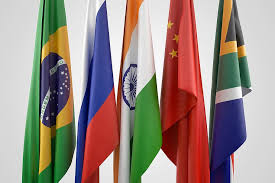
Brazil, China and South Africa have signed a memorandum of understanding (MoU) to establish the GOTTA-BRICS Pathfinder Network, an international telescope network designed to observe short-duration astronomical phenomena.
According to TV BRICS, the Global Open Transient Telescope Array (GOTTA) will enhance the observation of transient astronomical events, including stellar flares, changes in the brightness of celestial bodies and other dynamic processes in space.
The network, currently under development, will bring together scientific institutions from the BRICS countries to build a collaborative infrastructure for astronomical observations.
In Brazil, the project will be coordinated by the National Laboratory for Astrophysics (LNA), under the Ministry of Science, Technology and Innovation (MCTI), with observations conducted at the Pico dos Dias Observatory in the Serra da Mantiqueira mountain range, Minas Gerais.
China will contribute through the Xinlong and Lenghu observatories, while South Africa will participate through the South African Astronomical Observatory (SAAO).
Beyond astronomical observations, the initiative will support the development of technologies for managing distributed telescope networks, including the use of artificial intelligence for real-time operations.
It will also establish a shared infrastructure for data storage and exchange, alongside a training programme for personnel. Other MCTI research organisations specialising in astronomy and scientific instrumentation are also participating in the project.
The GOTTA-BRICS Pathfinder Network is expected to serve as a preparatory phase for the broader BRICS Intelligent Telescope and Data Network (BITDN), which aims to strengthen scientific and technological cooperation among member countries.
Acting Director of the LNA, Luciano Fraga, said the MoU reflected the shared commitment of Brazil, China and South Africa to build a joint astronomical observation network and deepen their participation in major international scientific projects.
According to him, the agreement represents not only institutional collaboration but also a long-term investment in scientific cooperation, innovation and capacity building among the participating countries.