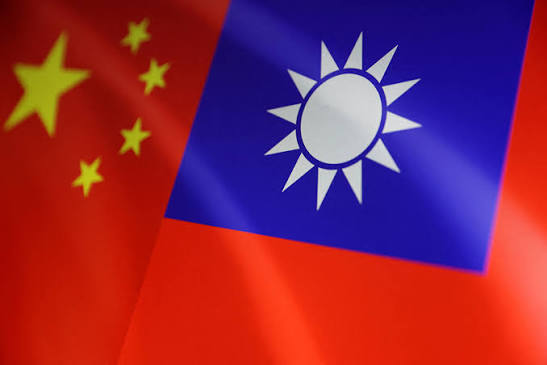
In a move that is likely to further heighten tensions across the Taiwan Strait, Taiwan has launched a new online platform aimed at encouraging Chinese citizens to provide intelligence and information about activities within mainland China, particularly those linked to the government in Beijing.
The initiative, unveiled by Taiwan’s National Security Bureau, seeks to create a secure channel for individuals in China who support democratic values to anonymously share information with Taiwanese authorities. Officials in Taipei described the platform as an opportunity for people who “share the same values of democracy” to contribute to efforts aimed at countering what they view as increasing authoritarianism and political repression under the Chinese government.
The announcement comes against the backdrop of long-standing political and military tensions between Taiwan and China. While Beijing regards Taiwan as part of its territory and has repeatedly vowed to bring the island under its control, by force if necessary, Taiwan maintains that it is a self-governing democracy with the right to determine its own future.
According to a statement issued by the National Security Bureau, the new website was introduced alongside a one-minute artificial intelligence-generated video designed to illustrate the atmosphere of fear and uncertainty that authorities say exists within China’s political and bureaucratic system.
The video depicts a Chinese civil servant watching colleagues being suddenly removed from their positions and subjected to investigations, creating an environment of anxiety and suspicion among government workers. The NSB said the scenario was intended to reflect what it described as “a pervasive atmosphere that everyone is on edge under China’s totalitarian regime.”
Taiwanese officials argued that the campaign was not only about gathering intelligence but also about giving a voice to individuals who may feel constrained by political pressures in mainland China. The bureau noted that there has been a noticeable rise in the number of people seeking ways to communicate with Taiwanese authorities.
According to the statement, an “increasing number” of individuals have approached agencies in Taiwan expressing a willingness to provide different types of information. Authorities did not specify the exact nature of the intelligence they hope to receive but indicated that the platform is designed to accept a wide range of reports and materials that could help Taiwan better understand developments inside China.
Security analysts say the initiative represents one of Taiwan’s most direct attempts in recent years to encourage cooperation from people living under Chinese rule. The move reflects growing concerns in Taipei over what it sees as escalating efforts by Beijing to influence Taiwan through espionage, cyber activities, disinformation campaigns, and infiltration of political, military, and social institutions.
Taiwan has repeatedly accused China of attempting to weaken its defences through covert operations and intelligence gathering. Several recent espionage cases involving current and former military personnel, government employees, and individuals with access to sensitive information have heightened concerns among Taiwanese security agencies.
In response, Taiwan has increased its counterintelligence operations and introduced stricter measures aimed at protecting national security. The new whistleblower platform is viewed as another component of that broader strategy. The launch also highlights the increasingly technological nature of modern intelligence operations.
By using artificial intelligence-generated content and online communication tools, Taiwan appears to be seeking new ways to engage potential informants while ensuring anonymity and accessibility.
Observers note that the campaign is likely to provoke a strong reaction from Beijing, which routinely condemns what it sees as separatist activities by Taiwan’s government. Chinese authorities have consistently rejected accusations of repression and have accused Taiwan’s leaders of promoting hostility and undermining prospects for peaceful reunification.
Relations between the two sides have deteriorated significantly in recent years. China has increased military exercises around Taiwan, dispatched fighter jets and naval vessels near the island, and intensified diplomatic pressure aimed at isolating Taipei internationally.
Meanwhile, Taiwan has sought to strengthen its security partnerships with democratic nations and improve its defence capabilities amid growing concerns about regional stability. Political experts say the creation of the intelligence-sharing platform demonstrates how the contest between Taipei and Beijing increasingly extends beyond military manoeuvres and diplomatic disputes into the realm of information, influence, and public perception.
For supporters of the initiative, the website provides a channel for individuals who may wish to expose wrongdoing or share information they believe is important for regional security. Critics, however, may view the move as a provocative attempt to recruit informants from within China.
Regardless of differing perspectives, the launch of the platform underscores the deepening rivalry between Taiwan and China, a relationship that continues to shape security dynamics across the Asia-Pacific region and attract close attention from governments around the world.
As tensions remain high across the Taiwan Strait, the success or failure of Taiwan’s latest initiative could become another significant chapter in the ongoing struggle for influence, intelligence, and political legitimacy between the two sides.