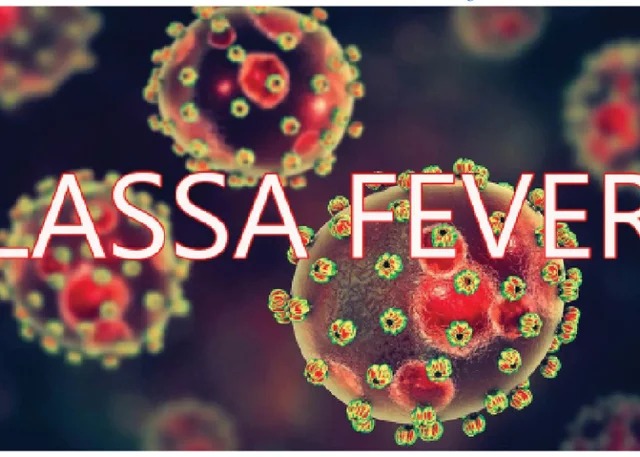
This is the third time this year we are dedicating this space to the crisis of Lassa fever deaths in Nigeria, and each time we return to the subject, the numbers are grimmer than before. In its Situation Report for Week 14 of 2026, covering March 30 to April 5, the Nigeria Centre for Disease Control and Prevention (NCDC) reported 170 deaths from Lassa fever between January and the first week of April ,a span of barely 14 weeks.
The case fatality rate now stands at 24.8 per cent, a sharp deterioration from the 18.8 per cent recorded in the same period last year. That a disease which has been known in Nigeria since 1969 when it was first identified in the town of Lassa, Borno State, continues to kill at this rate is an indictment of every tier of government and every public health institution in this country.
The NCDC report indicates that 22 states have recorded at least one confirmed case across 94 local government areas, with Bauchi, Ondo, Taraba, Benue and Edo states accounting for 84 per cent of all confirmed infections. The predominant age group affected remains 21 to 30 years ,the most productive demographic in any society.
These are young Nigerians in the prime of their working lives, and they are dying from a disease that thrives in conditions of poverty, poor sanitation and overcrowded housing. That single fact tells us everything we need to know about why Lassa fever has received so little sustained attention from policymakers.
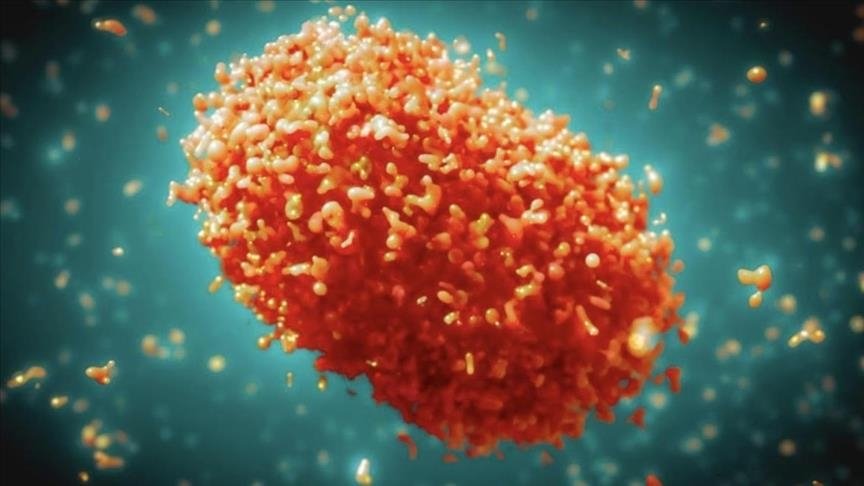
Lassa fever is, by every measurable indicator, a disease of the poor. It is transmitted through contact with food or household items contaminated by the urine or faeces of the Mastomys rat, a rodent that breeds prolifically in environments where waste management is non-existent and housing is substandard.
The communities most ravaged by this virus are rural settlements and urban slums where residents cannot afford rat-proof housing, where open refuse dumps serve as breeding grounds for rodents, and where access to healthcare is a distant aspiration. If Lassa fever were killing the children of senators and governors at the rate it kills the children of subsistence farmers in Ondo and Taraba, the response from Abuja would be radically different.
The disease persists because its victims lack the political voice to demand action and the economic power to compel it.
There is a disturbing parallel that must be drawn here. Nigeria is a country where citizens are killed daily by terrorists, bandits, kidnappers and armed herdsmen in numbers that have made international headlines. Billions of naira are allocated annually to military operations and security infrastructure. Yet Lassa fever, killing 170 Nigerians in 14 weeks with a fatality rate that would trigger national emergencies in other countries, barely registers on the political radar.
There are no emergency security meetings convened, no presidential directives issued, no special appropriations debated on the floor of the National Assembly. The virus is competing with bullets and bombs for Nigerian lives, and it is winning its share of that grim contest in near-total silence.
We find this silence unacceptable. A 24.8 per cent case fatality rate means that roughly one in every four confirmed Lassa fever patients is dying. For context, the fatality rate during the Ebola outbreak in West Africa between 2014 and 2016, which triggered a massive international response, hovered around 40 per cent. Lassa fever’s fatality rate is more than half that figure, and the national response remains tepid. The country has no dedicated Lassa fever vaccine programme in advanced stages.
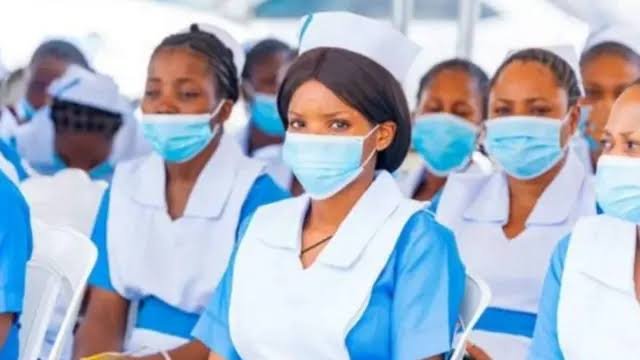
Research into the disease remains grossly underfunded. Diagnostic capacity is concentrated in a handful of centres, meaning that patients in remote areas often die before a diagnosis is confirmed. The healthcare workers on the frontline, though mercifully spared in the most recent reporting week, have in previous outbreaks paid with their own lives for the government’s failure to invest in protective equipment and infection control.
The pattern is as predictable as it is infuriating. Every year, between January and April, Lassa fever peaks. Every year, the NCDC issues situation reports documenting the rising toll. A few editorials are written, a handful of public health experts sound the alarm, and then the dry season arrives, the case count drops, and the country moves on ,until the next outbreak season begins again with worse numbers. This is not a crisis that sneaks up on Nigeria. It announces itself on schedule, and the country’s response each time amounts to hoping it will go away on its own.
What must be done is neither mysterious nor novel. Aggressive rodent control programmes in endemic communities, investment in waste management infrastructure in rural areas, expansion of diagnostic laboratory capacity, public education campaigns in local languages targeting at-risk populations, and the training and equipping of healthcare workers in endemic states ,these are measures that public health professionals have recommended repeatedly. None has been implemented at the scale required.
The federal government’s allocation to primary healthcare remains a fraction of what the World Health Organisation recommends, and the state governments in the worst-affected areas have shown no greater urgency.
We said it the first time we wrote about this. We said it the second time. And we are compelled to say it a third time with even greater force: Lassa fever is not a minor public health footnote. It is a preventable killer that claims hundreds of Nigerian lives every year because the country’s leadership does not consider the lives of poor, rural Nigerians worth the cost of a sustained intervention.
Until the political class treats Lassa fever with the same urgency it brings to security appropriations and election logistics, Nigerians will continue to die needlessly from a disease that modern public health systems elsewhere have contained. The 170 dead in 14 weeks are not statistics. They were people, and they deserved better from a country that has the resources but not the will to protect them.