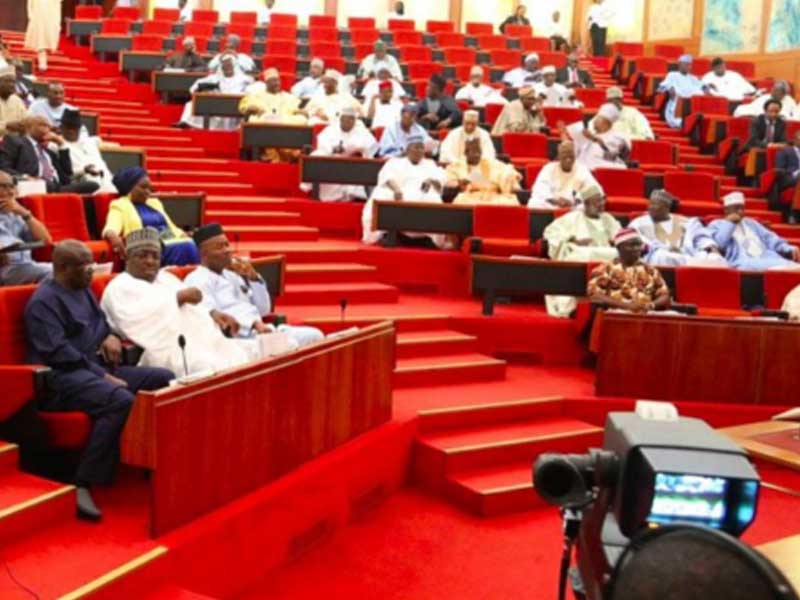
The Senate is set to reconvene today for an emergency plenary session in what many political observers and security experts have described as a defining moment in Nigeria’s democratic and security evolution, as lawmakers prepare to consider and potentially pass the long-debated State Police Bill.
The special session comes against the backdrop of growing insecurity across various parts of the country and mounting calls for a more decentralized policing structure capable of responding effectively to local security challenges.
At the center of the deliberations is a constitutional amendment bill that seeks to establish state-controlled police formations, a proposal that has dominated national discourse for years and remains one of the most ambitious security reforms since the return to democratic governance in 1999.
The emergency sitting became necessary after lawmakers were unable to conclude action on the bill before embarking on a three-week recess.
Despite widespread support from senators across party lines, the upper legislative chamber failed to secure the constitutionally required quorum needed to complete the amendment process.
Because the proposal involves amendments to the 1999 Constitution, it requires the support of at least two-thirds of members of the Senate before it can proceed to subsequent stages of the constitutional review process.
The inability to meet the required threshold before recess triggered concerns among supporters of the legislation, many of whom feared that further delays could slow momentum behind a reform widely regarded as crucial to addressing the country’s worsening security challenges.
Today’s emergency plenary is therefore expected to provide lawmakers with another opportunity to secure the numbers needed to advance the bill and move Nigeria closer to a major restructuring of its policing architecture.
For decades, Nigeria has operated a centralized policing system under the control of the Federal Government through the Nigeria Police Force. While the arrangement was designed to ensure uniformity and national cohesion, critics have increasingly argued that it has become inadequate in addressing the complex and evolving security threats confronting different regions of the country.
From banditry in the North-West and insurgency in the North-East to kidnapping, communal clashes, cult violence, and separatist agitations in other regions, security challenges have continued to test the capacity of the centralized policing framework.
Supporters of state police argue that governors, who are often described as the chief security officers of their states, currently lack direct operational control over security personnel despite being held accountable by citizens whenever insecurity occurs.
They contend that establishing state police formations would allow local authorities to respond more quickly to emerging threats, improve intelligence gathering, and enhance community-based policing initiatives.
Many governors, traditional rulers, civil society groups, and security experts have repeatedly advocated the creation of state police, insisting that local security agencies would possess a better understanding of the terrain, culture, language, and unique challenges within their jurisdictions.
Advocates also point to successful community security arrangements in several states as evidence that decentralized policing could strengthen law enforcement and improve public safety.
The proposed legislation is expected to outline the legal framework for the creation, administration, funding, oversight, and accountability of state police services across the federation.
However, despite broad support for the reform, the proposal continues to generate significant debate among stakeholders.
Opponents of state police have expressed concerns about the possibility of abuse by state governments, warning that governors could potentially use local police formations to intimidate political opponents, suppress dissent, or influence electoral processes.
Some critics also fear that disparities in economic resources among states could result in uneven policing standards, with wealthier states maintaining more effective security institutions than their less financially endowed counterparts.
Others have called for stronger safeguards, including independent oversight mechanisms and constitutional protections, to prevent political interference in the operations of state police commands.
These concerns have fueled extensive debates within the National Assembly and among stakeholders involved in the constitutional review process.
Nevertheless, many lawmakers believe the security realities facing the nation have made reform increasingly unavoidable.
Several senators have previously argued that the current security environment demands innovative approaches and structural changes capable of addressing emerging threats more effectively than existing arrangements.
Political analysts note that the outcome of today’s sitting could have far-reaching implications not only for security governance but also for the broader conversation about restructuring and federalism in Nigeria.
If the Senate successfully secures the required votes and advances the bill, it would mark a significant milestone in a constitutional amendment process that has attracted nationwide attention.
The proposal would still need to pass through additional constitutional procedures, including approval by the House of Representatives and endorsement by at least two-thirds of the country’s State Houses of Assembly before it can become law.
However, a successful vote in the Senate would represent a major breakthrough for proponents of the reform and signal growing legislative consensus on the need for changes to the nation’s security architecture.
As senators gather for the emergency session, expectations are high among citizens, security stakeholders, and political observers eager to see whether lawmakers can overcome the procedural hurdles that stalled progress before the recess.
For many Nigerians, the debate transcends politics and constitutional technicalities. It is ultimately about finding sustainable solutions to the security challenges that continue to affect communities, disrupt economic activities, and threaten national stability.
Whether today’s deliberations result in a decisive breakthrough or further debate, the State Police Bill has already emerged as one of the most consequential legislative proposals of the current democratic era, with the potential to reshape the future of policing and security management across Nigeria.