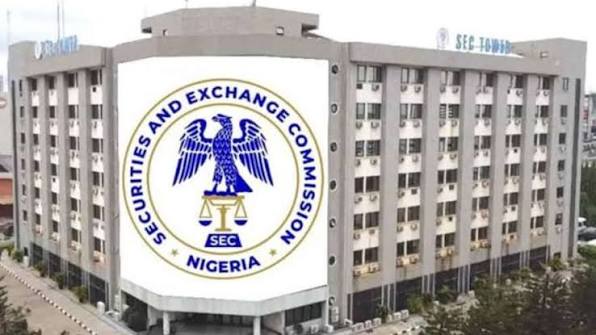
The Securities and Exchange Commission (SEC) has urged Nigerian tertiary institutions to shift away from their historical reliance on government allocations and TETFund subventions by actively participating in the capital market to achieve long-term financial sustainability.
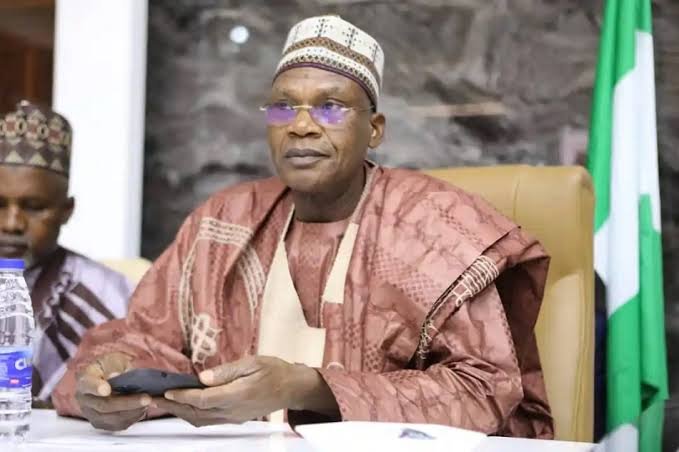
The call was made by the Director-General of the SEC, Dr. Emomotimi Agama, while delivering a keynote lecture titled “Capital Formation, Wealth Creation, and the Future of Higher Education in Nigeria” at the University of Lagos (UNILAG), Akoka, on Friday, October 9, 2026, at 11:00 AM.
Speaking in the J.F. Ade Ajayi Main Auditorium, Dr. Agama expressed concern over the passive role academic institutions have played in national financial systems despite their critical role in human capital development.
“Despite producing Nobel laureates, heads of state, central bank governors, and the very architects of our financial system, Nigeria’s premier institutions have remained financial spectators in a market built by their own graduates,” Agama stated. “Not once has a major public university issued a bond, launched a structured fund, or listed an investment vehicle to raise long-term capital.”
Dr. Agama highlighted the vast disparity between government budgetary disbursements and the capacity of the capital market. He noted that while Nigerian commercial banks successfully raised over ₦4.65 trillion through recapitalisation exercises over a 24-month period, average institutional allocations from TETFund sit at approximately ₦2.53 billion per university, representing a funding capacity ratio of nearly 1,000 to 1.
He urged university governing councils, vice-chancellors, and financial officers to explore capital formation instruments such as; Issuing municipal-style bonds backed by enterprise revenues, technology transfer patents, and commercial real estate assets.
Structuring professional investment vehicles traded on the Nigerian Exchange (NGX) to manage institutional endowments and assetizing intellectual property and spin-off companies through venture capital and private equity frameworks.
With national pension assets standing at ₦31.48 trillion as of July 2026 and total equities market capitalisation on the NGX exceeding ₦215 trillion, Agama emphasized that liquidity exists within the system to fund infrastructure and research, provided institutions build governance structures capable of attracting institutional investors.
The Vice-Chancellor of the University of Lagos, Prof. Folasade Ogunsola, along with academic leaders and financial market operators present at the event, acknowledged the necessity of financial innovation amid tightening public sector fiscal constraints.
The SEC reiterated its commitment to supporting higher education institutions through tailored regulatory frameworks that facilitate corporate listings, municipal debt issuance, and financial literacy initiatives across university campuses nationwide.