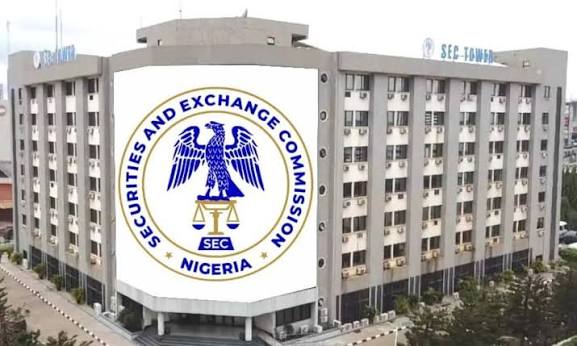
The Securities and Exchange Commission (SEC) has unveiled a comprehensive draft regulatory framework aimed at tightening oversight, bolstering financial stability, and establishing rigorous capital standards across Nigeria’s rapidly expanding digital asset sector.
Released on Thursday, August 20, 2026, from the commission’s headquarters in Abuja, the draft policy document titled;”Rules on Digital and Virtual Asset Operations, Custody and Markets” introduces strict entry barriers and ongoing compliance fees for virtual asset service providers (VASPs) operating within or targeting users in Nigeria.
Under the proposed rules, major market participants specifically Digital Asset Exchanges (DAXs) and Digital Asset Custodians (DACs) will be required to maintain a minimum paid-up capital of ₦2 billion ($1.5 million).
Additionally, these entities must pay a non-refundable registration fee of ₦30 million, along with a ₦100,000 processing fee and a ₦300,000 application fee.
Sub-categories, including Digital Asset Platform Operators (DAPOs), Digital Asset Offering Platforms (DAOPs), and Real-World Asset Tokenization Platforms (RATOPs), face a minimum capital requirement of ₦500 million alongside the ₦30 million registration fee. General VASPs are subject to a ₦200 million capital floor and a ₦15 million registration fee.
To protect retail investors against operational shocks, the SEC has mandated that all registered operators maintain a fidelity insurance bond covering at least 25 per cent of their minimum paid-up capital.
”No person shall conduct any digital or virtual asset business, service, function or activity in Nigeria, or targeted at persons resident in Nigeria, unless registered, approved or authorised by the Commission in accordance with these Rules,” the SEC stated in its official publication.
The policy framework also establishes continuous supervisory fees calculated as a percentage of adjusted turnover.
Under the SEC’s Accelerated Regulatory Incubation Programme (ARIP), participating exchanges will pay a quarterly supervisory fee of 0.015 per cent of adjusted turnover. Once fully registered, this charge will increase to 0.025 per cent for exchanges and 0.015 per cent for other digital asset operators.
To curb retail exposure in high-risk offerings, the draft rules impose investment ceilings: retail investors may not invest more than ₦1 million per issuer or ₦10 million in aggregate across digital asset offerings over any 12-month period without additional regulatory clearances and explicit risk acknowledgments.
Highlighting the commission’s focus on enforcement and accountability, the regulatory framework specifies that any entity offering digital asset services to Nigerian residents must maintain a physical office in the country.
Furthermore, the company’s Chief Executive Officer or equivalent principal officer must reside within Nigeria.
Speaking on behalf of the regulatory body, Dr. Emomotimi Agama, Director-General of the Securities and Exchange Commission, emphasized the necessity of balancing innovation with investor protection.
”Our goal is not to stifle technological advancement, but to create a transparent, well-capitalized, and resilient financial ecosystem,” Agama stated during a regulatory briefing. “By establishing clear operational parameters and capital safeguards, we are protecting market integrity, preventing market abuse, and ensuring that legitimate operators can build sustainable businesses within Nigeria.”
The commission has opened a public consultation period through September 2026, during which industry stakeholders, financial institutions, and public representatives may submit comments before the final guidelines are enacted.