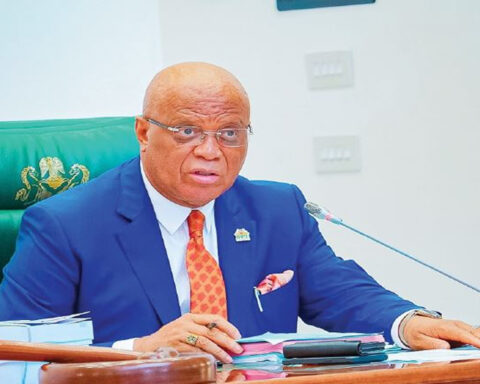
Former Minister of Finance and Coordinating Minister of the Economy, Wale Edun, has exited the cabinet of President Bola Ahmed Tinubu, with sources attributing his departure largely to health concerns.
It was reported that this is not the first time Edun has stepped down from public office due to medical reasons. During Tinubu’s second term as governor of Lagos State, he similarly resigned from the state cabinet in February 2004, barely a year after his appointment, citing health reasons.
Insiders disclosed that Edun had also taken ill in October 2025 and was flown abroad for treatment. Sources close to the presidency noted that having recently turned 70, the demands of the role had taken a significant toll on his health.
A senior economist, who spoke on condition of anonymity, said while such developments are not unusual in high-pressure public offices, they can raise concerns in performance-driven systems.
“It’s not uncommon for health to become a factor in high-pressure roles like that,” the economist said. “But in a system where outcomes are everything, any sign of slowdown can quickly become an issue.”
In contrast, the exit of former Minister of Housing, Ahmed Musa Dangiwa, was linked to dissatisfaction with his performance.
Sources indicated that the President sought a more aggressive implementation of his nationwide housing programme.
Meanwhile, Edun has expressed gratitude to President Tinubu, describing his time in government as both an honour and a privilege.
In a statement issued shortly after his exit, he thanked the President for the opportunity to serve in multiple capacities since the administration began in May 2023.
He recalled his roles as head of the Presidential Transition Committee, Special Adviser on Monetary Policy, and later as Finance Minister.
Reflecting on his tenure, Edun stated that the administration inherited a fragile economy but worked collectively to stabilise the macroeconomic environment and improve fiscal sustainability.
He said these efforts helped drive economic growth from about two per cent to over four per cent, while inflation declined from 35 per cent to 15 per cent.
According to him, the reforms were guided by a commitment to restoring public trust, boosting investor confidence, and ensuring inclusive growth.
Edun also acknowledged the support of members of the Federal Executive Council, state governors, and stakeholders across both public and private sectors, noting that collaboration was key to the progress recorded.
While admitting that significant work remains, he expressed optimism about Nigeria’s economic trajectory, stating that the foundations for long-term growth have been firmly established.
He wished his successor success in office and reaffirmed his commitment to continue supporting the administration and contributing to national development.