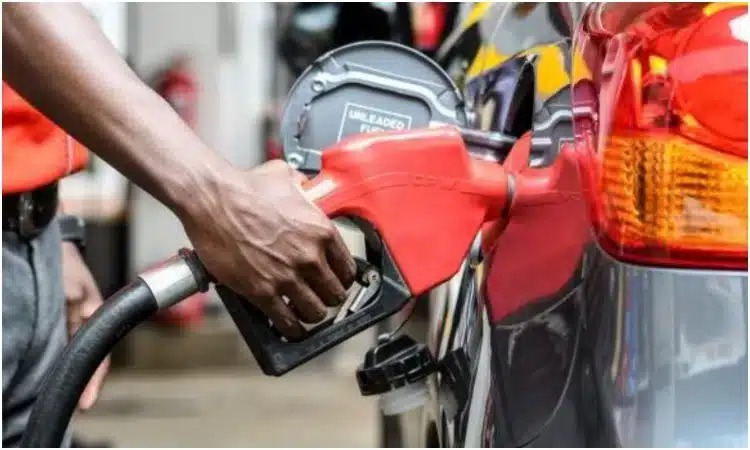
Fuel queues eased across major Nigerian cities on Saturday as independent petroleum marketers began revising their pump prices downward, following recent adjustments made by the Nigerian National Petroleum Company Limited (NNPCL) and domestic refiners.
The price reductions, which began filtering through retail outlets late Thursday evening, represent a shift in the downstream sector as falling imported landing costs and reduced wholesale gantry prices filter down to consumers.
Independent filling stations across Lagos, Abuja, and Port Harcourt reported cuts between ₦15 and ₦30 per litre, bringing retail rates closer into alignment with state-backed stations.
At a media briefing held Friday morning at the Independent Petroleum Marketers Association of Nigeria (IPMAN) headquarters in Abuja, the association’s National Publicity Secretary, Chinedu Ukadike, confirmed that member stations had received instructions to reflect the lower wholesale costs at the pump.
”What consumers are seeing now is market forces working as intended under a deregulated system,” Ukadike told reporters. “As depot costs drop and product availability improves through both NNPCL channels and local refining, our marketers must adjust their pricing to remain competitive. Stations along major corridors in Abuja and Lagos have already calibrated their meters to pass these savings on.”
The downward trajectory was triggered by a reduction in wholesale gantry rates at the Dangote Petroleum Refinery, alongside a dip in the landing cost of imported Premium Motor Spirit (PMS) to approximately ₦1,304 per litre at coastal depots.
In response, NNPCL retail stations adjusted prices to range between ₦1,020 and ₦1,370 per litre depending on the region, prompting independent operators, who typically sell at a premium, to narrow the price gap.
Visits to retail outlets in Lagos on Saturday morning showed major independent brand MRS and several non-aligned stations along the Lekki-Epe Expressway and Ikeja selling fuel at ₦1,330 per litre, down from ₦1,355 earlier in the week. Similar trends were observed along the Katampe and Lugbe expressways in Abuja, where prices stabilized between ₦1,370 and ₦1,400 per litre.
Energy analyst Adeola Yusuf noted during a telephone interview on Saturday that while the price adjustments offer welcome relief to motorists and small business owners, retail stability remains tied to foreign exchange rates and international crude price trends.
”The immediate reduction by independent marketers demonstrates that local depot price drops can translate quickly to the street level,” Yusuf said. “However, maintaining these lower pump prices over the long term will depend heavily on sustained local supply and crude price stability on the global market.”
Industry representatives expect additional filling stations to update their prices through the weekend as older, higher-cost inventory clears out across regional distribution hubs.