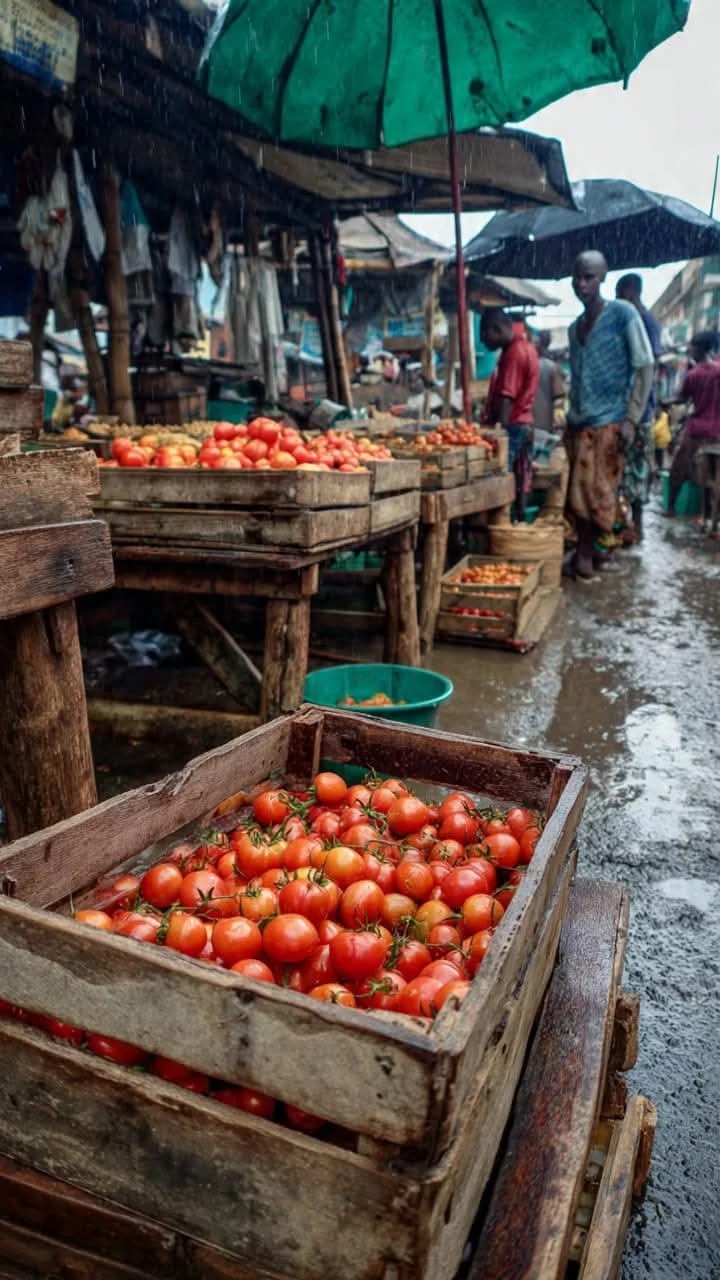
Tomato sellers in Anambra have attributed the current rise in shortage and price of the product to persistent rainfall and flooding in key tomato-producing areas of the country.
According to the survey, the price of a basket of tomatoes rose from between N65,000 and N70,000 to between N100,000 and N150,000.
Mr Uchenna Amanambu, a tomato wholesaler at Eke-Awka market, said that persistent rainfall in Jos and Makurdi, had negatively impacted farming activities and reduced output.
According to him, the two states are major tomatoes producers in Nigeria.
He added that flooding along key transportation corridors had further disrupted the distribution of tomatoes to markets across the country, thereby worsening the supply shortage.
Mrs Ifeoma Uzonna, another tomato wholesaler, said traders were struggling to maintain supplies due to irregular deliveries from the Northern part of Nigeria.
“Before now, trucks arrive almost every week with large quantities of tomatoes but these days, we receive fewer supplies and sometimes wait longer for deliveries.
“The scarcity has pushed up prices significantly; what we sold for N70,000 a few months ago now sells for over N120,000,” she said.
Another trader, Mr Chinedu Nwafor, said transportation costs had also increased because some roads linking producing areas to the South-East had been affected by flooding.
“The cost of moving goods has gone up and this ultimately affects market prices.
“Traders are not making excessive profits; we are simply adjusting to the realities of supply and transportation challenges,” he said.
At Ose market, Mrs Celestina Ezeokafor described the situation as one of the most severe supply shortages experienced this year.
She said: “Customers complain every day about the prices, but we explain that the problem started from the farms.
“The rains damaged many farms and reduced harvests.
“Some customers who usually buy in baskets now purchase half baskets or smaller quantities because of the high cost. ”
Also speaking, Mr Emeka Obi, a retailer at the market said consumers had become more cautious in their spending.
“People now buy only what they need for immediate cooking.
“Many families are substituting tomatoes with tatashe and pepper to reduce cost,” he said.
At Nkpor market in Idemili South Local Government Area, traders said the situation had affected both sales volume and consumer purchasing power.
Mrs Ngozi Chukwu, popularly known as mama Chidera, said the scarcity had compelled many households to seek alternatives.
“The good thing is that pepper, onions and tatashe are still available.
“These items have helped many families prepare meals in spite of the high cost of tomatoes,” she said.
She advised residents to supplement fresh tomatoes with pepper, tatashe and tomato paste pending the restoration of normal supply levels.
Another trader, Mr Sunday Ezeani, expressed optimism that the situation would improve in the coming months.
“We expect supply to improve when rainfall reduces and farmers begin harvesting from irrigated farms.
“Once more tomatoes enter the market, prices will gradually come down,” he said.