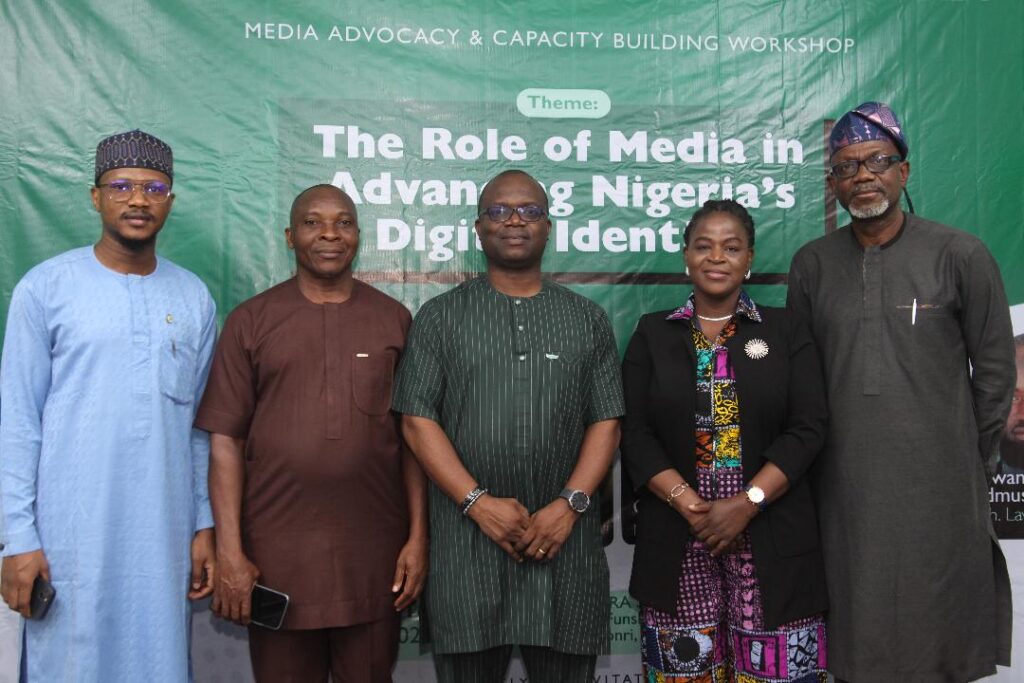
Nigeria has taken a significant step toward securing its digital future with the deployment of Domain Name System Security Extensions (DNSSEC) on the .ng domain—a development that goes beyond technical advancement to touch the core of national sovereignty, economic value, and digital trust.
Unveiled by the Nigeria Internet Registration Association (NiRA), the successful signing of the .ng zone introduces cryptographic protection into Nigeria’s Domain Name System (DNS), ensuring that users who visit .ng websites are connected to authentic destinations. It is a direct response to growing cyber threats such as phishing, spoofing, and traffic hijacking—risks that have become more pronounced as Nigeria’s digital economy expands.
Yet, while DNSSEC strengthens the infrastructure, it also raises a more fundamental question: who owns Nigeria’s digital identity—and who benefits from it?
Beyond Oil: The Rise of Digital Sovereignty
For decades, Nigeria’s economic narrative has been tied to oil, agriculture, and physical infrastructure. But the architecture of global power is shifting. Today, nations increasingly compete on the strength of their digital ecosystems—data, platforms, and identity.
Digital identity is the invisible backbone of this new economy. It determines where value is created, who controls data, and how trust is established in online transactions.
At the centre of Nigeria’s digital identity lies the .ng domain.
Often overlooked as a mere technical suffix, .ng is in fact a strategic national asset. It is Nigeria’s address on the internet, its digital flag, and its gateway to economic participation in an increasingly online world.
As Nigeria targets a trillion-dollar economy, the issue is no longer simply access to the global digital marketplace—it is ownership within it.
The Policy Architecture: Building a Controlled Ecosystem
Nigeria’s digital transformation is being shaped by a growing body of policy and regulation designed to secure cyberspace and promote local participation.
The Cybercrimes (Prohibition, Prevention, etc.) Act of 2015, reinforced by its 2024 amendment, provides legal backing to combat fraud, identity theft, and attacks on critical infrastructure. The Nigerian Data Protection Act (NDPA) further strengthens the ecosystem by regulating how personal data is collected, processed, and stored.
More strategically, the Nigeria First Policy introduces a clear economic directive: prioritise local digital assets. By mandating government institutions and critical sectors to adopt the .ng domain and host data within Nigeria, the policy seeks to retain value within national borders.
This is not merely regulatory housekeeping—it is a deliberate attempt to prevent digital dependency and capital flight.
In effect, Nigeria is beginning to treat its digital space as it would any other strategic resource.
The Economics of Domain Names: A Quiet Revenue Engine
To the average internet user, a domain name is simply a web address. But in economic terms, it is digital real estate.
Each domain represents a node of economic activity—an enterprise, a service, a platform. Collectively, domains form an ecosystem that generates revenue through registration fees, hosting services, cybersecurity infrastructure, and digital commerce.
Globally, country code top-level domains (ccTLDs) such as Germany’s .de, the United Kingdom’s .uk, and China’s .cn account for a substantial share of domain registrations. These countries have intentionally cultivated their domain ecosystems as part of broader digital strategies.
Nigeria, despite its population of over 200 million and an internet user base exceeding 150 million, has fewer than a quarter of a million .ng domain registrations. This is a fraction of its potential.
The gap is not just numerical—it is economic.
When Nigerian businesses operate on foreign domains, a significant portion of the value chain—domain registration, hosting, and associated services—flows out of the country. This represents a subtle but persistent form of capital flight.
Conversely, expanding .ng adoption would stimulate local industry—registrars, hosting providers, developers—and create a more self-sustaining digital economy.
DNSSEC: Securing the Foundation of Trust
The deployment of DNSSEC addresses one of the most critical vulnerabilities in the internet’s architecture.
Traditionally, the Domain Name System functions like a phonebook, translating human-readable domain names into IP addresses. However, without built-in verification, it is susceptible to manipulation. Cybercriminals can intercept or redirect traffic, leading users to fraudulent sites without their knowledge.
DNSSEC changes this dynamic by introducing cryptographic signatures that verify the authenticity of DNS responses. It ensures that when a user types a .ng address, they are directed to the legitimate destination.
For Nigeria’s financial services, telecommunications, e-commerce platforms, and government portals, this is a major upgrade in security assurance.
Institutions regulated by the Central Bank of Nigeria (CBN) and the Nigerian Communications Commission (NCC) are particularly positioned to benefit, as DNSSEC strengthens defenses against fraud, data interception, and service disruption.
Equally important, the deployment signals Nigeria’s alignment with global best practices in internet governance and cybersecurity.
Trust, Identity, and the Power of Local Presence
Trust is the lifeblood of digital transactions—and it is often rooted in familiarity and accountability.
A .ng domain provides both. It signals that a business or institution is Nigerian, subject to local laws, and reachable within the country’s regulatory framework. For consumers wary of scams and digital fraud, this can be a decisive factor.
NiRA’s infrastructure—featuring DNSSEC, anycast routing, registrar accreditation, and abuse reporting mechanisms—further strengthens this trust layer.
For journalists and investigators, tools like the .ng WHOIS database add an additional dimension: transparency. They enable the tracing of domain ownership, supporting accountability in an increasingly opaque digital environment.
In a time when misinformation and cybercrime are on the rise, these mechanisms are not just technical features—they are pillars of digital credibility.
The Awareness Gap: Why Adoption Still Lags
Despite its strategic importance, the .ng domain remains underutilised.
The reasons are varied. Some businesses perceive foreign domains such as .com as more prestigious or globally recognisable. Others are simply unaware of the economic and security implications of their choices.
Cost perceptions, legacy preferences, and limited public awareness all contribute to the slow uptake.
This is where a critical gap exists—not in infrastructure, but in understanding.
Bridging that gap requires coordinated effort: policy enforcement, industry incentives, and, importantly, public education.
The Media’s Responsibility: Shaping the Narrative
Digital infrastructure rarely captures headlines. Stories about startups, fintech unicorns, and artificial intelligence dominate the media landscape, while foundational elements like domain systems remain largely invisible.
Yet, without this foundation, the digital economy cannot function.
The media has a crucial role to play in reframing the narrative. By explaining the importance of .ng in accessible terms, highlighting real-world implications, and investigating issues such as digital capital flight, journalists can influence both perception and behaviour.
In doing so, they move from passive observers to active participants in nation-building.
Global Lessons: Strategy, Not Chance
Countries with strong digital identities did not arrive there by accident.
Germany treats .de as essential infrastructure. The United Kingdom consolidated its public digital presence under gov.uk. China combined policy enforcement with strict verification systems to build the world’s largest ccTLD ecosystem.
In each case, success was driven by deliberate policy, consistent enforcement, and widespread adoption.
Nigeria’s challenge is not unique—but neither is success guaranteed.
Nigeria’s Strategic Window
Nigeria’s digital economy is growing rapidly, contributing an estimated 18–20% to GDP. The foundations for a thriving digital future are already in place: a large population, expanding internet penetration, and a vibrant technology sector.
What remains is consolidation.
To fully harness this potential, Nigeria must strengthen enforcement of local domain policies, incentivise businesses—particularly SMEs—to adopt .ng, and align regulatory, infrastructural, and market forces.
The DNSSEC deployment is a critical milestone, but it is only one step in a longer journey.
A Future Defined by Ownership
The .ng domain is far more than a technical identifier. It is a national asset—one that embodies economic opportunity, digital sovereignty, and institutional trust.
With the addition of DNSSEC, its value proposition has become even stronger: secure, local, and globally competitive.
In the emerging digital order, nations that control their identity control their destiny.
For Nigeria, the path forward is clear.
The infrastructure is being secured. The policies are taking shape. The opportunity is undeniable.
What remains is a collective decision—to build, adopt, and own Nigeria’s digital future from within.
And that ownership begins with a simple but powerful choice: .ng.