The Katsina State Government faces mounting criticism following disclosures from its fiscal expenditure framework showing that ₦1.219 billion has been earmarked under capital projects for the state House of Assembly’s 2026 Hajj exercise.
The line item forms part of broader statutory capital provisions accompanying multi-billion naira allocations for assembly utility vehicles, emergency palliatives, and social empowerment initiatives designated for the state’s 34 local government areas.
Overall 2026 Budget Profile sums up to ₦897.86 billion, designated as the “People’s Budget,” with roughly 81% directed toward capital development. The budgetary details featured in discussions at the Katsina State House of Assembly Complex on Kanta Road, Katsina, as well as during subsequent executive briefings.
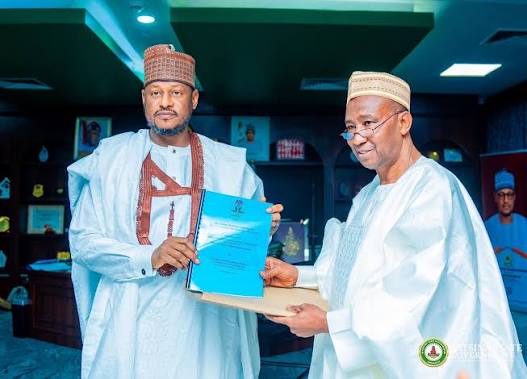
Defending the state’s expenditure priorities during the budget assent ceremony at the Executive Council Chamber, Governor Dikko Umaru Radda maintained that the framework maintains a balance between structural governance and rural transformation.
”Our priority remains aligning public expenditure with real development outcomes while maintaining structural support for the organs of government,” Governor Radda stated.
At a separate send-off ceremony held at the Katsina Pilgrims Camp on May 10, 2026, the governor noted that the administration had to secure a ₦3.8 billion loan facility to guarantee 3,890 Hajj slots for state pilgrims alongside statutory support for delegates.
Clarifying executive welfare and logistics provisions, the Chief Press Secretary to the Governor, Ibrahim Kaula Mohammed, emphasized that institutional support for pilgrims and state delegations ensures seamless operations in Saudi Arabia.
Meanwhile, the Speaker of the State House of Assembly, Rt. Hon. Nasir Yahaya Daura, assured that legislative allocations undergo appropriate scrutiny to support assembly duties.
Public policy analysts and civil society groups have voiced strong concern over accounting for religious trips as capital projects. Critics contend that funding legislative Hajj trips with over ₦1 billion raises accountability questions given pressing security and economic demands.
Conversely, government representatives maintain the funding covers administrative logistics, oversight duties, and statutory welfare required during the annual exercise.