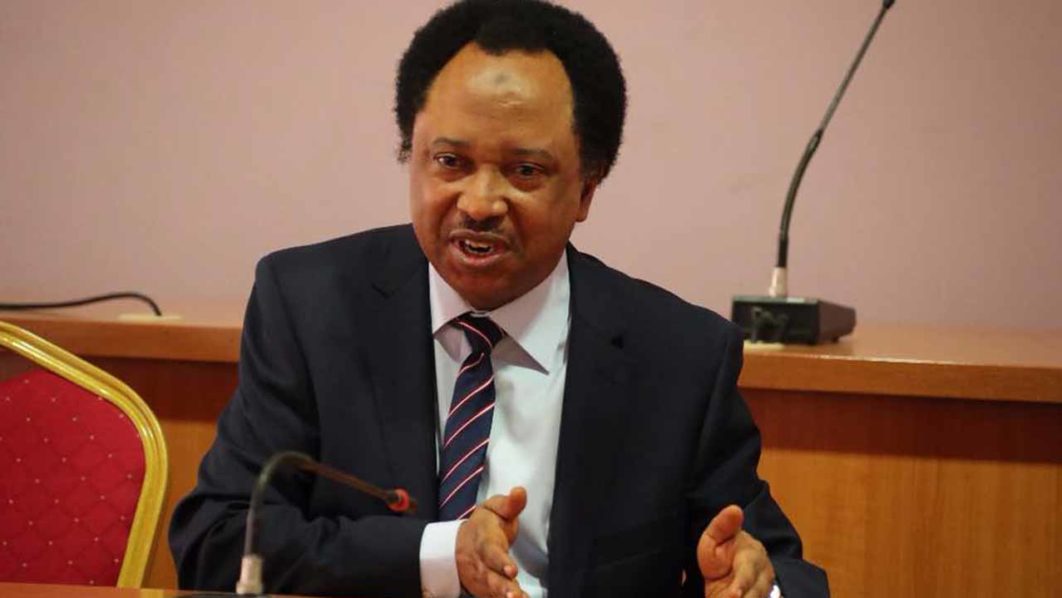
Senator Shehu Sani, who represented Kaduna Central in the 8th Senate, has asserted that both the Northern political elite and the masses are trapped in deep denial over the persistent security crisis in northern Nigeria, preferring to scapegoat outside figures rather than confronting local accountability failures.
In a public statement released on his verified social media handles on Tuesday, September 8, 2026, Sani criticized the double standards applied by Northern leaders when assessing successive federal administrations on regional security performance.
Addressing the ongoing political friction triggered by recent remarks from Defence Minister General Christopher Musa regarding former Kaduna State Governor Nasir El-Rufai, Sani argued that the region routinely enforces selective political blame.
”If Christopher Musa had blamed GEJ [Goodluck Jonathan] and BAT [Bola Ahmed Tinubu] for the killings, he would have been applauded,” Sani observed. “It’s said that Musa failed as a Defence Chief, but all those revered as opposition messiahs were also once in office like Musa.”
Sani reiterated that the security threats, namely Boko Haram terrorism and armed banditry, were homegrown inside Northern communities before spilling over across Nigeria and into neighboring Lake Chad Basin nations.
”The bandits and terrorists, many of whom are from our part of the country, have shed the blood of innocent people; they abducted children, raped women, extorted ransom, displaced millions, and burned down the villages of our people,” he stated. “The orphans and widows generated by banditry and terrorism are now IDPs in our cities and refugees in neighboring countries.”
Sani highlighted a persistent political trend in the North, noting that regional commentators “blamed Jonathan, skipped and pampered Buhari, and are now blaming Tinubu for the infernos those in office couldn’t automatically quench.”
”We are asking for a miracle and magic we failed to perform,” Sani added. “We don’t want to even hear that at a certain point in our tragic history, all the defense and security chiefs were from our part of the country; they met us with bandits and left us with more bandits.”
Comparing the region’s reluctance to accept internal culpability to a patient refusing a medical diagnosis, Sani concluded: “We are patients who want our diseases to be treated and cured, but we don’t want to accept and read the lab results; we want to write our own lab reports.”
The former senator’s remarks align with his previous public interventions in Kaduna warning against the politicisation of insecurity.
While hosting representatives from the Open Heart Foundation and the Women Empowerment Centre in Kaduna in November 25, 2025, Sani warned that terrorists and bandits operating in the region speak local languages (Hausa, Fulfulde, and Kanuri) and urged Northern leaders to address internal socio-economic causes like mass illiteracy and the almajiri system.
At the National Museum in Kaduna during the “Art For Unity And Healing” exhibition in December 16, 2025, Sani urged civil society organizations not to allow politicians to use security casualties as leverage ahead of the 2027 general elections.
Sani insisted that the North cannot resolve its security crisis until its political establishment stops protecting the image of failed local leaders and focuses on strengthening the armed forces and supporting current security operations.