By Alabi Oluwasore
Must Move From Promises to Tangible Action
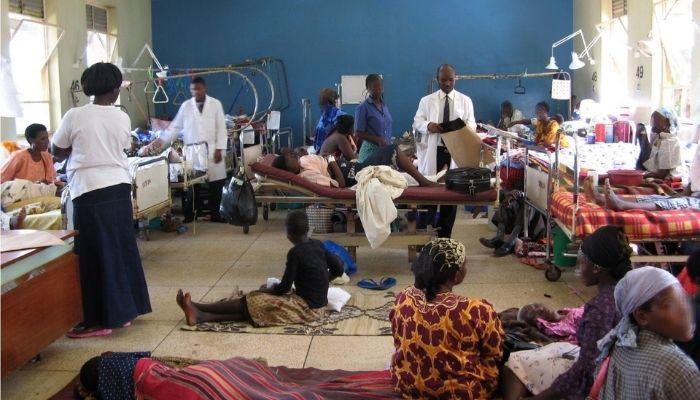
Nigeria’s public hospitals are in a sorry state, and the situation has become too pressing to ignore. Across the country, patients are waiting hours in waiting rooms, sleeping on benches in overcrowded wards, buying their own medicine because pharmacies in hospitals have run out, and hoping doctors and nurses will be available despite burnout and staffing shortages. New funding and policy announcements keep being made by government leaders, but within many hospitals, it does not appear things are really improving. The gap between rhetoric and what patients experience continues to widen.
Recent events highlight this dramatically. Resident doctors and nurses in some states have demonstrated against unpaid allowances, non-functional equipment, and working conditions they describe as unacceptable. Some have even threatened to go on strike, not that they desire to, but because they say they are driven to the wall. If the same individuals who are supposed to save lives are struggling to survive and are mentally and emotionally drained, then it is a question of time before the entire healthcare system further collapses.
The Federal Ministry of Health has announced funding interventions, including the release of funds to consolidate primary health care and support thousands of local health centers. All this is good on paper, but Nigerians have every right to ask, where is the physical effect of these interventions? Why are government hospitals still leaking, understaffed, and underequipped on such a massive scale? Why do major wards still lack equipment that functions? Why does a pregnant woman in labour still have to go from one hospital to another seeking a functional ultrasound machine or a doctor on duty who is available?
A primary explanation is that money does not always translate into impact. Money that is poorly supervised, transparently monitored, or rightfully distributed has a way of disappearing before it reaches the needy. In most hospitals, the fundamentals of clean water, stable electricity, safe waste disposal, working toilets, and infection control are still not guaranteed. These are not luxury extras, they are the minimum for any functional hospital. Those items are essential for the safe use of equipment, and without them, patients and health workers alike are placed at risk.
Then there’s the issue of morale. Health workers are already departing Nigeria for other nations where they are appreciated, compensated, and safeguarded. The brain drain is not a distant danger, it is a reality that is happening now, and patients are suffering daily. A hospital can have buildings and equipment, but without doctors, nurses, laboratory scientists, pharmacists, cleaners, and technicians, it is just a building and nothing more. When leftover professionals are overworked and underpaid, quality of care automatically suffers.
The consequences are toughest on the most impoverished Nigerians, those who cannot afford to visit private hospitals or abroad. The wealthy politician can fly to London to receive treatment, but not the market woman, the bus driver, the school child, the elderly grandmother in the village, they have no such option. They are completely reliant on the state’s promise to protect their health. At this time, that promise is not being kept.
The solutions are not complicated. The government and the Ministry of Health must ensure that the funds for healthcare are tracked down to the very last hospital level, not merely approved at the federal level. There must be more staff for hospitals, better working conditions, and timely payment of wages and allowances. Maintenance and sanitation must be life-saving priorities, not afterthoughts. And local health centres must be consolidated so that individuals do not need to overwhelm principal hospitals for basic care.
Nigeria has the talent, the skill, and the resources to build a health system that works. Commitment and sustained accountability are all that have been missing. Hospitals are where government promises meet reality. Until there is proof that money that has been announced has been turned into working hospital beds, working machines, stocked pharmacies, safe wards, and half-decently treated staff, Nigerians will continue to suffer unnecessary pain and death.
This is a moment for urgency, responsibility, and honesty. Not more speeches, but change. The health of a nation is not measured by what the officials say, but by what patients see when they go into a hospital. Currently, what they see is a warning sign. The time has arrived to rectify it.