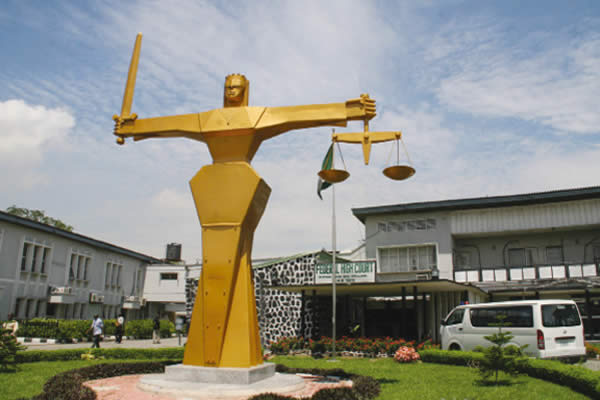
The Federal High Court of Nigeria officially signalled the end of the manual filing of all processes on Monday, with the landmark launch of its electronic filing (e-filing) system in the Lagos Division.
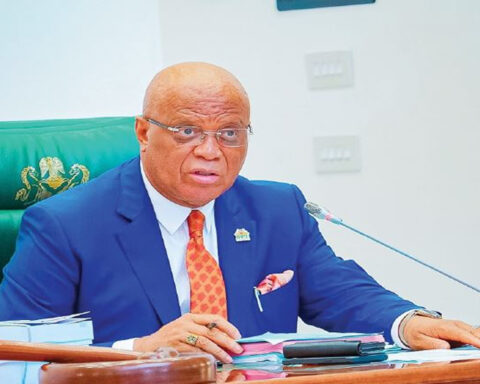
Speaking at the inaugural ceremony, the Chief Judge of the Federal High Court, Justice John T. Tsoho, declared that the transition from paper-heavy corridors to a digital ecosystem is no longer a luxury but a categorical necessity for the Nigerian legal system.
Justice Tsoho emphasised that the move is designed to enhance transparency and dismantle systemic vulnerabilities associated with physical files, such as tampering, loss, or damage.
“For too long, the corridors of the Federal High Court have been synonymous with the physical weight of paper and mountains of case files.
“Today, we declare that era over. We are not just installing software; we are dismantling the barriers that have historically slowed the wheels of justice,” Justice Tsoho stated.
The Chief Judge noted that the new system ensures a digital footprint for every action, eliminating the possibility of backdating processes and bypassing gatekeepers who seek to monetise access to the court.
In his words: “The court registry no longer closes at 2 p.m. Litigants can file from any location with internet access.
“The time for a file to reach a judge’s desk has been reduced from days to seconds. All filing fees are processed through integrated gateways, ensuring every kobo is accounted for by the Federation.
“Lawyers are encouraged to adopt digital signatures and use the e-Affidavit platform for documents requiring a commissioner for oaths.”
Bolstering the argument for digitalisation, the Chairman of the Judicial Information Technology Policy Committee and the Chief Judge of the Borno State High Court, Justice Kashim Zannah, shared a harrowing success story from Borno State.
Justice Zannah revealed that during the recent flood disaster in Maiduguri, which left physical courtrooms and registries underwater, the judiciary did not lose a single document.
“All the registries were flooded and destroyed. Yet, we did not lose a single case document because they were all safely stored in the cloud.
“While the physical courts were underwater, lawyers were still filing cases from their homes, and the business of the court moved on,” Zannah said.
“While states like Borno, Bayelsa, Delta, Niger, and Taraba have already boarded the train of progress,” Justice Zannah urged other states, including Ekiti, Ebonyi, and Ogun, to follow suit.
The Nigerian Bar Association (NBA), represented by the Chairman of the Surulere Branch, Mr Anene Nwadukwu, expressed unwavering support for the initiative, noting that technology is the only way to maintain Lagos as a centre of excellence in legal service delivery.