By Richard Benjamin
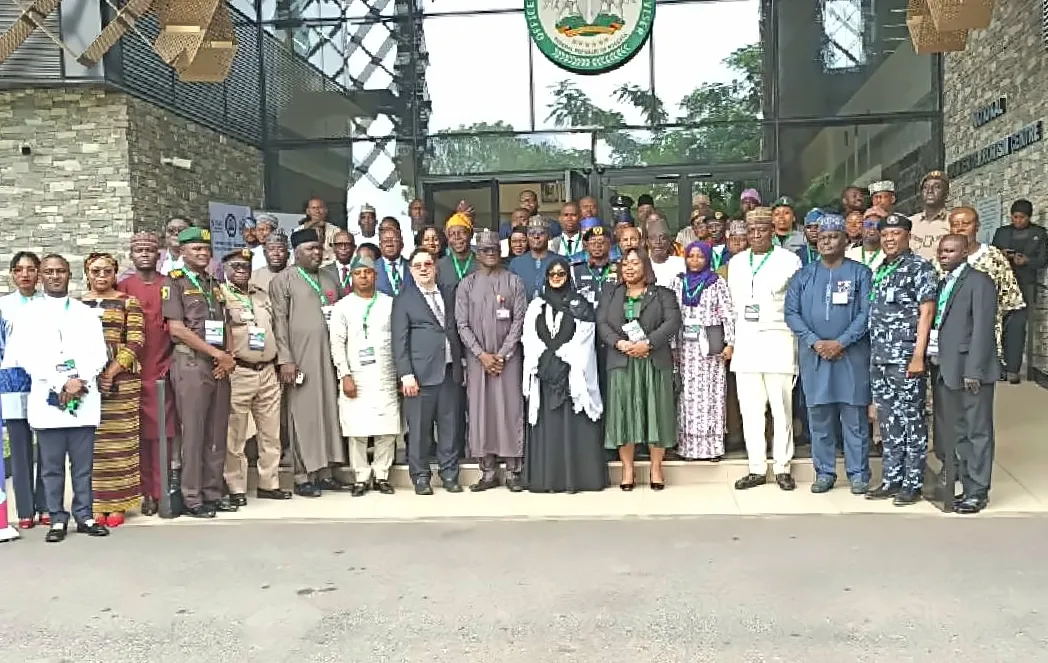
Nigeria, in collaboration with the United Nations and the United States, on Friday, July 17, validated its first National Organised Crime Strategy in Abuja, marking a major step towards strengthening coordination among security agencies and international partners to combat organised crime.
The strategy, expected to be officially launched on Aug. 17, provides a national framework for tackling terrorism, cybercrime, human trafficking, illicit drug and arms trafficking, illicit financial flows and other forms of organised crime.
Speaking at the validation exercise, the National Coordinator of the National Counter Terrorism Centre (NCTC), Maj.-Gen. Adamu Laka, described organised crime as one of the greatest threats to national and regional security.
Laka said the strategy was developed through collaboration between the Federal Government, the United Nations Office on Drugs and Crime (UNODC), the U.S. Bureau of International Narcotics and Law Enforcement Affairs (INL), and other stakeholders.
According to him, the framework will strengthen intelligence sharing, improve inter-agency coordination and promote collaboration among law enforcement agencies, government institutions, civil society organisations and international partners.
He noted that organised crime and terrorism have become increasingly interconnected, posing serious threats to governance, economic development and public safety.
“The National Organised Crime Strategy provides an integrated, evidence-based approach to preventing and combating organised crime while strengthening cooperation among relevant institutions,” Laka said.
He added that the strategy aligns with the UNODC Country Programme for Nigeria (2026–2030) and complements Nigeria’s National Counterterrorism Strategy and the NCTC Strategic Action Plan (2025–2030).
Laka also disclosed that the NCTC, which is transitioning into a Regional Centre of Excellence for Counterterrorism in West Africa and the Sahel, will support implementation through intelligence fusion and operational collaboration.
The UNODC Representative in Nigeria, Cheikh Toure, described organised crime as one of the most serious threats to peace, security, sustainable development and good governance.
He said criminal networks continue to exploit institutional weaknesses, porous borders and vulnerable communities to perpetrate crimes ranging from cyber-enabled fraud and human trafficking to environmental crimes and kidnapping.
Toure explained that the strategy adopts a whole-of-government and whole-of-society approach built around four pillars—prevention, pursuit, protection and promotion. “UNODC is not here to lead; we are here to serve.
Nigeria owns this strategy, and our role is to provide technical support to help realise Nigeria’s vision,” he said. Also speaking, Acting Director of the U.S. Department of State’s Bureau of International Narcotics and Law Enforcement Affairs (INL), Dr Douglas Grane, said organised crime had become a global challenge requiring coordinated international responses.
Grane said the United States supported the development of the strategy through the Strengthening Regional and Nigerian Coordination to Combat Organised Crime Project.
He described the framework as Nigeria’s first comprehensive operational strategy for combating organised crime through coordinated prevention, law enforcement, victim protection and institutional cooperation.
He stressed the need for intelligence sharing, biometric cooperation and cross-border collaboration, particularly in addressing cybercrime and financial sextortion.
The Commandant of the National Institute for Security Studies (NISS), Mr Joseph Odama, said organised crime remained a major driver of insecurity, weak governance and economic losses in Nigeria. Odama said
The strategy reflected recommendations from the institute’s 2023 research titled “Organised Crime in Nigeria: The Third Assessment,” which identified illicit drug trafficking, human trafficking, arms trafficking, kidnapping, maritime crime, cybercrime and financial crime as key security threats.
He urged stakeholders to ensure the strategy remains practical, effective and responsive to emerging criminal threats. The validation exercise brought together representatives of security and intelligence agencies, development partners, civil society organisations and international bodies to review the strategy ahead of its official launch.