By Victor Ogiemwonyi
Talent Abroad, Failure at Home
Nigerian footballers shine in Europe’s top leagues, yet we cannot assemble a team to qualify for the FIFA World Cup. For the second consecutive cycle, Nigeria failed to qualify despite, a ₦20 billion budget to prepare, for the qualifying rounds.
The cost of failure is staggering. Nigeria lost $12.5 million in direct FIFA payments, money meant to strengthen our football.
The Price of Absence
World Cup participation is more than national pride; it is a commercial pipeline. Advertising revenues, sponsorship bonuses, and brand partnerships all vanish when Nigeria is absent. Analysts estimate total losses between ₦150 billion and ₦300 billion.
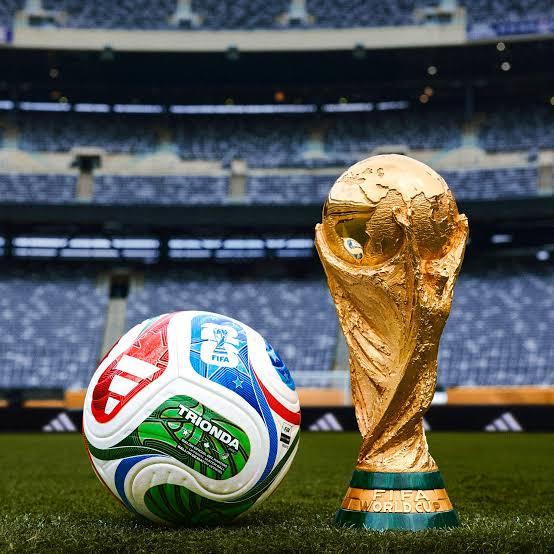
Meanwhile, FIFA earned $13 billion from the just concluded tournament. That is the scale of the football economy Nigeria continues to miss.
Administration Without Merit
The Nigerian Football Federation (NFF) is run like our politics — by people with little football knowledge, recruited through patronage. As in our politics, when recruitment is broken, nothing good follows.
Players and coaches complain of unpaid allowances, mismanaged contracts, and corruption. Recently, the NFF renewed the contract of the national coach who failed to qualify Nigeria for the World Cup, even giving him responsibility for the U-17 team. This is Nigeria’s warped measure of merit. I guess a Malian will be great for these peculiar Nigerian things.
Collapse of Local Football
Poor administration has killed passion for local football. Allegations of match-fixing, compromised referees, and corruption abound. Nigerians, who are still deeply passionate about the game, now invest their energy in European Leagues, where they trust the Football.
Lessons from the Midwest Era
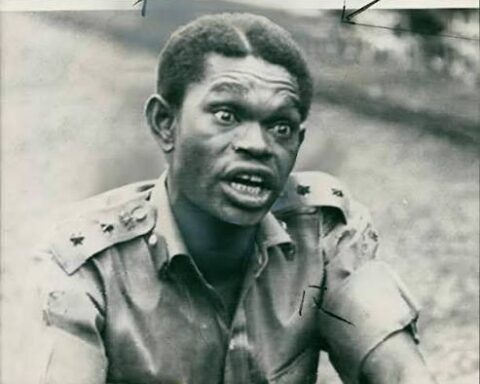
It was not always like this. Under Brigadier General Samuel Ogbemudia, the Midwest Region built a sports administration that delivered results. With Olympian B.A.A. Guobadia leading the Midwest Sports Council, integrity and passion drove success. The results were stellar
The Ogbe Stadium in Benin City and the Afuze Sports Village were built during this era. The era also produced stellar results in world class athletes.
That programme produced Nigeria’s only Wimbledon player, Nduka Odizor, who reached the fourth round in singles and the quarterfinals in doubles at the 1983 US Open. It also produced world-class athletes like Charlton Ehizuelen, a world class triple and long jumper, Terry Obaze, ( Terrikoto, as his fans called him) a world class long distance runner and Dr. Godwin Obasogie, a world class Olympic hurdler and later all American at the University of Missouri, USA.
The Midwest dominated national sports festivals and football competitions, proving that talent flourishes when administration is sound.
The Football Economy We Ignore
Nigeria’s failure is not about lack of talent but about bad administration. The football economy is too big to ignore.
What Must Change
Take away the Ministry of Sports. It is another layer of administration, that creates more bureaucracy. It is not needed.
National Sports Commission as a Department at the Presidency is all that is required.
* Strengthen the National Sports Commission: Empower it with an enabling Act to serve as the government’s sports development agency.
* Establish State Sports Councils: Each state should organise sports locally through its own council.
* Citizen Led Associations:
Football and other sports associations should be voluntary, registered organisations, funded by citizens, not government patronage.
* Targeted Federal Funding:
Grants should go only to visibly well-organised youth development clubs, with special attention to training.
* Inclusive Representation:
Elections into federations like the NFF must include reserved seats for former footballers, referees, and coaches, with representation from every State. Then put the collection of 40-44 members into effective committees ( Finance, brand and marketing, youth sports management, training and partnerships, protocols and logistics etc ) to ensure proper administration
Nigeria has the talent, the passion, and the market.
What we lack is integrity and a structured administration, to make things work for results.
Until we fix this, we will continue missing out on the vast football economy, that intersect between entertainment, tourism and social development. An industry that could rival oil, in its impact on national growth.
Ogiemwonyi, a retired Investment Banker, and writes from Ikoyi, Lagos