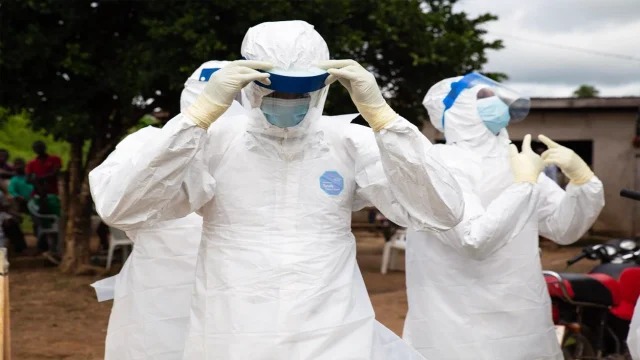
Nigeria has heightened nationwide surveillance and emergency preparedness measures against the spread of Ebola Virus Disease (EVD) following growing outbreaks in Uganda and the Democratic Republic of Congo (DRC), the Nigeria Centre for Disease Control and Prevention (NCDC) announced over the weekend.
The public health agency said although no confirmed Ebola case linked to the ongoing East African outbreaks has been detected in Nigeria, authorities are treating the situation with utmost seriousness because of the country’s high vulnerability to imported infections through international travel and cross-border movement.
In a fresh public health advisory issued by the Director-General of the NCDC, Jide Idris, the agency disclosed that enhanced surveillance systems had already been activated nationwide, particularly in high-risk locations such as border communities, airports, seaports and major transport terminals.
According to the advisory, the latest national risk assessment classified the possibility of Ebola importation into Nigeria as “high,” citing continued transmission in Uganda and the DRC, uncertainty surrounding the full scale of the outbreaks and the challenge of early detection because Ebola symptoms closely resemble those of common tropical diseases such as malaria and Lassa fever.
“This assessment estimated the risk of Ebola importation into Nigeria as high due to the ongoing transmission in the DRC and Uganda, international travel and population movement, uncertainty regarding the full magnitude of the outbreak, and the potential for delayed recognition because symptoms may overlap with endemic diseases such as malaria and Lassa fever,” the advisory stated.
The agency explained that emergency response teams had been placed on alert across states, while disease surveillance officers were intensifying monitoring activities in health facilities and communities nationwide.
The NCDC also confirmed that port health services at international airports, land borders and seaports had strengthened screening protocols to quickly identify travellers showing symptoms associated with Ebola infection.
Health officials warned that the increasing movement of people within Africa and across international borders makes Nigeria particularly vulnerable to imported infectious diseases, especially during regional outbreaks.
The agency noted that the country’s previous experience with Ebola in 2014 had demonstrated the importance of rapid response, early detection and coordinated public health action in preventing widespread transmission.
Nigeria recorded its first Ebola outbreak in July 2014 after an infected Liberian-American diplomat arrived in Lagos by air travel. Through aggressive contact tracing, isolation measures and coordinated public health interventions, the outbreak was successfully contained within months, earning international recognition for the country’s response efforts.
Public health experts believe that the lessons learned from the 2014 outbreak have significantly improved Nigeria’s preparedness capacity, including laboratory testing capabilities, emergency operations coordination and disease surveillance systems.
The NCDC said state governments, healthcare institutions and relevant stakeholders had already been advised to reactivate emergency preparedness plans and ensure that isolation centres, treatment facilities and rapid response mechanisms remain functional.
Hospitals and healthcare workers nationwide were also directed to maintain a high index of suspicion for patients presenting symptoms consistent with Ebola, particularly those with recent travel history to affected countries.
The agency listed common Ebola symptoms to include sudden fever, weakness, headache, sore throat, muscle pain, vomiting, diarrhoea and unexplained bleeding.
Citizens were urged to observe strict hygiene practices, avoid contact with sick persons or bodily fluids and report suspected cases promptly to health authorities.
The NCDC further appealed to Nigerians not to panic or spread misinformation, stressing that no confirmed case had been identified within the country.
“We urge the public to remain calm but vigilant. Nigeria has strengthened preparedness and surveillance measures to ensure early detection and rapid containment should any suspected case arise,” the agency stated.
Health authorities also warned against stigmatization of travellers or persons from affected countries, noting that public cooperation and accurate information remain critical to effective disease control efforts.
The World Health Organization and other international health agencies have continued to monitor the outbreaks in Uganda and the DRC amid fears of wider regional spread if containment measures are not strengthened.
Medical experts say Ebola remains one of the world’s deadliest viral diseases because of its high fatality rate and ability to spread rapidly through direct contact with infected bodily fluids.
Although vaccines and improved treatment methods have increased survival rates in recent years, health officials insist that prevention, early detection and swift isolation remain the most effective tools for controlling outbreaks.
As Nigeria intensifies preparedness efforts, public health authorities say collaboration among federal and state governments, healthcare workers, border officials and local communities will be essential in preventing any potential outbreak within the country.
The renewed alert has also prompted calls for stronger investment in disease surveillance infrastructure, laboratory networks and emergency response systems to protect Africa’s most populous nation from future public health threats.