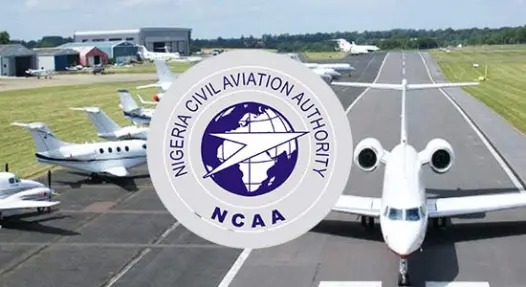
The Nigeria Civil Aviation Authority has directed its various directorates to suspend services to 11 domestic airlines over unpaid statutory charges owed to the regulatory agency, escalating efforts to enforce financial compliance within the nation’s aviation industry.
The directive was contained in an internal memo dated May 22, 2026, obtained by our correspondent on Sunday, in which the authority placed the affected operators on its updated “No-Pay-No-Service” list.
According to the memo, all departments and directorates of the NCAA were instructed to immediately withhold regulatory, operational and administrative services from the affected airlines until they either settle their outstanding debts in full or enter into acceptable repayment arrangements with the regulator.
The development has triggered fresh concerns within the aviation sector over the financial health of some domestic carriers, many of which have struggled in recent years with rising operational costs, foreign exchange pressures, maintenance expenses and declining profit margins.
At the centre of the dispute are the mandatory five per cent Ticket Sales Charge and Cargo Sales Charge collected by airlines on behalf of the NCAA.
The charges constitute one of the major revenue streams used by the aviation regulator to fund safety oversight operations, personnel training, inspection activities, economic regulation and other critical functions required for effective supervision of the industry.
Under existing aviation regulations, airlines are expected to remit the charges deducted from ticket and cargo sales within stipulated timelines. However, the NCAA has repeatedly expressed concerns over delayed remittances and mounting debts by several operators.
In the latest memo, the authority stressed that continued access to NCAA services would now depend strictly on financial clearance from its Directorate of Finance and Accounts.
The directive specifically ordered all NCAA directorates not to process requests or provide services to any airline listed under the sanction regime unless official confirmation of payment compliance was obtained.
Industry insiders said the suspension could affect a wide range of services required by airlines for daily operations, including documentation processing, approvals, certifications and regulatory support.
Although the names of all affected operators were not immediately disclosed publicly, officials familiar with the development said the action was part of a broader enforcement strategy aimed at improving accountability and financial discipline in the aviation industry.
A senior aviation official who spoke on condition of anonymity explained that the NCAA had repeatedly engaged defaulting airlines through meetings, reminders and payment notices before resorting to the latest action.
According to the official, the regulator could no longer ignore the growing debts because the charges were essential for sustaining aviation safety systems and regulatory effectiveness.
“The NCAA depends on these statutory remittances to perform critical oversight responsibilities. When airlines collect these funds from passengers and fail to remit them, it weakens the system and affects the regulator’s capacity to function effectively,” the official stated.
The source added that the “No-Pay-No-Service” policy was not intended to cripple airline operations but to compel compliance with established financial obligations.
Analysts within the aviation industry say the latest crackdown reflects increasing pressure on regulators to strengthen accountability amid ongoing concerns over safety standards and operational sustainability in the sector.
Some stakeholders argued that strict enforcement was necessary to protect the integrity of the aviation system, while others warned that excessive sanctions could worsen the fragile financial condition of local carriers already battling economic challenges.
An aviation economist noted that domestic airlines have been under severe strain due to fluctuating exchange rates, rising aviation fuel prices and high maintenance costs.
He explained that many operators are struggling with cash flow problems, making it difficult to meet both operational and regulatory obligations simultaneously.
“While the NCAA has a legitimate right to demand compliance, there is also the need for a balanced approach that ensures airlines remain operational while settling outstanding liabilities,” the expert said.
Passengers and travel operators also expressed concern over the possible impact of the sanctions on flight operations and customer service delivery if the situation persists.
Travel agencies fear that prolonged disputes between airlines and regulators could lead to delays in approvals, disruptions in scheduling and uncertainty for passengers across domestic routes.
The NCAA, however, maintained that the action was in line with its regulatory mandate and existing aviation laws guiding the remittance of statutory charges.
The authority reiterated that any airline willing to negotiate structured repayment plans could still engage with the Directorate of Finance and Accounts to regularise its status and regain access to suspended services.
Observers say the latest development signals a tougher regulatory posture by the NCAA as authorities seek to strengthen transparency, improve revenue collection and ensure that operators comply fully with industry obligations.
The enforcement action also comes at a time when the Nigerian aviation industry is working to improve investor confidence, operational efficiency and safety standards amid increasing passenger traffic and renewed interest in the sector.
As discussions continue between regulators and affected operators, stakeholders are hoping for swift resolutions that will protect aviation safety while preventing disruptions to domestic air travel across the country.