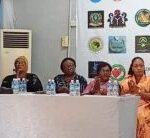
The National Broadcasting Commission (NBC) will commence technical and sensitisation training for installers of set-top boxes and associated reception equipment on Friday, 17 July 2026, at its Ibadan zonal offices.
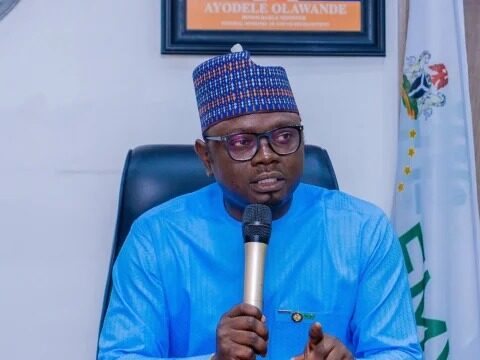
The training targets more than 50 technicians and installers drawn from states across the South-West region. According to Mrs Clementine Usman-Wamba, Head of the Digital Switchover (DSO) unit and Deputy Director of Public Affairs at the NBC, this marks the first in a series of capacity-building exercises designed to ensure the smooth and error-free operation of Nigeria’s long-awaited digital migration.
The DSO programme—Nigeria’s transition from analogue to digital terrestrial television broadcasting—has taken nearly two decades to implement. The country formally adopted the policy in 2008, following the International Telecommunication Union’s (ITU) 2006 directive for member states to complete the switch by June 2015.
However, Nigeria missed that deadline, as well as subsequent targets in December 2017 and beyond, due to funding shortfalls, policy inconsistencies, infrastructure deficits, and logistical hurdles. Although pilot rollouts were conducted in Plateau, Lagos, Kano, Enugu, Kwara, Osun, Kaduna, and the Federal Capital Territory, nationwide coverage remained elusive.
After multiple failed attempts and over N60 billion in public expenditure without commensurate results, the Federal Government—through the NBC and the Nigerian Communications Satellite Limited (NIGCOMSAT)—unveiled a renewed strategy in 2025. Dubbed *”The Big Picture,”* the initiative was nationally launched on 17 June 2026, with a final analogue switch-off scheduled for 31 December 2028.
The new framework adopts a hybrid broadcasting model combining Digital Terrestrial Television (DTT), Direct-to-Home (DTH) satellite delivery via NIGCOMSAT-1R, and Internet Protocol (IP)-based distribution.
This satellite-first approach leverages Nigeria’s sovereign satellite technology to bypass the need for costly transmission towers—reportedly accelerating digital television rollout by over 65 per cent and providing near-instantaneous national coverage.
The FreeTV platform is built on open-standard DVB-S2 technology and is designed to deliver up to 100 free-to-air digital channels with high-quality picture and sound to an estimated 40 million television households nationwide. For terrestrial reception, Nigeria has adopted the DVB-T2 transmission standard with MPEG-4 AVC compression, which supports up to 20 channels per frequency—significantly more efficient than the older DVB-T1 system.
Consumers can use DVB-S2-compatible set-top boxes, available on the market for ₦15,000 to ₦25,000, or smart TVs with built-in digital tuners certified for the DVB-T2 standard.
The Ibadan training is a direct response to the technical complexities introduced by this new configuration. Installers must now be proficient not only in terrestrial antenna alignment for DTT signals but also in satellite dish positioning for DTH reception, as well as the installation and activation of hybrid devices that may combine both reception paths.
Given that the new digital ecosystem differs significantly from the previous analogue configuration and earlier terrestrial-only DSO pilots, the NBC is prioritising installer sensitisation to minimise user errors, reduce service disruptions, and ensure that end-users—particularly in rural and underserved communities—can seamlessly access the new digital broadcasts.
Beyond its technical dimensions, the DSO is positioned as a transformative national economic project. The transition is expected to unlock substantial value by reallocating broadcast spectrum—the so-called “digital dividend”—for telecommunications and broadband services. The advertising market alone is projected to grow by up to ₦605.2 billion, while local manufacturing of reception devices is anticipated to create more than 20,000 jobs.
Mrs Usman-Wamba emphasised that the Ibadan training is the first of many planned engagements across Nigeria’s geopolitical zones. With the DSO now firmly on the national agenda and the switch-off clock ticking towards December 2028, equipping the installer workforce with the requisite technical skills is critical to delivering on the promise of universal, affordable, and high-quality digital television for all Nigerians.