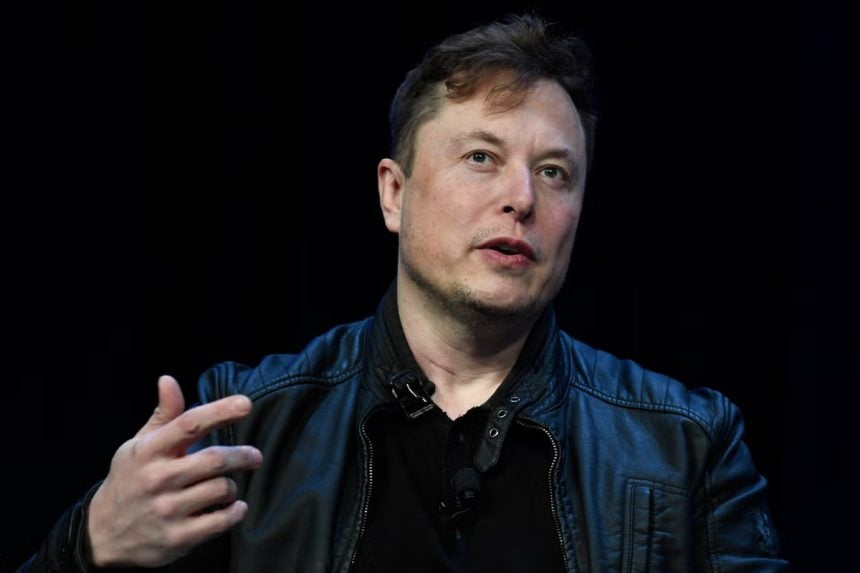
Tech billionaire and X owner Elon Musk has sparked a fierce geopolitical and economic debate after publicly asserting that colonialism is not the primary driver of modern Africa’s economic struggles.
Musk, who was born and raised in South Africa before immigrating to North America, made the remarks during a wide-ranging discussion on social media. Responding to a thread analyzing global wealth disparities and historical exploitation, Musk suggested that pinning Africa’s current poverty strictly on its colonial past is an oversimplification that ignores modern governance failures.
”Blaming everything on colonialism is a convenient excuse for catastrophic internal governance,” Musk stated. “While historical factors exist, Africa’s poverty today is primarily driven by systemic corruption, a lack of free-market policies, and the absence of the rule of law.”
Musk’s comments immediately went viral, drawing sharp criticism from historians, African policymakers, and socioeconomic experts, while receiving praise from free-market advocates.
Critics argue that Musk’s take completely disregards the structural legacy of the “Scramble for Africa,” during which European powers systematically extracted resources, drew arbitrary borders that sparked ethnic conflicts, and dismantled indigenous governance systems.
”To decouple Africa’s current economic landscape from centuries of colonial exploitation and post-colonial interference is economically illiterate,” said Dr. Amara Eke, an international relations analyst. “Colonialism created dependent, extraction-based economies. Those structural disadvantages don’t disappear in a few decades.”
Conversely, supporters of Musk’s view argue that focusing entirely on the past absolves modern African leaders of their responsibilities. They point to nations like Singapore and South Korea, which transitioned from post-colonial poverty to global economic powerhouses within generations as proof that modern policy, transparency, and tech innovation matter more than historical grievances.
This is not the first time Musk has waded into the complex socio-political landscape of his home continent. The billionaire has frequently used his platform to criticize the economic policies of South Africa’s ruling African National Congress (ANC), particularly regarding Broad-Based Black Economic Empowerment (B-BBEE) policies, which he has previously labeled as counterproductive to foreign investment.
As the world’s wealthiest individual, Musk’s commentary carries immense weight, often driving market sentiments and geopolitical discourse. While his latest remarks have been condemned by many as a tone-deaf minimization of historical trauma, they have undoubtedly reignited a critical global conversation on what it will truly take to unlock Africa’s vast economic potential.