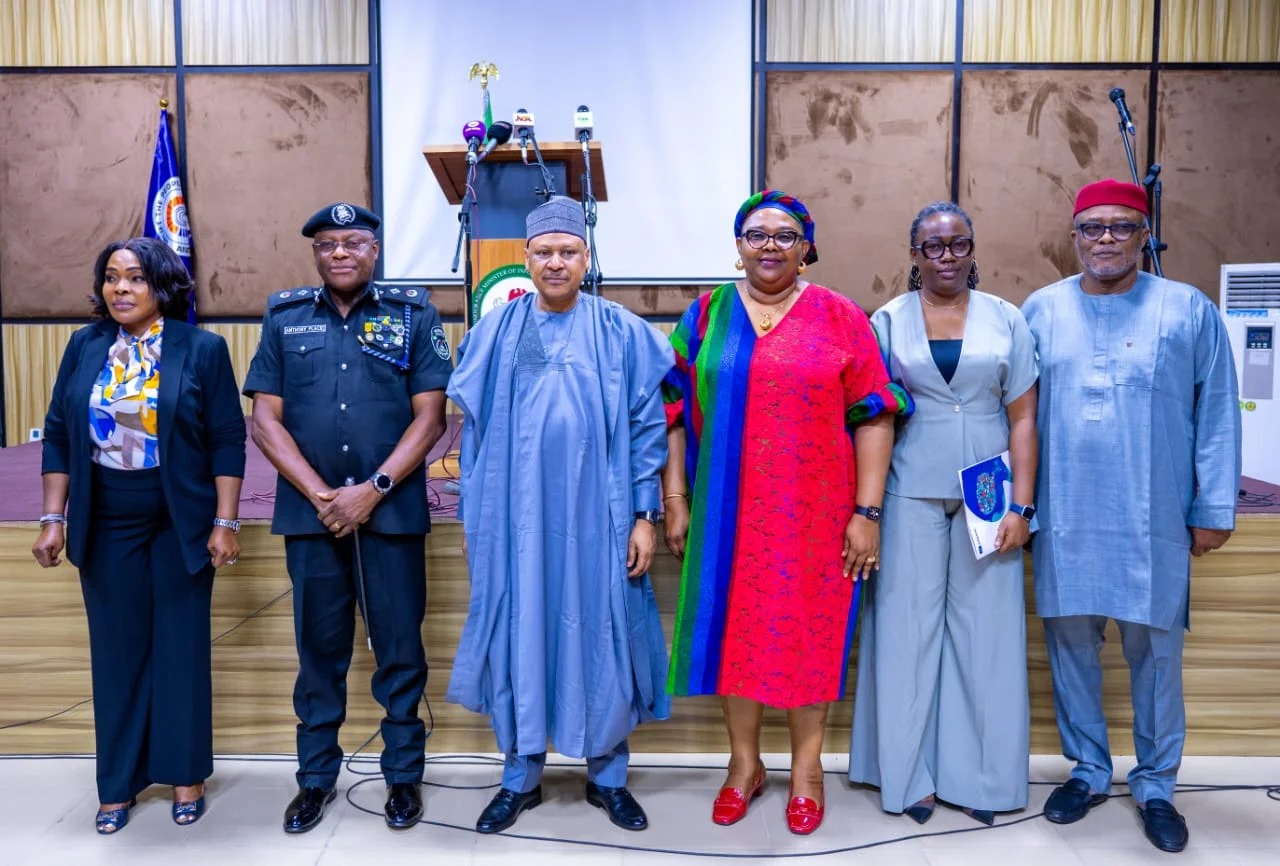
The Minister of Information and National Orientation, Alhaji Mohammed Idris, has called for collaboration between the media and security agencies to ensure a media-friendly environment.
Idris made the call on Monday in Abuja at an inter-ministerial press conference in commemoration of the 2026 World Press Freedom Day.
The theme of the event was, “Shaping a Future at Peace, Promoting Press Freedom as Human Rights, Development and Security.
The minister said the media organisations and security agencies must work collaboratively to protect freedom of expression.
“They must work together so that we can have the kind of democratic, free, and developed society that all of us crave to have.
“The true trust of press freedom lies not in our declarations, but in our actions. This includes all of us. Those in government, the security agencies, and the media organisations.
“All of us would not just pay leap service to the idea of press freedom. It is in how we as media practitioners can do our work and how truthfully information is also shared by us and how responsibly it is also consumed by our people.
“So, all of us have to work collaboratively towards one direction to ensure that we have a media-free environment that promotes and strengthens national unity,” the minister said.
According to him, the Federal Government fully recognises press freedom as a fundamental right enshrined in the Constitution of the Federal Republic of Nigeria, and it remains committed to its protection and promotion.
“Let me reaffirm unequivocally that the federal government does not support all forms of intimidation, unlawful harassment or attacks against journalists and all media professionals carrying out their lawful and legal duties.
“A media environment in which journalists feel unsafe ultimately weakens our democracy itself,” Idris said.
According to him, President Bola Tinubu is fully committed to fostering an environment where the media can operate freely, safely and responsibly in accordance with democratic principles and the rule of law.
“However, we must also acknowledge the evolving realities of today’s information ecosystem.
“The rapid expansion of digital platforms, social media and emerging technologies, including artificial intelligence, has transformed how information is produced, disseminated and ultimately consumed.
“While these advancements have expanded access to information, they have also amplified the risk of misinformation, disinformation and information disorder, challenges that threaten public trust, national cohesion and security.
“Let me say here that with the advent of social media, new media and digital media, it is important that they should aim at promoting unity and fostering better understanding among our people.”
The minister, however, noted that the same platform had become a source of concern to Nigerians.
“We have seen how the influence of artificial intelligence and fake news generally has threatened the very democracy that press freedom seeks to advance and to protect.
“I want to thank the representative of UNESCO here present for what they have done to Nigeria, their interest and their belief that Nigeria indeed can play a pivotal role in cleaning the global community of the menace of fake news and disinformation.
“That is why they went to a great extent, after a very long and tedious process, a two-year process, granting Nigeria the hosting right for the UNESCO Media and Information Research Centre, which was unveiled by the President a few days ago in Abuja.”
The minister thanked UNESCO and the global community for the trust and confidence they had in Nigeria, assuring that the country would continue to live up to expectations.
He said the centre unveiled in Nigeria would provide solutions to the issues of fake news.
“We will provide that hope for the global community to find a lasting solution to the issues of fake news and misinformation.
“As we look ahead to the 2027 general elections, the media’s role becomes even more critical.
“A professional, ethical and responsible media will be central to ensuring that we have a free, fair, peaceful and credible elections.”
The minister said that the media must continue to provide accurate, timely and verified information, while resisting the spread of harmful narratives that undermine democratic processes, public trust and national stability.
“It is incumbent on the media that it must provide a self-cleansing mechanism that enables it to safeguard the very democracy that it sets out to protect in the first place,” Idris said.
In her remarks, the Director-General, Department of Security Service (DSS), Oluwatosin Ajayi, said press freedom and national security should not be seen as permanent enemies.
Ajayi, who was represented by the Director of Protocol, DSS, Mobel Chukwuka, said that in mature societies, both could co-exist through clear laws, responsible institutions and ethical journalism.
According to him, government must define national security exceptions narrowly and lawfully.
“Information should be restricted only when disclosure presents a genuine, specific and measurable risk, not merely because it is inconvenient or embarrassing.
“Additionally, security institutions must cultivate strategic transparency. While operational details may remain classified, citizens should still receive timely and truthful information about threats, policy direction and outcomes.
“Silence often creates a vacuum that misinformation quickly fills. In the same vein, the media also carries responsibility,” Ajayi said.
According to him, journalists have a duty to investigate and inform, but also to weigh the public interest against the potential arm of publication.
“Responsible editorial judgments can protect both truths and lives. Trusted channels of engagement between media and security agencies are equally essential.
“Regular briefings, crisis communication mechanisms and professionalised structures can reduce unnecessary confrontation and build mutual understanding.
“History shows that societies are strongest not when secrecy dominates, nor when every secret is exposed, but when institutions know what must be protected and what must be disclosed.
“A nation at peace requires both security and liberty. Security without freedom risks dictatorship. Freedom without security risks disorder. But when wisely placed, each reaffirms the other.
“The dilemma between press freedom and national security is not insoluble. It demands wisdom, restraints, legality and trust,” he said.
According to him, our task is to ensure that secrecy serves the public interest, not power alone, and that press freedom threatens the nation rather than awakens it.
He said press freedom must go hand in hand with responsibility, ethics and professionalism.
“Freedom without accountability can be exploited to spread falsehood and incite division.
“Therefore, while protecting media independence, we must also encourage fact-checking, ethnic standards and responsible use of digital platforms.
“To shape a future at peace, governments, civil servants, media institutions and citizens must work together to create an environment where journalists are safe, media organisations are independent and trust is rendered over propaganda.”
The DSS boss underscored the need to invest in media literacy, strengthen legal protection for journalists and protect dialogue rather than censorship.
“We must recognise that the pen, the microphone and the camera are not threats to peace when guided by integrity. They are instruments of peace.
“A peaceful future cannot be built in silence or fear. It must be built on truth, justice, openness and informed participation.”
Also speaking, the Inspector-General of Police, Olatunji Disu, reaffirmed the Nigeria Police Force’s commitment to ensuring the safety and protection of media practitioners across the country.
Disu, who was represented by the Police Force Public Relations Officer, DCP Anthony Placid, said the police had prioritised the protection of journalists as a fundamental human right.
“We are continuously refining our engagement protocols to ensure that reporters can discharge their duties without fear of harassment, intimidation or violence.
“Any infringement on the rights of journalists is an affront to the rule of law and we remain dedicated to investigating and prosecuting such violations.”
The Inspector-General of Police urged the media to remain steadfast in upholding professional ethics, noting that fake news and disinformation could compromise national security and trigger civil unrest.
According to him, the role of the professional journalist as a gatekeeper of truth is more critical than ever.