By Stephanie Shaakaa
Communities that once shared homes, schools, markets, friendships and political relationships can become bitter enemies within a generation. When violence destroys those relationships, the damage extends beyond casualties and displaced families. Trust disappears, children inherit suspicions they did not create, livelihoods collapse, and histories of co-existence become buried beneath grievances. Rebuilding such relationships is often far more difficult than preventing their breakdown.
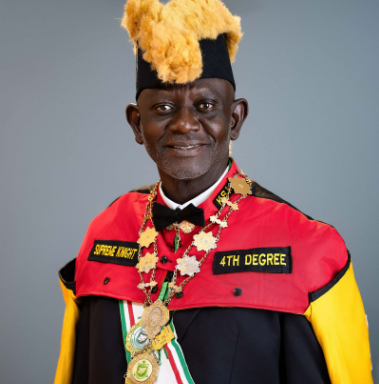
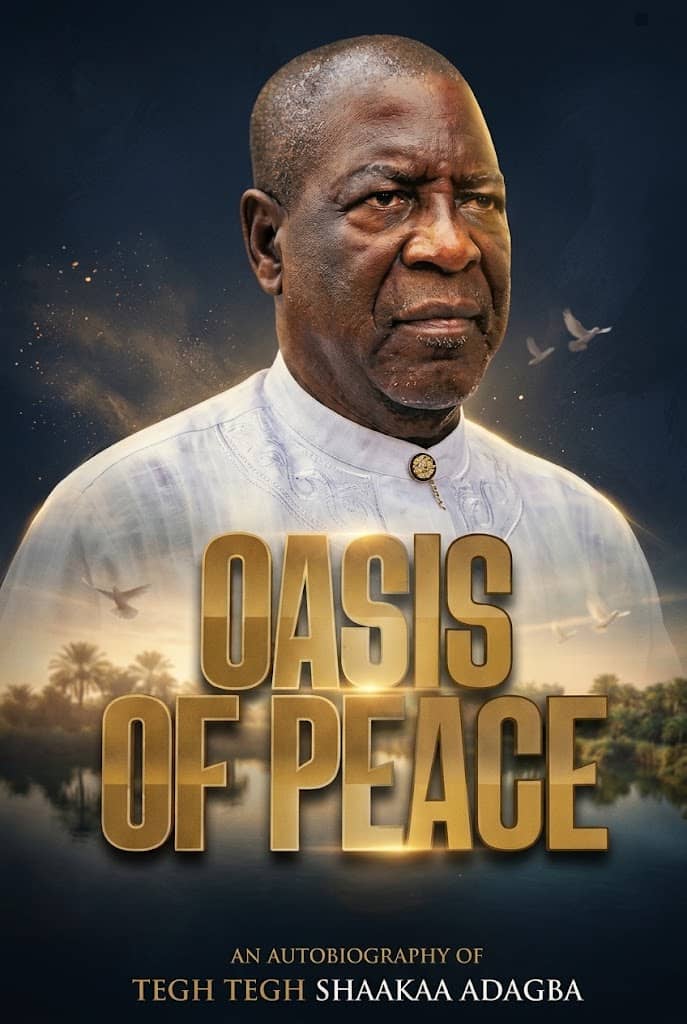
This is a burden my father, Chief Tegh-Tegh Shaakaa Adagba, JP, has carried for decades. Tomorrow, November 28, 2026, at 78, he launches his autobiography, In the Oasis of Peace, documenting his experiences, interventions and reflections on the conflicts that have troubled Southern and Central Taraba and the wider Benue Valley. His memoir arrives at a time when Nigeria continues to grapple with communal violence, displacement and the increasingly dangerous politics of ethnic identity.
Born in 1948 in Kadarko Ward, Donga Local Government Area of Taraba State, Chief Shaakaa built a business career across Kaduna, Gboko and Abuja, where his firm was the first to complete its section of the NYSC Orientation Camp in Kubwa.
In 1991, he returned home to devote himself to community service. When the Tiv-Jukun and Tiv-Fulani crises escalated in 2001, he became deeply involved in mediation and peace-building.
As President General of the Taraba State Tiv Cultural and Social Association (TCSA) from 2001 to 2005, he helped bury the dead, manage displaced populations, petition authorities and negotiate fragile truces.
What makes his memoir particularly important is its refusal to interpret every crisis through ethnic blame. Chief Shaakaa challenges the notion that neighbouring communities are destined to remain hostile, reminding readers that the region’s history contains relationships of trust, cooperation and mutual dependence that have largely disappeared from contemporary narratives.
His recollections of Tiv-Jukun relations are particularly revealing. He describes an era when rural Tiv families routinely relied on Jukun hosts in towns where their children lived while attending school. These relationships were built on familiarity and trust. Chief Shaakaa himself grew up in the palace of the Chief of Donga, His Majesty Sambo Garagbosa, popularly known as Tor Gaba, where visitors sometimes mistook him for the monarch’s biological son.
The chiefs of Wukari, Donga and Takum also maintained residences in Makurdi and Kaduna, which served as places of refuge and hospitality for travellers from their domains, irrespective of ethnicity or religion. Such visitors were identified as Mutanin Wukari, Mutanin Donga or Mutanin Takum. These recollections challenge the assumption that ethnic suspicion is the natural condition of life in Southern Taraba. People once entrusted their children, journeys and safety to communities they now regard with apprehension.
The memoir also examines the Tiv-Fulani conflict and its devastating consequences for farming communities. Chief Shaakaa points out the economic asymmetry of rural violence: pastoralists can move with their cattle, but farmers cannot carry their farms away. When violence strikes, farmers lose crops, homes, land, tools and years of labour, often leaving them without the means to rebuild. Yet he refuses to regard hostility as inevitable.
Recalling the traditional joking relationship, bawa-na, and political alliances through which Tiv leaders were appointed to important positions under Sir Ahmadu Bello, Shehu Shagari and Umaru Musa Yar’Adua, he reminds readers that co-existence was once possible and practised.
One of the memoir’s most instructive accounts concerns the mediation efforts that followed his engagement with traditional authorities across Northern Nigeria. Through his shuttle diplomacy, the Sultan of Sokoto constituted a committee on Tiv-Fulani relations, chaired by the Emir of Gombe, with the Tor Tiv as Vice Chairman. The committee supervised mediation across Taraba, Benue and Nasarawa States and adopted practical measures, including prohibiting collective reprisals, recognising local Ardos, demarcating grazing corridors and conducting border checks on foreign herders.
According to Chief Shaakaa’s account, clashes fell to near zero in areas where these arrangements were enforced. The experience suggests that peace required more than appeals: it needed recognised leadership, clear rules, communication, accountability and enforcement. Partisan politics eventually derailed the process, exposing how fragile peace becomes when political interests outweigh community stability.
Perhaps the bravest pages confront violence within the Tiv community itself. Chief Shaakaa describes what he calls the “war within”: intra-Tiv banditry and vigilante justice along the Benue-Taraba border. He argues that this internal violence has claimed more Tiv lives and destroyed more property than the Jukun and Fulani conflicts combined.
His message is uncomfortable but necessary. Criminality does not become acceptable because its perpetrators share one’s ethnicity, and communities cannot demand peace from others while excusing violence among their own people.
For governments and traditional institutions, the lessons are practical. Commissions of inquiry whose White Papers gather dust cannot heal communities. Nigeria must revive traditional consultative structures, enforce land and grazing agreements, reject collective punishment, address criminal violence impartially and implement recommendations from previous inquiries.
Peace cannot depend solely on the efforts of individual elders; it requires institutions capable of sustaining agreements beyond political cycles.
Chief Shaakaa captures the enduring reality of shared geography when he writes: “Unless an earthquake occurs, the unforeseen type that would fling people to different worlds and planets, Tiv, Jukun and Fulani ethnic groups would continue to co-exist, side by side, till eternity.”
They will continue to share geography. The question is whether they will choose to share it in peace.
As In the Oasis of Peace launches today, its message deserves to reach beyond Taraba. No community can permanently prosper by making an enemy of its neighbour, and no nation can build a stable future by allowing generations to inherit the ruins of relationships their grandparents once cherished.