By the time Nigerians step up to cast their ballots in January and February 2027, the outcome of the election may have already been decided, not by the persuasive power of manifestos, or by the quiet dignity of the voting booth, but by fear.
The warning signs are already everywhere. In just ten weeks, between August 19 and October 27, the National Peace Committee recorded 109 breaches of the National Peace Accord across 26 States and the Federal Capital Territory.
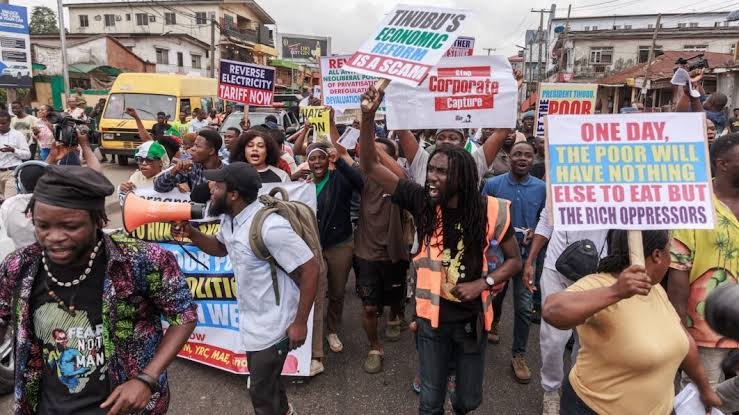
Political violence, attacks on campaign activities, intimidation, disinformation and restrictions on civic space have become troubling features of an election season that is still months away from the polls. A peace accord signed by political actors to reassure Nigerians is already struggling to survive the conduct of some of the people who signed it.
The numbers are bad enough. Thirty-three incidents involved political violence and thuggery, 29 were linked to misinformation and disinformation, 19 involved attacks on political activities or campaign assets, while intimidation and threats accounted for another 15. Seven incidents involved restrictions on freedom of expression and assembly, with other breaches completing the picture. Kaduna recorded nine violations, the highest of any State, while Edo, Enugu and the Federal Capital Territory recorded seven each. Delta and Lagos were not spared either.
But statistics alone cannot convey what these breaches mean to people trying to participate in politics. In Benue, Peter Obi’s convoy was reportedly obstructed near Makurdi. In Enugu, political gatherings and party premises faced armed disruptions. In Cross River, a political consultation meeting was disrupted by gunmen. In Edo, a supporter was reportedly shot during political engagements. In Oyo, violence surrounding political activities claimed a life. Different States, different political actors, but the same unsettling message: political participation is increasingly accompanied by the threat of violence.
Then came the killings in Delta State.
On November 23, a campaign gathering involving former Deputy Senate President Ovie Omo-Agege, the Nigeria Democratic Congress senatorial candidate for Delta Central, was violently disrupted at Uduere community in Ughelli North. Omo-Agege reportedly escaped unhurt, but members of his campaign team did not. His campaign organisation reported four deaths, while subsequent preliminary government accounts put the figure at six. Several people were also injured, the police commenced investigations, and the state government imposed a dusk to dawn curfew in Ughelli North.
The conflicting accounts surrounding the incident must be investigated, and responsibility established through evidence rather than political accusations. But whatever the investigation eventually reveals, the deaths themselves should trouble every Nigerian. People have already lost their lives around political activities when the country has not even reached election day. Campaigning should not be a death sentence. Nobody should have to risk their life because of the candidate they support or the political party they belong to.
The Delta tragedy also brings attention to something else that has become increasingly disturbing: the language politicians are using.
Omo-Agege’s “rig and die” slogan has attracted criticism, particularly following remarks in which he warned against electoral manipulation and spoke in terms of fighting rather than relying on the courts. He has defended the expression, insisting that it was intended as a warning against rigging, not a threat against innocent people. His demand for free and credible elections is legitimate. Nobody should rig an election, and nobody should be permitted to subvert the people’s mandate.
But there is a line political leaders must understand. Declaring that electoral malpractice will be resisted is one thing. Introducing death into the language of election disputes is another. Elections are governed by laws, and allegations of rigging must be investigated and prosecuted through lawful institutions. No politician has the authority to turn an election into a personal battlefield or encourage supporters to believe that violence is an acceptable response to political grievances.
The danger is not simply what a politician says he means. It is what his supporters may hear, what they may take as encouragement, and what they may feel entitled to do when tensions rise. In an atmosphere already marked by attacks, intimidation and political hostility, language matters. It can calm a situation or make it worse. Festus Keyamo has also called on political actors promoting the “rig and die” mantra to withdraw it and apologise. That warning deserves to be taken seriously. Nigeria has enough political tension without leaders adding fuel to it.
And violence is not always delivered with a gun or a machete. Of the 109 breaches recorded by the National Peace Committee, 57 involved non-physical violations, representing approximately 52 per cent. Disinformation, threats and restrictions on political expression can be just as effective at discouraging participation. A candidate denied a venue, supporters threatened into silence, a community flooded with false information or voters intimidated into staying home may suffer no physical injury, but their democratic rights have still been compromised.
Yiaga Africa’s third National Voting Intentions Survey offers an unsettling picture of how Nigerians are responding to the political atmosphere. Conducted among 2,470 respondents across the 36 states and the FCT, the survey found that 84 per cent were likely or very likely to vote in 2027. Yet 61 per cent admitted that fear of violence could keep them away. Firm voter conviction had fallen to 47 per cent. Only 34 per cent expressed confidence in INEC’s ability to conduct credible elections, while 63 per cent had little or no confidence in the judiciary’s ability to resolve electoral disputes fairly.
Think about what those numbers mean. Nigerians want to vote, but many are already worried about whether they can do so safely. They want their votes to count, but they are not confident that the institutions responsible for protecting their mandate will deliver. A voter who fears being attacked on election day, or believes that a disputed result will never receive justice, may decide that staying away is safer. We should not be quick to condemn such a person for apathy. Sometimes, withdrawal is what people do when the system gives them little reason to trust it.
The problem is impunity. Nigeria has spent years condemning electoral violence without doing enough to punish those responsible. Peace Accords are signed, political leaders make solemn promises, security agencies issue warnings, and after another attack, the country returns to expressions of outrage.
The young men who carry out the violence are sometimes arrested, but the political sponsors who recruit, finance and deploy them rarely face the same consequences. Until those behind the violence are made to answer for it, these agreements will remain documents signed for public consumption while the real business of intimidation continues elsewhere.
The authorities must stop treating electoral violence as an unfortunate side effect of politics. Those who attack candidates, destroy campaign materials, intimidate voters or disrupt political gatherings must be investigated and prosecuted, regardless of the party they belong to. And prosecution cannot end with the people caught throwing stones or wielding weapons. The political financiers and organisers behind these attacks must also face the law.
Security agencies must concentrate on protecting voters and the democratic process, not serving the interests of whichever political actors happen to wield power. Campaigns must be allowed to take place without intimidation, polling units must be protected, and security personnel must act impartially. No candidate should receive preferential protection because of political connections, and no opposition supporter should be left vulnerable because of the party they support.
Political leaders must also take responsibility for what they say and what they encourage. Ethnic insults, threats, disinformation and language that glorifies violence have no place in an election. Supporters must resist the temptation to defend every misconduct committed by their political camp simply because they want their candidate to win. The politicians may eventually reconcile after the election, but the ordinary people who have been set against one another are left to live with the consequences.
A democracy cannot survive on selective outrage, where violence is condemned when the other side commits it and excused when our own side benefits. Political competition should never become a licence to intimidate, injure or kill. The right to campaign, the freedom to support a candidate and the right to vote without fear belong to every Nigerian, not to whichever party is currently in favour.
Nigeria still has time to change the course of this election. But time is not an excuse for complacency. The 109 breaches, the killings in Delta, the intimidation of political supporters and the increasingly reckless language surrounding electoral competition should be warning enough.
If 2027 is to be an election rather than a coronation by coercion, Nigeria’s leaders, institutions and security forces must prove, starting now, that the ballot box is stronger than the machete. Nigerians must be able to choose their leaders without fear, and those who threaten that right must discover that this country is no longer willing to look the other way.
Shaakaa can be reached on: shaakaastephanie@yahoo.com