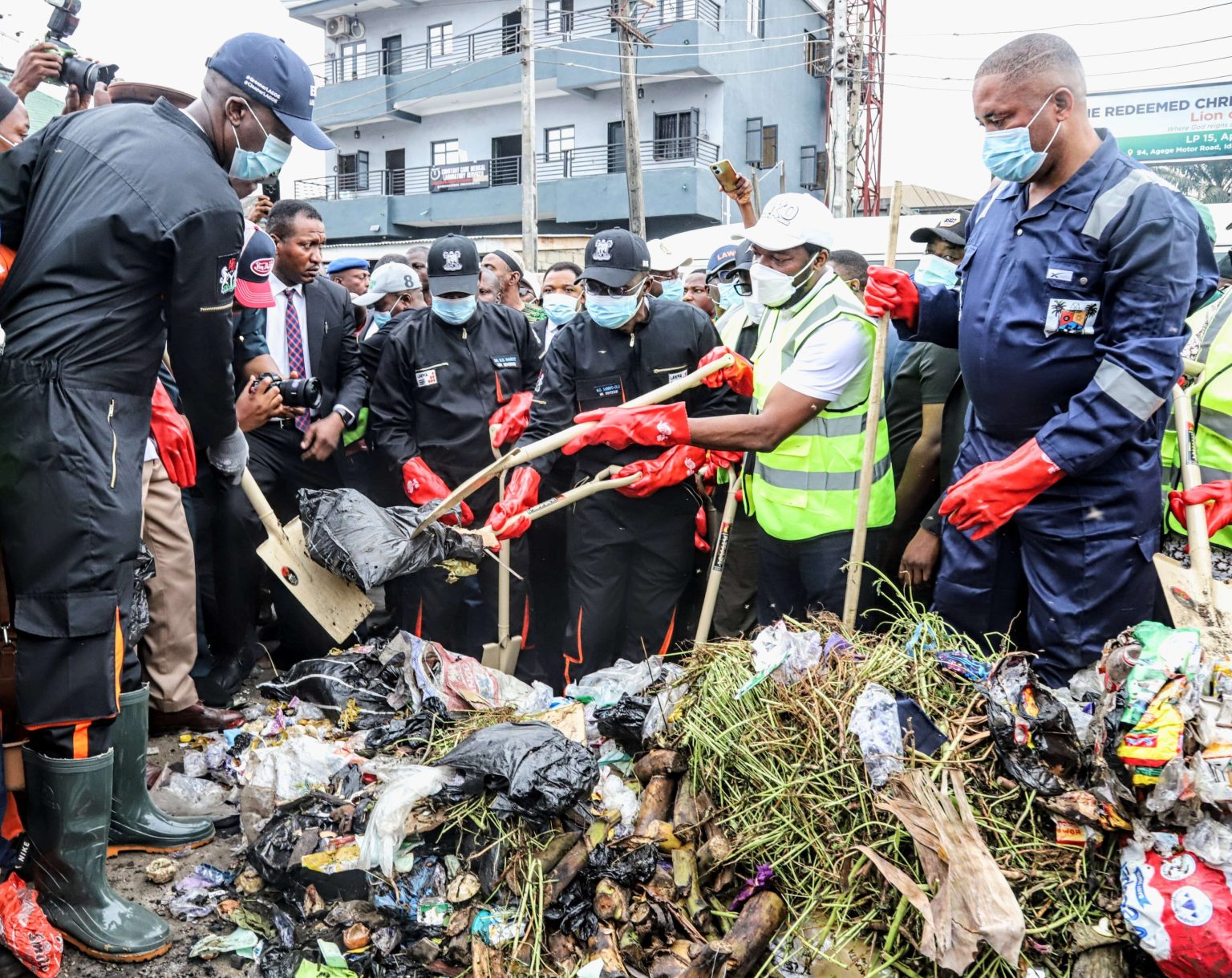
The Lagos State Government has unveiled comprehensive guidelines for the reintroduced monthly environmental sanitation exercise, set to resume on Saturday, April 25, 2026, in a renewed push to improve cleanliness, public health, and environmental sustainability across the state.
The announcement, made on Wednesday, signals a return to a once-familiar civic routine that authorities believe is critical to tackling persistent environmental challenges in Africa’s largest city.
According to the Commissioner for Environment and Water Resources, Tokunbo Wahab, the exercise will now take place on the last Saturday of every month between 6:30 a.m. and 8:30 a.m., during which controlled movement will be enforced across the state.
“The exercise will hold every last Saturday of the month between the hours of 6:30 am and 8:30 am. During this period, there will be controlled movement across the state to allow residents to carry out thorough cleaning of their homes, surroundings and drainage frontages,” Wahab stated.
The reintroduction of the sanitation exercise comes amid growing concerns over waste management, blocked drainage systems, and the increasing risk of flooding, especially during the rainy season. Officials say the initiative is designed not only to clean up the environment but also to instill a culture of responsibility among residents.
To ensure compliance, the government has assembled a multi-agency enforcement team comprising officials from the Ministry of Environment and Water Resources, the Lagos State Environmental Protection Agency, Kick Against Indiscipline, the Lagos Waste Management Authority, and sanitation inspectors from local government councils.
These teams, Wahab explained, will conduct physical inspections during and after the sanitation window to monitor adherence and identify defaulters.
Their mandate includes ensuring that residents participate actively in cleaning their immediate surroundings, clearing blocked drains, properly disposing of waste, and refraining from unauthorized movement during the exercise.
The commissioner issued a clear warning that non-compliance will attract penalties in line with the Lagos State Environmental Management and Protection Law of 2017. While specific sanctions were not detailed in the statement, past enforcement efforts have included fines, community service, and in some cases, prosecution.
Observers note that the success of the initiative will depend heavily on both enforcement and public cooperation. While many residents acknowledge the importance of sanitation, previous exercises have sometimes been undermined by low participation and weak enforcement.
This time, however, the government appears determined to ensure stricter compliance, with officials emphasizing that environmental sanitation is a shared responsibility rather than a government-only obligation.
Across Lagos, reactions to the announcement have been mixed. Some residents have welcomed the move as a necessary step toward restoring order and cleanliness in a rapidly expanding urban environment. Others, however, have raised concerns about the inconvenience of movement restrictions, particularly for workers and businesses that operate early in the day.
Environmental experts argue that beyond the immediate impact of monthly cleanups, sustained behavioral change is essential. They stress the need for continuous public education on waste disposal, recycling, and environmental stewardship to complement the sanitation exercise.
They also highlight the broader implications of poor sanitation, including its link to flooding, disease outbreaks, and urban degradation. In densely populated areas, blocked drainage systems can quickly lead to waterlogging, disrupting daily life and damaging infrastructure.
For the Lagos government, the reintroduction of the sanitation exercise is part of a broader strategy to position the state as a cleaner, safer, and more resilient megacity. Officials say that maintaining environmental standards is crucial not only for residents’ well-being but also for attracting investment and tourism.
As Saturday approaches, residents are being urged to prepare by gathering cleaning tools, organizing waste disposal, and planning their schedules around the sanitation window. Community leaders and local authorities are also expected to play a key role in mobilizing participation at the grassroots level.
Ultimately, the effectiveness of the initiative will be measured not just by cleaner streets on sanitation days, but by lasting improvements in environmental habits and urban management.
For now, Lagos is set to revisit a familiar tradition, one that carries the promise of a cleaner city, but also demands discipline, cooperation, and a collective commitment to change.