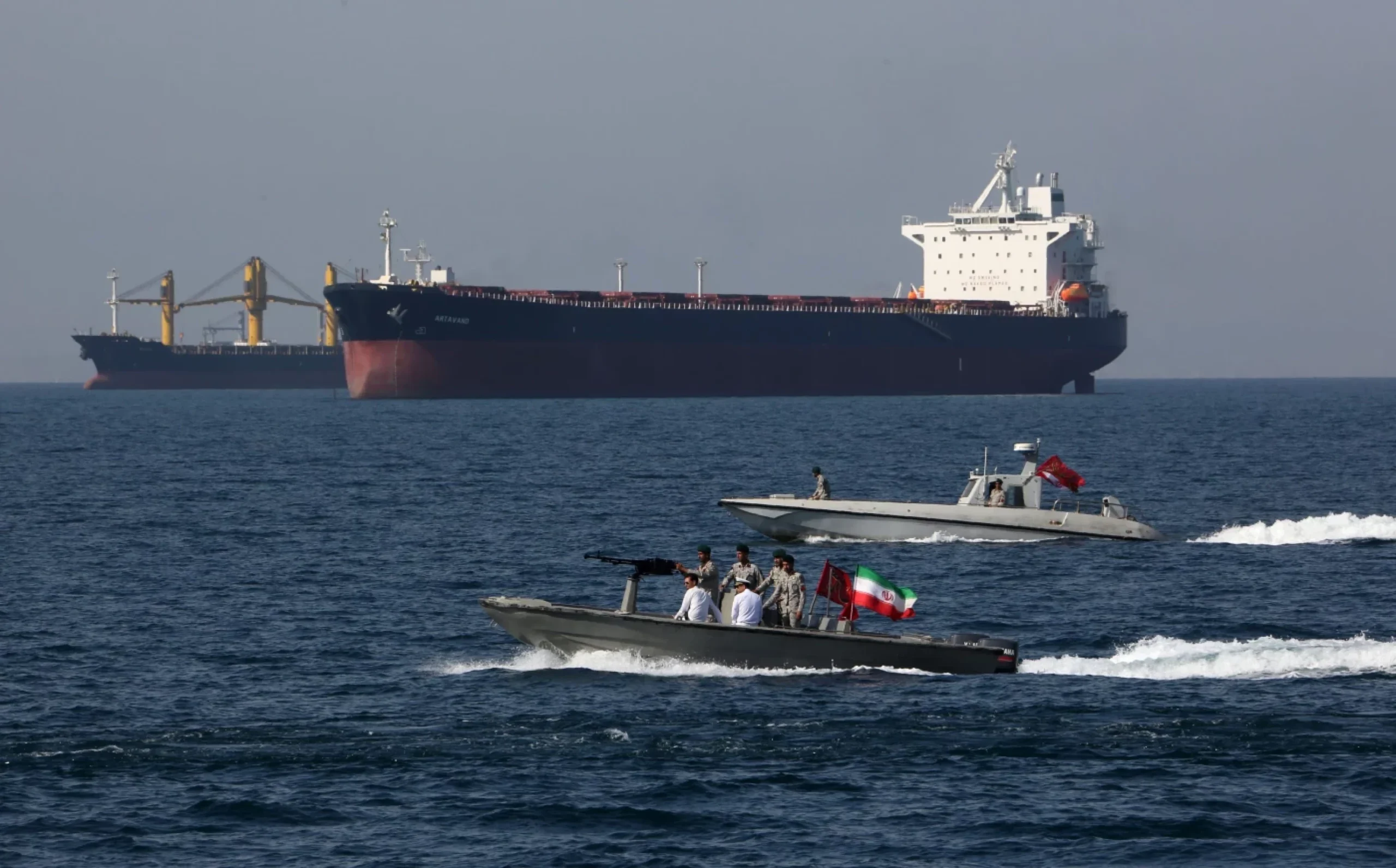
Iranian forces attacked an unmanned U.S. Navy surface vessel attempting to enter the Strait of Hormuz early Sunday, September 6, 2026, marking a sharp escalation in the strategic waterway following intense exchanges between the two nations over the weekend.
The attack on the naval drone occurred hours after Iran’s Islamic Revolutionary Guard Corps (IRGC) targeted three commercial oil tankers navigating designated transit routes in the strait, alongside three additional U.S.-linked vessels across the region. According to a statement carried by Iran’s state-run IRNA news agency, the IRGC Navy engaged the remotely operated American craft after it breached a protected maritime zone.
The Iranian operations came in direct response to U.S. Central Command (CENTCOM) strikes conducted on Saturday, September 5. CENTCOM confirmed that U.S. fighter jets and drones permanently disabled three crude oil carriers associated with the IRGC shadow network: the M/T Downy off Kharg Island, the M/T Stark 1 near Jask in Hormozgan province, and the unladen M/T Kylo in the Gulf of Oman.
The IRGC Aerospace Force claimed it launched ballistic missiles targeting a U.S. aircraft carrier and Navy destroyer early Sunday, asserting both sustained damage and withdrew from the engagement area. CENTCOM officials refuted Iranian claims of damaged warships, confirming that U.S. Navy vessels successfully evaded all incoming projectiles with zero casualties. CENTCOM Commander Adm.
Brad Cooper defended the strikes on the tankers, stating, “If you shoot at two of our ships, we will impose an even higher economic cost, taking out three of yours.” Iranian Foreign Ministry Spokesman Esmaeil Baqaei condemned the American strikes on the tankers as “illegal and aggressive actions,” warning that further actions against Iranian maritime assets would trigger significantly harsher retaliation.
The latest skirmishes reflect a deepening deadlock in the ongoing six-month conflict, which has severely disrupted commercial transit through the Strait of Hormuz, a bottleneck that historically handled nearly 20% of global oil shipments.
With Tehran enforcing tight security protocols over the narrow passage and Washington maintaining a counter-blockade of Iranian ports, regional military commands, including Iran’s Khatam al-Anbiya Central Headquarters, have warned that further miscalculations could rapidly expand the scope of military operations.