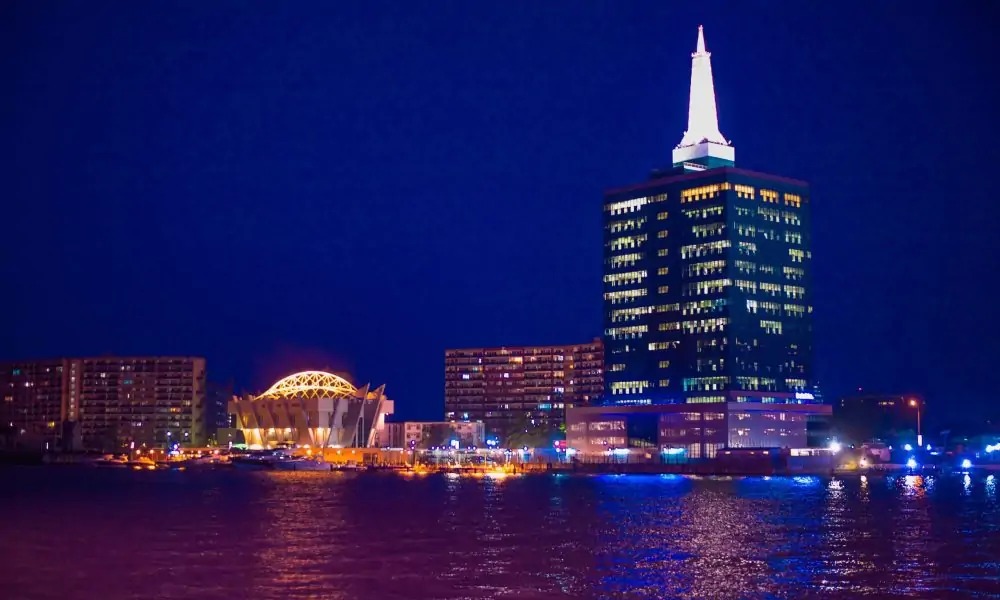
When night falls across Lagos, Ibadan, Port Harcourt, Katsina, and hundreds of other towns, another economy wakes up.
Plastic chairs spill onto sidewalks. Grills crackle. Music drifts into the street. Projectors flicker on for football. By 8pm, money is already moving.
And according to fresh data from Moniepoint, the scale of that movement is staggering.
In 2025 alone, over ₦900 billion flowed through Nigeria’s clubs, bars, lounges, food joints, and viewing centres.
This is not velvet-rope nightlife.
This is Nigeria’s community night economy — informal, improvised, but deeply organised.
₦900 Billion After Dark
Across Moniepoint’s network:
27,000+ nightlife venues processed transactions
Payments occurred at a rate of three per second
Lagos leads with 4,856 businesses
FCT follows with 2,515
Rivers records 2,362
Delta has 1,930
Edo counts 1,574
These are thousands of small spaces where Nigerians gather after work, spend money, and sustain livelihoods.
During 2024’s Detty December season, some high-end Lagos clubs reportedly generated up to ₦360 million in a single day, with tables selling for as much as ₦1.2 million.
But that is only one layer.
The deeper layer lives in neighbourhood bars where food arrives before alcohol — and where bottled water sometimes outsells beer.
Where Food Leads, Not Champagne
At Amuludun Kitchen in Ipaja, nearly 1,000 people can pass through on busy nights.
In one evening:
78 plates of catfish
100 plates of tilapia
200 plates of goat meat
10–12 goats processed daily
16 pots of fish pepper soup (45 minutes per pot)
Three POS terminals handle payments.
Cash is rare. Transfers and cards dominate.
This pattern repeats nationwide.
Nigeria’s food and drink market is valued at over $50 billion, and food consumed outside the home forms a significant slice. In community nightlife spaces, meals anchor the spending. Alcohol may follow — but it does not always lead.
The World Health Organisation ranks Nigeria’s alcohol consumption among the highest in the region. Oui Capital estimates that clubbing activity accounted for roughly 5% of Lagos State’s ₦41 trillion GDP in 2024.
Still, alcohol alone does not explain why people stay.
Nightlife runs on habit, familiarity, timing — and football.
When AFCON Goals Trigger Transactions
During the 2025 Africa Cup of Nations, bars turned into communal stadiums.
Fridges were stocked in advance. Freezers packed. Drinks and meals moved quickly.
Between 8pm and 10pm, transactions spiked.
When goals were scored, so were payments.
Moniepoint’s data shows:
Transactions begin rising sharply from 8pm
Peak naira volume occurs around 9pm
Spending slows after midnight, even if venues remain full
In neighbourhood viewing centres, match nights create concentrated bursts of micro-spending that, aggregated nationwide, become billions.
The Workforce Behind the Night
Nigeria’s informal economy accounts for over 90% of employment.
Behind the ₦900 billion are tens of thousands of workers:
Cooks
Servers
Cleaners
Security guards
POS operators
Managers
On peak nights, bars expand staffing by 30–50%.
Even under conservative estimates, at least 54,000 people are engaged in nightlife labour every evening.
The 2025 Rome Business School Nigeria report estimates that the entertainment industry contributed ₦154 billion to GDP in 2024 and supported 4.2 million jobs.
Yet ownership remains uneven.
Men control roughly 63.8% of nightlife businesses, compared to 36.2% for women — though women dominate service roles.
The night economy is structured — and gendered.
The Quiet Revolution: Cash Is Fading
Perhaps the most striking finding: nightlife is going digital faster than the broader informal economy.
While about half of informal payments nationwide remain cash-based, nightlife tells a different story.
In bars and lounges:
Transfers dominate
Cards follow
Cash is discouraged due to theft and security risks
During peak nighttime hours, transfers exceed card payments by nearly two million transactions.
In 2022, Moniepoint introduced POS transfers that assign a dedicated bank account number to each terminal. Customers transfer directly. Confirmation is instant. Receipts print immediately.
In noisy, crowded environments, that confirmation sound matters.
Operators close the night knowing their revenue in real time.
Not Just Lagos
Regional patterns vary:
Lagos peaks between 11pm and 3am
Port Harcourt peaks 10pm to 2am
Katsina peaks earlier, 8pm to midnight, with food central to spending
Katsina alone generated over ₦130 million in nighttime food truck payments in the past year. Kwara leads in transaction volume.
Nightlife is not just an elite urban phenomenon.
From suya stands in Surulere to food trucks in Katsina, the pattern holds:
People gather.
Food arrives.
Phones rise for transfers.
Screens glow for football.
Workers move fast.
By 9pm, the night’s economy has largely been decided.
A Structured Economy Disguised as Casual Fun
What appears spontaneous is in fact deeply organised.
Staffing is calibrated.
Stocking is forecasted.
Ambience is financed through loans.
Payments are digitised.
Peak hours are predictable.
Nigeria’s nightlife is not just entertainment.
It is a ₦900 billion shadow economy — disciplined, data-driven, and expanding after dark.